Naturschutzgebiet Am Hornpottweg
A former gravel pit on Cologne's north-eastern edge, a nature reserve since 1983 – a wetland habitat with over 200 bird species that can be viewed from a roughly 2 km circular trail.
since 1983
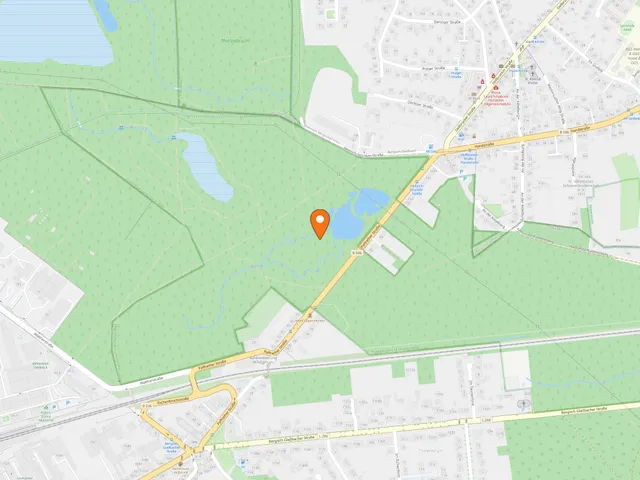
On the north-eastern edge of Cologne, close to the city boundary between Dünnwald and Leverkusen-Schlebusch, the "Am Hornpottweg" nature reserve lies within the Dünnwald forest – a former gravel pit that has grown into one of the most valuable biotopes anywhere in Cologne. Water, reed beds, dry grassland and mixed woodland bring a remarkable diversity of species together in a small space.
At a Glance
- Location
- North-eastern edge of Cologne, in the Dünnwald forest on the border with Leverkusen-Schlebusch, around 55 m above sea level
- Protected status
- A nature reserve since 1983, part of the Bergische Heideterrasse
- Area
- About 27.6 hectares, of which 17.8 ha are the former gravel pit plus adjoining woodland
- Access
- The fenced-off pit itself may not be entered – but it can be viewed well from the roughly 2 km circular trail
- Wildlife
- More than 200 recorded bird species, plus amphibians, reptiles, bats and Glan cattle as landscape managers
- What makes it special
- From several points along the trail you can take in almost the entire pit – wildlife watching like at hardly any other biotope
Area comparison
Area compared with other Cologne parks and green spaces.
Age comparison
Age compared with other places in Cologne.
From Gravel Pit to Wetland
After the pit was shut down in 1976, the excavation – roughly 445 metres long, 400 metres wide and 10 metres deep – was actually meant to be filled back in. But once the groundwater was no longer being pumped out, larger pools formed, and a varied vegetation quickly took hold – and with it a growing number of resting migratory birds, including species that were already endangered at the time. Conservationists, above all the DBV (later NABU Cologne) and BUND in Leverkusen, therefore applied to the Cologne regional president in 1980 to have the area placed under protection. After a few years an agreement was reached: the state of North Rhine-Westphalia bought the land and designated it a protected wetland in 1983. In 1993 the Hornpottweg was additionally closed to cars, to protect common toads, common frogs and smooth newts.
Location & Landscape
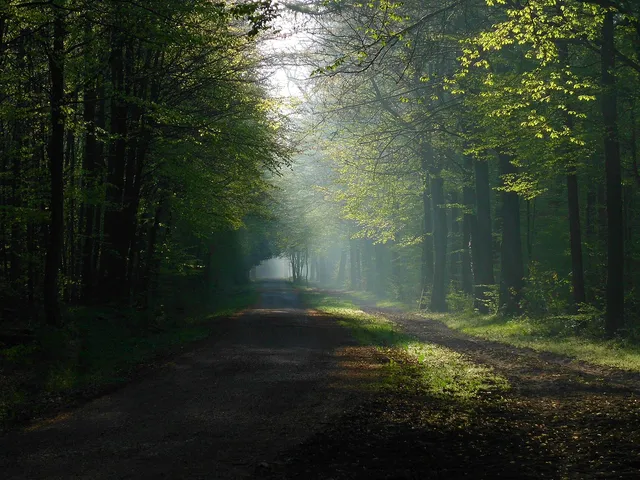
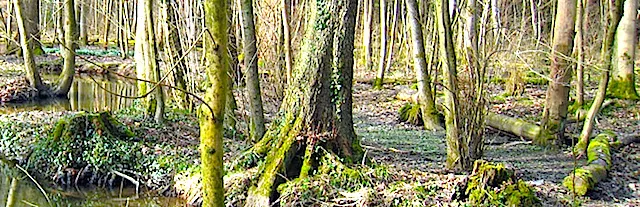
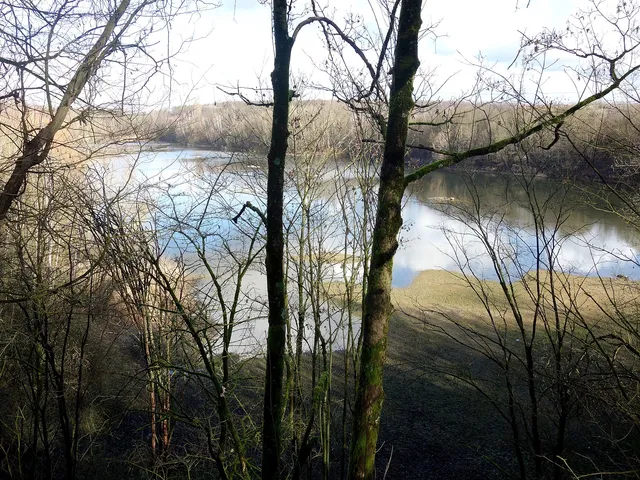
The water level in the pit fluctuates sharply – depending on rainfall and on the level of the Rhine, a good four kilometres away. At high water the individual pools merge into a stretch of water some six hectares in size dotted with small islands, ideal for waterfowl and diving birds. When the water level drops, muddy flats emerge that offer breeding opportunities for wading birds. Dense embankments of willow, brambles and shrubs run around the pit, along with a mixed woodland rich in pines and birches, typical of the sandy soils of the Dünnwald forest. The habitats range from reed beds and grassland to small patches of sandy dry grassland; the rarer plants include marsh iris and water knotweed.
Wildlife
Rich vegetation, healthy fish stocks and countless dragonflies, bush-crickets and butterflies make the area a paradise for birds: more than 200 species have already been spotted here, around 110 of them on North Rhine-Westphalia's Red List. In spring and autumn the osprey rests here on its migration, while grey herons and cormorants fish the waters. The breeding birds include the little ringed plover, lapwing and common whitethroat, and with a bit of luck you may spot a hobby, goshawk, kingfisher or hen harrier. Away from the birds, too, the area is full of life: sand lizard, wood mouse and many bats live here, and deer and foxes show themselves again and again.
Grazing with Glan Cattle
Since 1994, Glan cattle from the Wahner Heide have spent every year from spring to autumn in the Hornpott pit. The plain brown animals belong to the old Rhenish "Glanvieh" breed and feed exclusively on the vegetation on site; the calves grow up within the herd. Their grazing keeps hard-to-reach fringe areas open and replaces labour-intensive management such as mowing and clearing scrub, which would otherwise be needed to prevent the area from becoming overgrown and individual species from being crowded out.
Challenges
For a long time the northern side bordered on the so-called "Bullenwiese" (bulls' meadow), a large expanse of arable land and meadow on Leverkusen territory that served migratory birds as a resting place and where grey herons hunted for mice when the water was high. Since 2004, however, this area has been almost entirely built over with a commercial estate. Conservation groups sharply criticise this: as residential and commercial development creeps ever closer to the Hornpott pit, the reserve faces the loss of habitats and an impoverishment of its wildlife.
Map
Blue dots: other places nearby — tap to explore.
Address
Hornpottweg
51069 Köln
Hours
So: 00:00–24:00
You might also like — related or nearby
Comments
- Loading comments…
Sources & links
- Official website
- Official website (retrieved 2026-08-10)
- Wikipedia (retrieved 2026-08-09, rev 267215419)
- Wikidata (retrieved 2026-08-09)
Auto-generated, last verified: 2026-08-09
How this page is made
This page draws on open sources — Wikipedia, Wikidata, official websites and the city’s open data. Every statement is checked against the sources linked here, and pages are refreshed regularly.
Spotted a mistake anyway? Tell us below — we read every submission.