Heinzelmännchen Fountain
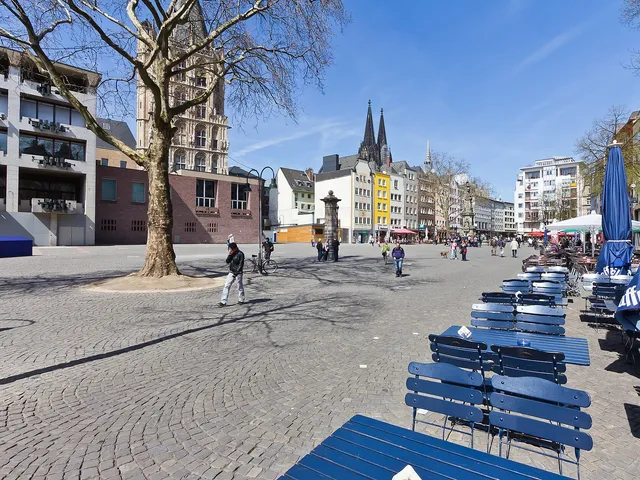
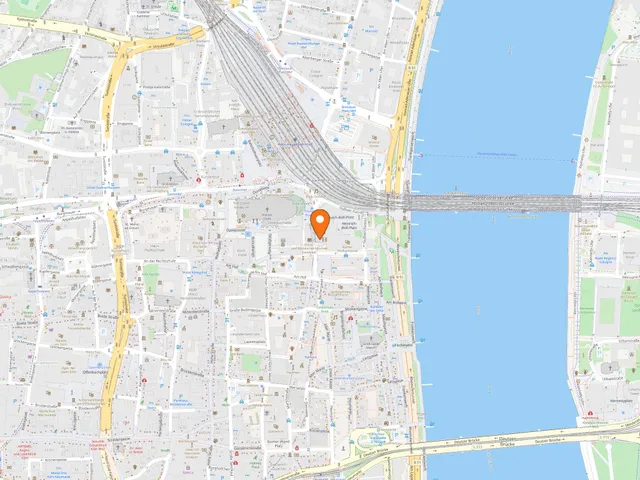
Just a few steps from Cologne Cathedral, the Heinzelmännchen Fountain recalls the city's famous legend of industrious house spirits who did the townsfolk's work while they slept. The richly decorated fountain stands on the street Am Hof, opposite the traditional Früh brewery.
since 1900
The Heinzelmännchen Fountain celebrates one of Cologne's best-known legends: the tale of little house spirits who secretly finished the work of the sleeping citizens by night – until they were spotted just once and vanished forever. The story became widely known through a poem written by the Cologne poet August Kopisch in 1836.
Source: Wikipedia
At a Glance
- Location
- Am Hof street, near Cologne Cathedral and opposite the Früh brewery
- Built
- 1899–1900
- Designed by
- architect Heinrich Renard (1868–1928) and his father, sculptor Edmund Renard the Elder (1830–1905)
- Donated by
- the Cologne Beautification Society
- Occasion
- the 100th birthday of poet August Kopisch (1799–1853)
- Materials
- granite (fountain basin), sandstone (parapet wall)
- Reliefs
- eight in total, six depicting the crafts of the Heinzelmännchen
Almost none of the fountain's figures are still original: the tailor's wife at the fountain is a weather-resistant copy, and during the 2017/18 restoration the figurative reliefs were also replaced with artificial-stone casts – the originals are kept in the museum and in the city conservator's depot.
Things to do here
- Spot the eight reliefs on the parapet wall and identify the six crafts of the Heinzelmännchen
- Search for the hidden owl with its magnifying glass on the back of the fountain
- Take a break at the Früh brewery right across the street
- See the original sculpture of the tailor's wife at the Cologne City Museum in the Zeughaus
Age comparison
Age compared with other places in Cologne.
Design
The fountain is laid out along a circular segment, centred on a trefoil-shaped granite basin. Above it, a double staircase rises to the figure of the tailor's wife, who holds a lantern in her hand. Her light falls on the Heinzelmännchen tumbling down on either side, all looking up at her. On the central pier, a banner above a tailor's coat of arms bears the key line of Kopisch's poem about the tailor's wife and her curiosity.
To the west and east, a massive sandstone parapet wall adjoins the fountain. Eight reliefs adorn it: six show the nightly labours of the little helpers – from left to right the carpenter, the joiner, the baker, the butcher, the innkeeper and the tailor. Between them are two panels with excerpts from the poem in blackletter script. On the rear sits an owl holding a magnifying glass atop a book: a symbol of cleverness and wisdom, and a nod to Kopisch's literary work.
History and Preservation
The fountain was conceived and executed by Heinrich Renard and his father Edmund Renard the Elder, who otherwise devoted himself mainly to religious art. Over time, originals have been replaced with copies to protect them: the original sculpture of the tailor's wife is now displayed at the Cologne City Museum in the Zeughaus, while a more weather-resistant copy stands at the fountain. During the 2017/18 restoration, the figurative reliefs – damaged by a water-repellent treatment – were replaced with artificial-stone casts; the originals went to the City Museum and to the depot of Cologne's city conservator.
Good to Know
The Heinzelmännchen have left other traces across Cologne: in the Neuehrenfeld district there is the Heinzelmännchenweg near Takuplatz, and in the Höhenhaus district a monument to the Grinkenschmied at Wupperplatz commemorates a related legendary figure.
Gallery
Map
Blue dots: other places nearby — tap to explore.
You might also like — related or nearby
Comments
- Loading comments…
Sources & links
Auto-generated, last verified: 2026-08-28
How this page is made
This page draws on open sources — Wikipedia, Wikidata, official websites and the city’s open data. Every statement is checked against the sources linked here, and pages are refreshed regularly.
Spotted a mistake anyway? Tell us below — we read every submission.