Hiroshima-Nagasaki-Park
Memorial park in Cologne's Inner Green Belt commemorating the victims of the atomic bombings of Hiroshima and Nagasaki, with a monument featuring an origami crane.
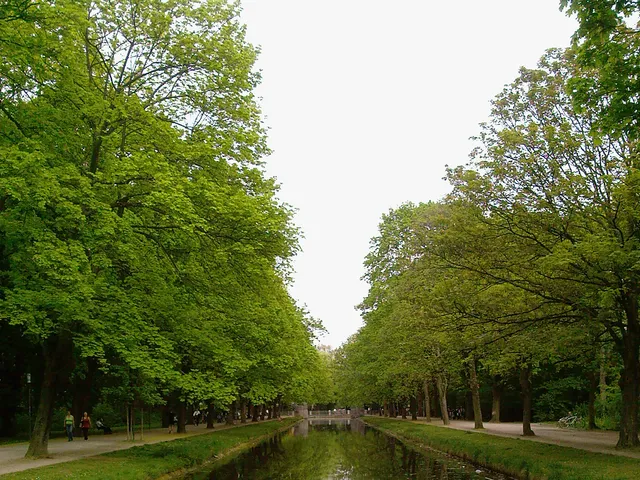
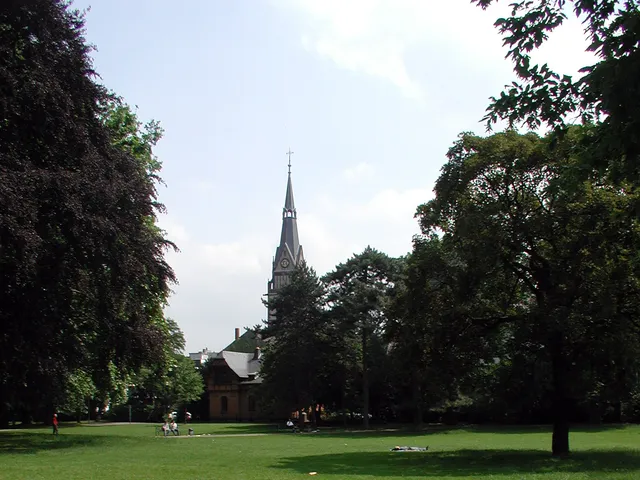
The Hiroshima-Nagasaki-Park sits atop a rubble mound in Cologne's Inner Green Belt, serving as a memorial to the victims of the atomic bombings of Hiroshima and Nagasaki.
At a Glance
- Type
- Park in the Inner Green Belt
- District
- Lindenthal
- Opened
- 7 August 2004
- Named after
- Hiroshima and Nagasaki
- Location
- between Aachener Straße, Universitätsstraße, Bachemer Straße and the railway grounds
- Surroundings
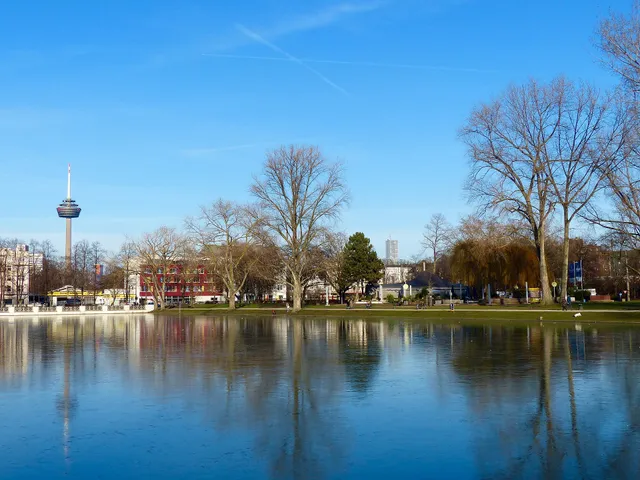
- Aachener Weiher lake and the Museum of East Asian Art are immediate neighbours
- Monument
- "Abolish Nuclear Weapons" with origami crane
The park was built on a former Nazi rally ground where mass NSDAP marches took place, featuring a grandstand crowned by a 15 × 20 metre Reich Eagle – and it now sits atop a rubble mound piled up from the city's wartime debris after World War II.
Area comparison
Area compared with other Cologne parks and green spaces.
Age comparison
Age compared with other places in Cologne.
Origins and Naming
The initiative came from the Cologne Peace Forum, which in 2000 proposed a park to commemorate the first atomic bombings. In late 2001, the Innenstadt district council voted unanimously to name the green space near Aachener Weiher accordingly. The former rubble mound close to the Museum of East Asian Art and the Japan Cultural Institute was chosen as the site. Cologne has been a member of the Hiroshima-Nagasaki Peace Study Association — an international alliance of cities opposed to nuclear weapons — since 1985. The park was inaugurated by Mayor Renate Canisius, in the presence of Japanese Consul Toshihiko Mochizuki and Nagasaki survivor Kazuo Soda.
From Nazi Rally Ground to Rubble Hill
During the National Socialist era, this area was known as the Maifeld, a site for mass NSDAP rallies. A terraced grandstand bore a Reich eagle measuring 15 × 20 m. After the Second World War, rubble and debris were piled onto the open ground; the resulting hill is locally known as Mont Klamott or Aachener Berg. The viewing platforms and sight lines originally laid out are now concealed by mature trees and serve no practical purpose.
Monument and Symbolism
On 5 August 2007, the monument "Abolish Nuclear Weapons" by Cologne artist Hannes Helmke was unveiled. It features an origami crane and is surrounded by three trees: a ginkgo for Hiroshima, a Japanese flowering cherry for Nagasaki, and a black poplar for Cologne. The crane draws on a Japanese legend holding that anyone who folds 1,000 origami cranes (sembazuru) will have a wish granted. It became a worldwide symbol against nuclear weapons following the death of schoolgirl Sadako Sasaki, who fought in vain against radiation-induced leukaemia after the Hiroshima bombing.
Art in the Park
Since 1985, the park has been home to the sculpture "Ancient Form", created by Lajos Barta in 1966.
Timeline
- 1966Lajos Barta creates the sculpture "Uralte Form"
- 1985Cologne joins the Hiroshima-Nagasaki alliance; sculpture installed in the park
- 2000Cologne Peace Forum proposes a memorial park for the atomic bombings
- Ende 2001Innenstadt district committee unanimously approves the park's name
- 7. August 2004Park inaugurated by Mayor Renate Canisius
- 5. August 2007Memorial "Abolish Nuclear Weapons" by Hannes Helmke unveiled
Gallery
Map
Blue dots: other places nearby — tap to explore.
Address
Universitätsstraße 22a
50923 Köln
Hours
So: 00:00–24:00
You might also like
Comments
- Loading comments…
Sources & links
Auto-generated, last verified: 2026-06-26