Cologne Ghost Parade
Alternative carnival procession and political demonstration: since 1991, it winds through changing Cologne neighborhoods without a formal permit.
since 1991
The Geisterzug (Ghost Parade) is Cologne's alternative carnival procession and political demonstration rolled into one. Since 1991, it has marched almost every year under a rotating — and typically provocative — political motto through different city neighborhoods.
Source: Wikipedia
At a Glance
- Type
- Alternative carnival procession and political demonstration
- Since
- 1991, nearly every year since
- Organizer
- Ähzebär un Ko e. V. (named after the carnival "pea bear" mask)
- Date
- Carnival Saturday until 2019; from 2020 onward, the Saturday before Women's Carnival Thursday
- Participation
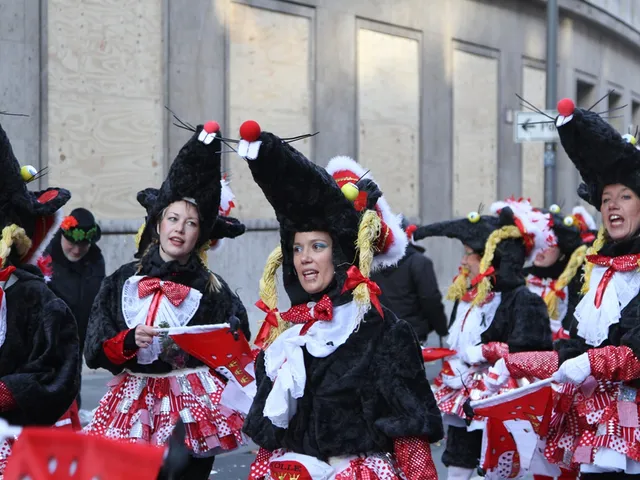
- Spontaneous, no registration required — come dressed as a ghost or shadowy figure
- Funding
- Donations only
When the official Geisterzug was cancelled in 2006 due to lack of funds, the police actually asked the organizers to register the event after all – because otherwise they would have had to "decisively dissolve" the spontaneous unofficial processions that were expected to take place anyway.
Things to do here
- Join the procession dressed as a ghost or dark figure
- Walk along with the alternative, vehicle-free carnival parade
- Take in the political theme that changes every year
- Marvel at the imaginative costumes and masks
- Experience Cologne away from the big crowds through changing neighborhoods
- Soak up the unique, communal atmosphere of the procession
Age comparison
Age compared with other places in Cologne.
Origins
Ghost parades were part of Cologne's carnival tradition as far back as 1860, until they were banned during World War I. In 1991, the Rose Monday parade was cancelled due to the Gulf War; an anti-war demonstration was planned along its route instead. That evening, protesters and carnival revelers marched together through the city center. The enthusiasm led to a second parade the following Carnival Saturday — and it has been running almost annually ever since.
Character and Format
The parade deliberately avoids vehicles and amplified music; each year's route is chosen specifically so that cars cannot join. The motto takes on current political events, and the route often passes locations tied to that year's theme. In 2005, the procession ended at the Lentstraße ice rink, in keeping with its motto "Iesije Zigge" (Icy Times).
Difficult Years
Because the organizing association covers security barriers and street cleaning entirely through donations, the parade has come close to collapse more than once. In 2000 it was cancelled at short notice due to lack of funds — yet around 4,000 people walked the already-published route anyway. In 2006 the organizers again called it off for financial reasons; police and city authorities then urged them to file an official permit to prevent unsanctioned "wild" processions. A last-minute version went ahead under the motto "Us dr Lamäng. Jeister am Engk?" (roughly "Off the cuff. Ghosts at the end?"), while a smaller unregistered march through Ehrenfeld simultaneously mocked the contemporary "Du bist Deutschland" national campaign. In 2012, heightened safety regulations introduced after the 2010 Love Parade disaster prevented the event entirely.
Registered Demonstration from 2020
From 2020 the Ghost Parade has been officially registered as a demonstration. Because demonstrations are prohibited on the main carnival days, the date shifted to the Saturday before Women's Carnival Thursday. In 2021 and 2022 the event was cancelled due to the COVID-19 pandemic.
Timeline
- 1860First ghost parades as part of Cologne Carnival
- 1914–1918Ghost parades banned during World War I
- 1991Revival as anti-Gulf War protest after Rose Monday parade cancelled
- 1992Second ghost parade; annual tradition on Carnival Saturday established
- 2000Officially cancelled due to lack of funds; 4,000 participants marched anyway
- 2006Nearly cancelled; held at short notice under motto 'Us dr Lamäng'
- 2012Cancelled due to high security requirements following the 2010 Loveparade disaster
- 2020First officially registered as a demonstration; moved to Saturday before Weiberfastnacht
You might also like — related or nearby

Comments
- Loading comments…
How this page is made
This page draws on open sources — Wikipedia, Wikidata, official websites and the city’s open data. Every statement is checked against the sources linked here, and pages are refreshed regularly.
Spotted a mistake anyway? Tell us below — we read every submission.