RheinEnergieStadion
Home ground of 1. FC Köln in Müngersdorf — rebuilt in 2004 as a dedicated football stadium and one of twelve 2006 FIFA World Cup venues.
since 1921
The RheinEnergieStadion in Cologne's Müngersdorf district is the home ground of 1. FC Köln. It occupies the site of the former Müngersdorfer Stadion — a name that lives on in everyday speech — and has carried its current name since 2004 under a naming-rights deal with regional energy supplier Rheinenergie.
At a Glance
- Type
- Football stadium
- Location
- Müngersdorf district, Lindenthal borough
- Club
- Home ground of 1. FC Köln
- Opened (new build)
- 31 January 2004
- Capacity
- 49,698 (domestic), 45,965 (international)
- Architect
- Gerkan, Marg und Partner
- Owner/Operator
- Kölner Sportstätten GmbH
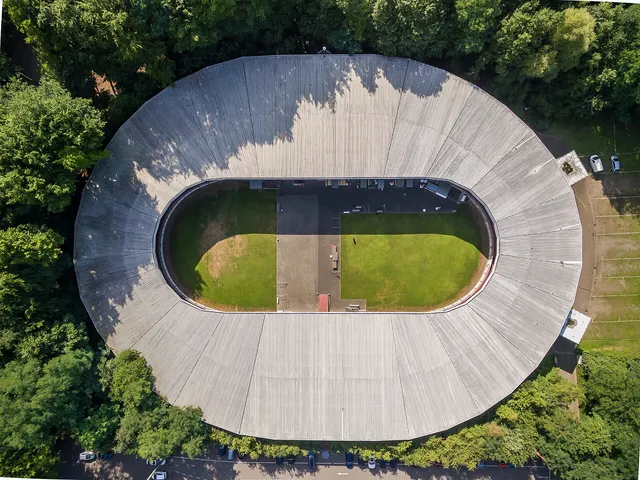
When Cologne planned a new stadium for the 1974 FIFA World Cup, the projected costs proved too high, causing the city to lose its host status — with Dortmund building the Westfalenstadion instead; during the transitional period, two Cologne Bundesliga clubs had to play their home matches in the old cycling velodrome.
Things to do here
Age comparison
Age compared with other places in Cologne.
History of the Site
After Cologne's fortifications were dismantled under the Treaty of Versailles, a broad strip of land opened up along the city's western edge. On the initiative of then-mayor Konrad Adenauer, a green belt was laid out there, with the Sportpark Müngersdorf at its centre. The city council approved the project in 1921; the park opened on 16 September 1923. Spread across 80 hectares, it included a main arena with around 80,000 places, two smaller stadiums, a cycling track, an outdoor swimming pool, and tennis and hockey facilities. Until the Berlin Olympic Stadium was built in 1936, it was the largest sports complex in Germany.
Rebuilds
A replacement stadium on the same site was planned for the 1974 FIFA World Cup, but costs proved too high and Cologne was dropped as a host city. During the 1973/74 Bundesliga season, 1. FC Köln and SC Fortuna Köln had to use the Müngersdorf cycling track as their temporary home. A more affordable 61,000-seat stadium opened on 12 November 1975. When that ground no longer met FIFA requirements, a purpose-built football stadium was constructed for the 2006 World Cup: groundbreaking took place in December 2001, and the final stand was handed over on 31 January 2004. Building in phases meant 1. FC Köln never had to relocate.
Major Events
The site has hosted international football for decades. During UEFA Euro 1988, two group matches were played here. In 2005, three Confederations Cup group games took place in Müngersdorf. At the 2006 World Cup, the stadium was one of twelve German venues and hosted a round-of-sixteen match plus four group games. Ahead of UEFA Euro 2024, the upper tier was redeveloped to provide additional seats for the tournament and future international fixtures.
Today
A feasibility study found that expanding the stadium to up to 75,000 seats would not be economically viable; a modernisation is being explored instead. Capacity figures vary by source: the operator cites 49,698 domestic and 45,965 international places, while Wikipedia and Wikidata give approximately 50,000 and 46,195 respectively. Alongside 1. FC Köln matches, the ground hosts concerts and large-scale events. Between March and June 2026, photovoltaic panels were installed on the roof to supply the stadium with solar power from the 2026/27 season onwards.
Timeline
- Oktober 1921Construction begins on Sportpark Müngersdorf (council resolution: 22 Sept. 1921)
- 16. September 1923Grand opening of Sportpark Müngersdorf
- 12. November 1975New stadium opened with 61,000 seats (cost: 45 million DM)
- 1988UEFA Euro 1988: two matches played at the stadium
- 20. Dezember 2001Groundbreaking for the new FIFA-compliant stadium
- 31. Januar 2004New stadium opens; renamed RheinEnergieStadion via sponsorship
- 2006FIFA World Cup: host venue for four group stage and one round-of-16 match
- März–Juni 2026Photovoltaic panels installed on the stadium roof
Gallery
Map
Blue dots: other places nearby — tap to explore.
Address
Aachener Str. 999
50933 Köln
You might also like — related or nearby
Deportation Camp Cologne-Müngersdorf Memorial
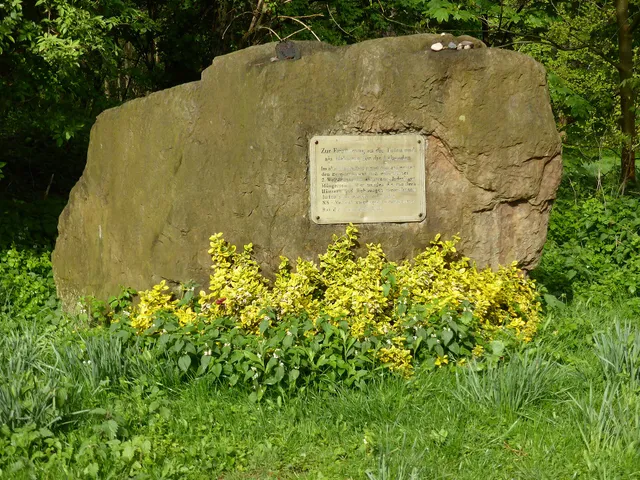
since 2020A freely accessible memorial in Cologne's outer green belt that has commemorated the former Nazi assembly camp since 2020. Around 3,500 Jewish people were deported from here. At its heart is a walkable path and the sculpture "Wall" by Simon Ungers.
Comments
- Loading comments…
Sources & links
- Official website
- Official Instagram (@rheinenergiestadion)
- Wikidata (retrieved 2026-06-24)
- Wikipedia (retrieved 2026-06-24, rev 268114753)
- Official website (retrieved 2026-06-24)
Auto-generated, last verified: 2026-06-27
How this page is made
This page draws on open sources — Wikipedia, Wikidata, official websites and the city’s open data. Every statement is checked against the sources linked here, and pages are refreshed regularly.
Spotted a mistake anyway? Tell us below — we read every submission.