Groß-Köln (Variety Theatre)
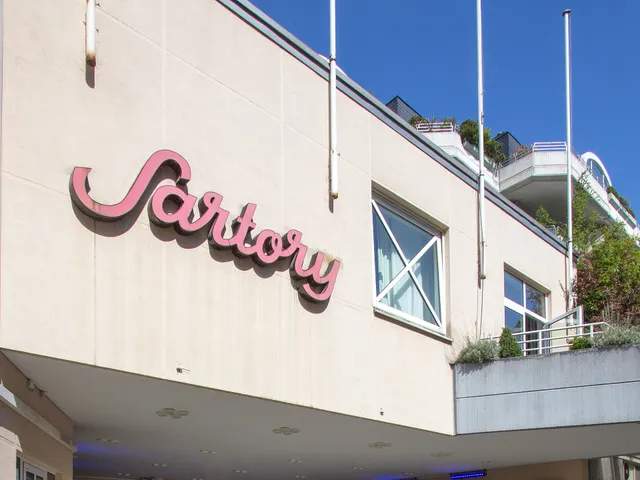
Cologne's first major popular variety theatre, opened in 1912 on Friesenstraße and destroyed in 1942 – today the site is home to the Sartory-Säle.
since 1912
Before the Second World War, Friesenstraße was Cologne's liveliest entertainment strip – and at its heart stood the Groß-Köln, the city's first major popular variety theatre.
Source: Wikipedia
At a Glance
- Opened
- 1912 (built 1911–1912)
- Architect
- Carl Moritz, who also designed Cologne's opera house
- Address
- Friesenstraße 44/46, Altstadt-Nord
- Character
- popular variety theatre with several restaurants and bars
- Operator
- Ludwig Blatzheim, later Ludwig and Hans Herbert Blatzheim
- Destroyed
- in the night of 31 May 1942 during a British air raid
- On the same site today
- the Sartory-Säle (opened 1948)
Age comparison
Age compared with other places in Cologne.
Origins
The building went up between 1911 and 1912 to designs by Cologne architect Carl Moritz, who was also responsible for the city's opera house. It was raised on the plot at Friesenstraße 44/46, previously home to the Cölner Bürgerbräu Josef Waßmann brewery founded in 1896. Under one roof, the venue – originally spelled Gross-Cöln – combined the variety theatre with several eateries, among them the séparée bar Bonbonniere.
Heyday and Programme
Friesenstraße was then regarded as Cologne's foremost pleasure mile. Thanks to low admission and drink prices, the house quickly became the city's first large popular variety theatre, and its Carnival and autumn revues ranked among the seasonal highlights. From 1926 the Cologne comedienne Grete Fluss performed here nightly; in 1930 she delighted audiences with the revue "Die Fastelovendsprinzessin" and Willi Ostermann's song "Och, wat wor dat fröher schön doch in Colonia." The local revue "Die Rutschbahn" ran in 1928, Otto Reutter appeared that November, and between 16 and 31 May 1929 the Comedian Harmonists gave their first performance here in their new, definitive line-up. For less affluent guests, the Klein family opened the pub Klein Köln across the street in 1926, which still exists today.
Censorship and Occupation
Between 1914 and 1918 the theatre, like others, was subject to censorship: political allusions in spoken and sung texts were cut, as were facial expressions and gestures. In 1918 occupation forces requisitioned the venue. From 1 February 1919 the city officially reverted to spelling its name "Köln," and the theatre changed its name accordingly from Gross-Cöln to Groß-Köln. In 1931 Hans Heinz Lüttgen was commissioned to rebuild and redesign the entrance structures; the reopening on New Year's Day 1932 featured the anniversary revue for Willi Ostermann, "Vum Billa zum Zilla."
Destruction and Successor
Exactly when performances ended is not clearly documented. Greven's address book still listed the house in 1941/42, even though the premises had probably been requisitioned by the Wehrmacht as early as late 1939 or early 1940. In the night of 30 to 31 May 1942, as part of Operation Millennium, 1,047 British aircraft raided Cologne and destroyed the Groß-Köln in the process. On its site, the Sartory-Säle opened on 11 November 1948.
Map
Blue dots: other places nearby — tap to explore.
Address
Friesenstraße 44/46
50670 Köln
You might also like — related or nearby
Comments
- Loading comments…
Sources & links
Auto-generated, last verified: 2026-08-21
How this page is made
This page draws on open sources — Wikipedia, Wikidata, official websites and the city’s open data. Every statement is checked against the sources linked here, and pages are refreshed regularly.
Spotted a mistake anyway? Tell us below — we read every submission.