Sartory-Säle
Historic Cologne event halls near Friesenplatz, a stage for carnival, concerts and boxing since 1948.
The Sartory-Säle are among the largest event venues in central Cologne and carry the name of the Sartory family of Cologne restaurateurs. For decades they have been a fixture for carnival, music and sport in the city.
At a Glance
- Location
- Cologne city centre, near Friesenplatz
- Opened
- 11 November 1948, in time for the start of the carnival season
- Architect
- Wilhelm Riphahn (new building), extended in 1950 by Wilhelm Koep
- Operator
- Sartory Säle GmbH & Co. KG (Sartory family)
- Capacity
- 7 halls for up to 3,500 guests across roughly 3,850 m²
- Largest hall
- the "Sartory-Saal" with up to 1,400 seats, followed by the "Ostermann-Saal" (up to 800)
- Use
- multifunctional halls for carnival, concerts, sessions and sporting events
History
Where the Sartory-Säle stand today, the "Groß-Köln" variety theatre operated until its destruction in the Second World War. It had emerged in 1912 from the "Cölner Bürgerbräu Josef Waßmann" brewery, founded in 1896. Stars such as Otto Reutter (1928) and the Comedian Harmonists (1929) performed there, and in 1930 Willi Ostermann's carnival revue "Die Fastelovendsprinzessin" was premiered.
The new building was designed by the influential Cologne architect Wilhelm Riphahn and completed in time for 11 November 1948. In the war-ravaged city, it was, alongside the Williams-Bau, the only event hall. Its builder and namesake was the restaurateur Carl Sartory senior (1909–1953). After his death the business was run first by his widow Mathilde, and from 1966 by his daughter Hilde together with her brothers Carl junior and Hans. In 1959 the Sartory-Lichtspiele cinema was added.
Carnival
The Sartory-Säle are closely tied to Cologne's carnival. In 1950 the family presented the first Cologne children's Dreigestirn here, and the first KAJUJA session took place on 25 January 1950. The venue became known nationwide through the annual televised carnival sessions, broadcast from here until 2019; since 2023 they have been produced at the Theater am Tanzbrunnen. In 1952 the comic orator Karl Küpper caused a stir with a routine alluding to the survival of old elites after the Nazi era.
Concerts and Sport
From 1965 the operators hosted beat-music competitions with regional bands. In 1968 the Cologne Stowaways won first prize here; they later evolved into the band Bläck Fööss. Performers on the stage included Queen (1974), Status Quo (1975), AC/DC (1978 and 1979) and the Scorpions (1979); the musical "Hair" had its German premiere here in 1971, and the Rockpalast broadcast came to the venue in 1981. Since 1963 the halls have also hosted boxing events: Vitali Klitschko fought early professional bouts here, and Regina Halmich defended her titles in 1999 and 2000.
Good to Know
In 2016 Marcus Sartory refused to provide rooms for a conference organised by the right-wing Compact magazine and cancelled the contract. In place of the cancelled congress, the benefit festival "Kein Raum für Rassismus" (No Room for Racism) was held on 29 October 2016 with around 1,500 participants, featuring bands such as Kasalla, Querbeat and Miljö and cabaret artists including Jürgen Becker and Wilfried Schmickler.
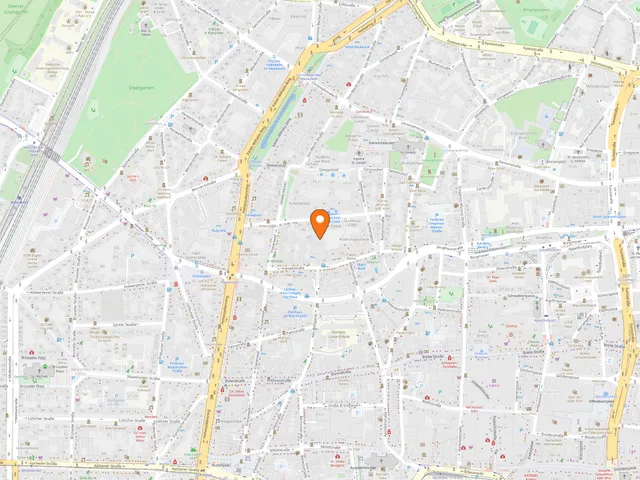
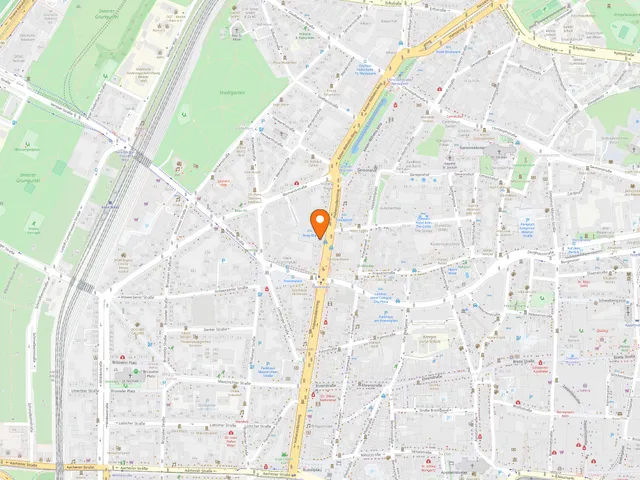
Map
Blue dots: other places nearby — tap to explore.
Address
Friesenstraße 44-48
50670 Köln
You might also like — related or nearby
Comments
- Loading comments…
Sources & links
- Official website
- Wikidata (retrieved 2026-08-11)
- Wikipedia (retrieved 2026-08-11)
Auto-generated, last verified: 2026-08-11
How this page is made
This page draws on open sources — Wikipedia, Wikidata, official websites and the city’s open data. Every statement is checked against the sources linked here, and pages are refreshed regularly.
Spotted a mistake anyway? Tell us below — we read every submission.