Ferdinand Franz Wallraf
Cologne priest and scholar whose art collection, left to the city, became the foundation of the Wallraf-Richartz Museum.
Ferdinand Franz Wallraf (1748–1824) was a Cologne priest, scholar, and art collector. The collection he bequeathed to the city formed the basis of several Cologne museums.
Source: Wikipedia
At a Glance
- Dates
- born 20 July 1748 in Cologne, died 18 March 1824 there
- Background
- son of a Cologne master tailor
- Activities
- priest, scholar (botany, natural history, aesthetics), rector of the old University of Cologne (1793–1796)
- Legacy
- collection of Roman excavation finds, medieval paintings, manuscripts, coins, fossils, and weapons
- Burial site
- Melaten Cemetery in Cologne
- Honor
- in 1823 awarded an oak-leaf crown as a civic honor; later dubbed the "Erzbürger" (arch-citizen)
Career
Wallraf attended the Gymnasium Montanum from 1760 and graduated as Magister artium in 1767. He was ordained a priest in 1772 and later studied medicine. In 1784 he received a professorship at the University of Cologne, linked to a canonry at St. Maria im Kapitol. After the French occupation abolished the university in 1798, he taught at its successor, the Central School.
The Collection
As Conservateur des monuments, Wallraf preserved archaeological finds and artworks. In his third will, dated 9 May 1818, he named the City of Cologne as universal heir, on condition that the holdings remain permanently in the city; the city accepted the bequest on 16 May 1818. From 1827 to 1860 the collections were displayed in the "Wallrafianum" on Trankgasse. Most of the collection is now housed in the Wallraf-Richartz Museum, while his library of roughly 14,000 prints resides at the University and City Library of Cologne.
Traces in Cologne
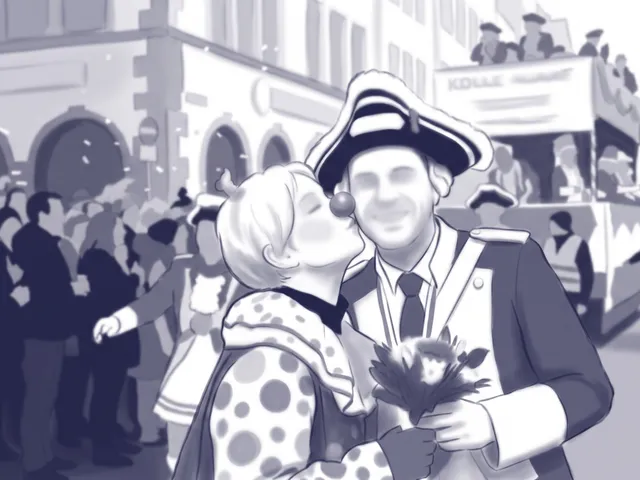
In 1809 Wallraf was commissioned to design Melaten Cemetery, taking inspiration from Paris's Père-Lachaise and envisioning it as a public green space as well. In 1812 he was tasked with proposing new French names for Cologne's streets. Around 1809 he founded the "Olympic Society," devoted to art, literature, and Cologne humor and dialect, and in 1823 he contributed to reforming Cologne's carnival traditions.
Monuments
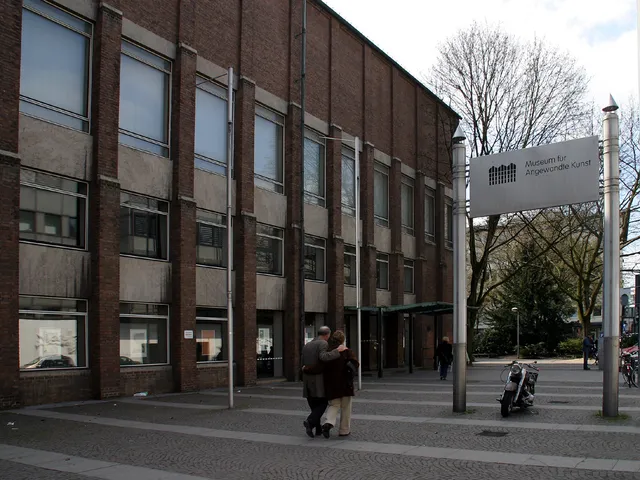
In front of the Museum of Applied Arts, the former site of the Wallraf-Richartz Museum, stands a bronze seated statue of Wallraf by Wilhelm Albermann, unveiled in 1900.
You might also like — related or nearby

Comments
- Loading comments…
Sources & links
Auto-generated, last verified: 2026-07-02
How this page is made
This page draws on open sources — Wikipedia, Wikidata, official websites and the city’s open data. Every statement is checked against the sources linked here, and pages are refreshed regularly.
Spotted a mistake anyway? Tell us below — we read every submission.