Karl-Schwering-Platz
An elongated green space in Cologne's Lindenthal district, designed in 1925 by garden director Fritz Encke – featuring a sunken garden, rose beds, water basins and a children's playground along the Lindenthal Canal.
since 1925
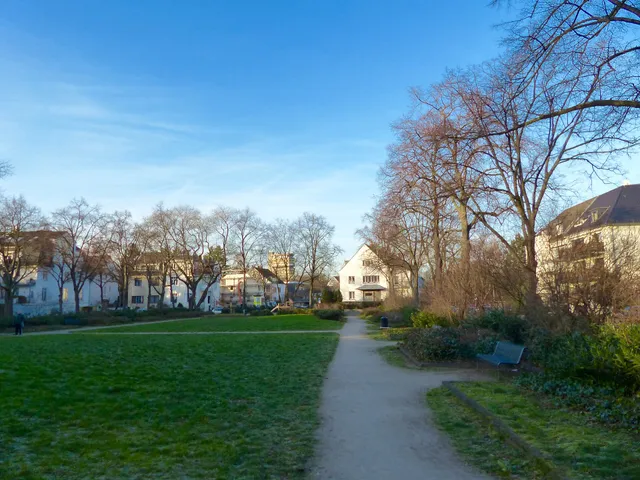
Karl-Schwering-Platz is a narrow, elongated green space in Cologne's Lindenthal district. Laid out in 1925 by garden director Fritz Encke, it forms part of the green corridor running along the Lindenthal Canal.
At a glance
- District
- Lindenthal
- Created
- 1925, designed by Fritz Encke
- Named after
- Karl Schwering (1846–1925), former head of the Apostelgymnasium
- Access
- via Dürener Straße
- Features
- sunken garden with rose beds, circular basin, water-lily pond, children's playground
- Sculptures
- a centaur and a naiad in shell limestone (since 1930)
The square is named after Karl Schwering (1846–1925), the former head of the neighbouring Apostelgymnasium.
Things to do here
- Stroll past the sunken garden with rose beds and water-lily pond
- Discover the 1930 shell-limestone sculptures of a centaur and a naiad
- Visit the playground with climbing equipment with children
- Climbing ↗
Age comparison
Age compared with other places in Cologne.
Location
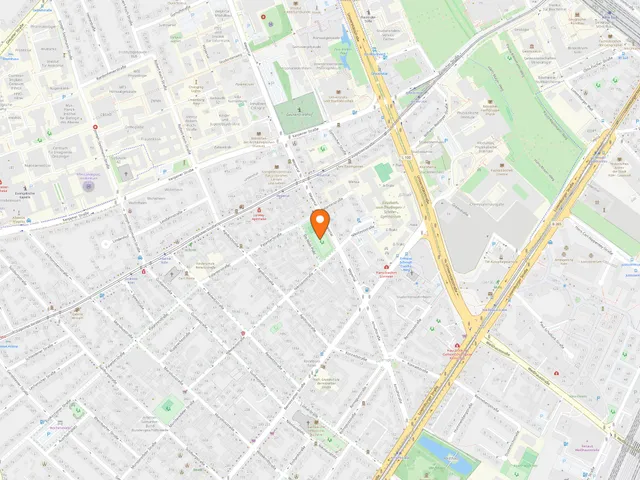
The grounds link the two sections of the Lindenthal Canal – the Clarenbach and the Rautenstrauch canals – ending at Dürener Straße, from where they are accessed. Originally the name referred only to the strip of green between Dürener Straße and Frangenheim/Biggestraße. Today it also includes the playground, the water basin on the Rautenstrauch Canal and the sunken garden west of Brucknerstraße. The wider green corridor was created to connect the Inner Green Belt at the Aachener Weiher with the city forest in the Outer Green Belt – an initiative of the then mayor Konrad Adenauer.
Design
At Karl-Schwering-Platz the canal is shifted about 200 metres to the south around the grounds of the Convent of the Good Shepherd and continues as the Rautenstrauch Canal. It begins here with a circular basin enclosed by a wrought-iron railing. On either side stand two shell-limestone sculptures by Eduard Schmitz, made from designs by Georg Grasegger and installed in 1930: a centaur and a naiad. North of the basin lies a sunken garden with rose beds, benches and a central water-lily pond, framed by a low wall with shrubs. To the south are a children's playground with climbing equipment and a small square planted with a ring of poplars.
History and today
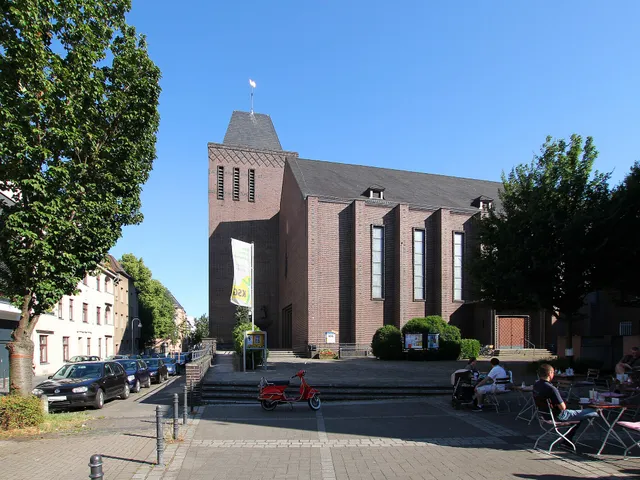
The green space was created alongside the canal on the basis of Fritz Schumacher's master development plan (1920–1923). By the early 21st century it had become overgrown and partly derelict. With support from the Cologne Green Foundation – founded on the initiative of Paul Bauwens-Adenauer and Patrick Adenauer – and the city's parks department, the grounds were gradually restored. In 2011 the rose garden was repaired thanks to a private donation, and in 2015 the damaged paths in the sunken garden were renewed. Institutions around the square include the Apostelgymnasium, the Liebfrauenschule and the Church of Christ's Resurrection.
Timeline
- 1925Fritz Encke designs the green space alongside the construction of the Lindenthal Canal
- 1930The shell-limestone sculptures of a centaur and a naiad by Eduard Schmitz, after Georg Grasegger, are installed
- 2011The rose garden is restored with the help of a private donation
- 2015The damaged paths in the sunken garden are renewed
Gallery
Map
Blue dots: other places nearby — tap to explore.
Address
Karl-Schwering-Platz
50931 Köln
Hours
So: 00:00–24:00
You might also like — related or nearby
Comments
- Loading comments…
Sources & links
Auto-generated, last verified: 2026-07-04
How this page is made
This page draws on open sources — Wikipedia, Wikidata, official websites and the city’s open data. Every statement is checked against the sources linked here, and pages are refreshed regularly.
Spotted a mistake anyway? Tell us below — we read every submission.