St. Joseph Church (Cologne-Ehrenfeld)
St. Joseph is a Roman Catholic parish church on Venloer Straße in Cologne-Ehrenfeld. Originally a neo-Gothic brick basilica by Vincenz Statz, it was rebuilt in the 1950s after wartime destruction.
since 1872
St. Joseph is a Roman Catholic parish church on Venloer Straße in Cologne-Ehrenfeld, close to the district's market square and the Mariä Himmelfahrt chapel. It belongs to the Ehrenfeld pastoral area within the Archdiocese of Cologne.
Source: Wikipedia
At a Glance
- District
- Cologne-Ehrenfeld, Venloer Straße (framed by Klarastraße and Wahlenstraße)
- Built
- 1872–1875
- Architects
- Vincenz Statz (original), Otto Bongartz (reconstruction)
- Style
- neo-Gothic brick basilica, three-aisled
- Tower
- 60-metre square tower with a pyramid spire
- Destruction
- 31 May 1942 during an air raid
- Reconstruction
- 1949–1955
- Heritage status
- listed since 1 June 1982, monument no. 1,040
The first three bells of 1875 were cast from melted-down cannons. The organ planned in 1912/13 was never finished because the organ builder Schaeben was drafted into the military and did not return from the war.
Things to do here
- View the chancel and side windows designed by Jan Schoenaker
- Discover the late-Gothic Anna Selbdritt sculpture from the 15th century
- See the three altar paintings from the Mariä Himmelfahrt chapel in the eastern aisle
- Look up at the 60-metre square tower from Venloer Straße
Age comparison
Age compared with other places in Cologne.
History
The church was built in 1872–1875 to designs by Vincenz Statz as a three-aisled neo-Gothic brick basilica without a transept, combining a tall nave with two low side aisles. Statz, together with Johann and Jakob Wahlen, also donated the building plot. The first service was held at Christmas 1873 while the interior was still provisional, and Archbishop Paulus Melchers consecrated the church to the patronage of Saint Joseph on 11 April 1875. That same year the church received three bells cast by the A. Rodenkirchen firm in Deutz from melted-down cannons, followed by its first organ in 1884.
Alterations in 1912/13 added a transept-like extension and replaced the low façade tower with today's 60-metre square tower topped by a slate-covered pyramid spire. The 1884 organ had to be dismantled for this work, but its replacement remained unfinished because the organ builder Schaeben was called up for military service and did not return from the war. After a stopgap with a borrowed organ, the parish obtained a new instrument of its own in 1926.
On 31 May 1942 an air raid destroyed the church except for its tower. Reconstruction followed in 1949–1955 to plans by Otto Bongartz. In place of the ruined vault, the building received a flat wooden ceiling painted with geometric figures; the exterior walls were rendered while leaving the ashlar detailing visible. A new organ with 38 stops and three manuals was built by the Gebr. Krell firm of Duderstadt in 1957. Coloured glass windows were added in 1958 and four new bells in 1960. Following the liturgical reform of the Second Vatican Council, the chancel and the building's colour scheme were redesigned in 1981/82.
Furnishings
The windows designed by Jan Schoenaker show the Nativity, the Resurrection of Christ and the Descent of the Holy Spirit in the chancel. The western side window is devoted to Saint Joseph and the life of Saint Cecilia, the eastern one to the expulsion from Paradise and Joseph with Jesus at the carpenter's bench.
The western aisle holds a figure of the Mother of God on the site of a former Marian altar. The eastern aisle contains, alongside the font, a late-Gothic sculpture of the Anna Selbdritt from the 15th century and three altar paintings from the former high altar of the Mariä Himmelfahrt chapel. They depict Saint Helena, the founder of St. Gereon; Saint Gertrude, abbess of Nivelles; and Saint Anne; a fourth painting of Saint Cecilia no longer survives. The tower room is furnished with figures of Saints Joseph, Jude Thaddeus and Anthony, together with a Fatima Madonna and an image of Our Lady of Perpetual Help.
Bells
The present bells were cast in bronze in 1960 by the Petit & Gebr. Edelbrock firm in Gescher. Their tuning follows the Salve Regina bell motif.
Location
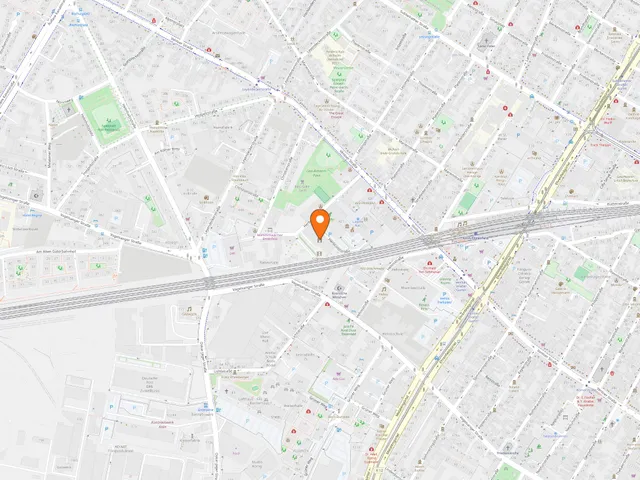
St. Joseph stands on Venloer Straße near the Ehrenfeld market square and the Mariä Himmelfahrt chapel, bordered on the sides by Klarastraße and Wahlenstraße. Its parish belongs, together with St. Mechtern, St. Peter, St. Anna and St. Barbara, to the Ehrenfeld pastoral area in the Cologne city deanery.
Gallery
Map
Blue dots: other places nearby — tap to explore.
You might also like — related or nearby
Comments
- Loading comments…
Sources & links
Auto-generated, last verified: 2026-08-29
How this page is made
This page draws on open sources — Wikipedia, Wikidata, official websites and the city’s open data. Every statement is checked against the sources linked here, and pages are refreshed regularly.
Spotted a mistake anyway? Tell us below — we read every submission.