Ursulinenkirche St. Corpus Christi
Baroque former convent church of the Cologne Ursulines, built in Venetian style by Matteo Alberti — now a school chapel and concert venue.
The Ursulinenkirche St. Corpus Christi (Corpus Christi Church) in Cologne is the baroque former convent church of the Ursuline Order, serving today as the chapel of the neighbouring Ursuline School.
Source: Wikipedia
At a Glance
- Type
- Former convent church, now school chapel
- Location
- Altstadt-Nord, city district Innenstadt
- Architect
- Matteo Alberti
- Foundation stone
- 1709, consecrated 1712
- Style
- Baroque in the Venetian tradition
- Listed
- Protected monument in North Rhine-Westphalia
- Organ
- 19 stops, two manuals and pedal
The Ursuline Church is considered the most significant Baroque church in Cologne built in the Venetian style in the 18th century – designed by Matteo Alberti, who drew inspiration from the hall churches of his Venetian homeland, despite Cologne being over 1,000 kilometers from Venice.
Age comparison
Age compared with other places in Cologne.
History
The story begins in 1639 with the first Ursuline convent in Germany, whose buildings served as a boarding school and girls' academy. In 1706, Matteo Alberti was commissioned to design the church. The foundation stone was laid on 30 April 1709, and the consecration followed on 16 October 1712, performed by auxiliary bishop Johann Werner von Veyder.
Architecture
Alberti drew on the hall churches of his Venetian homeland for both the design and detailing. The barrel-vaulted nave features a south façade flanked by towers and a semicircular north apse. The main façade is articulated by an Ionic pilaster order with a segmental pediment; two angel figures adoring the Eucharist make direct reference to the church's name. Inside, Ionic pilasters rise from tall pedestals.
Wartime Destruction and Rebuilding
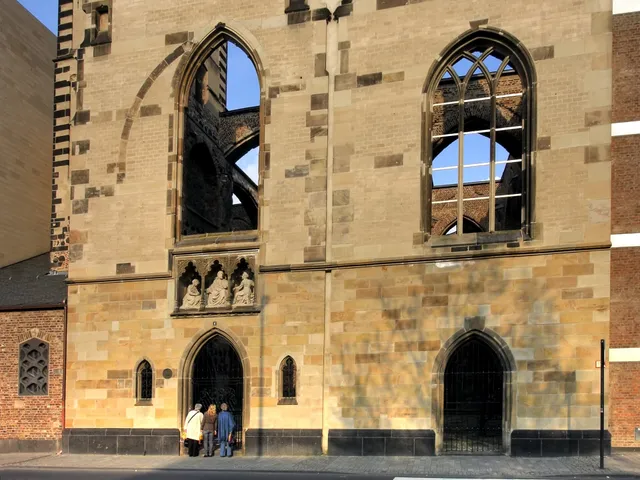
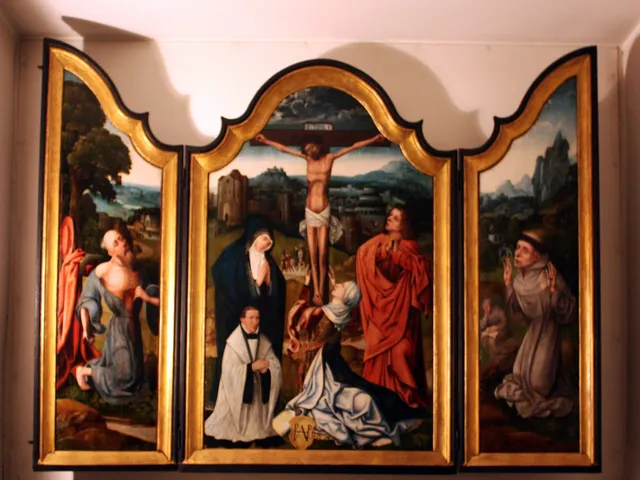
Bombs in the Second World War struck the church and convent buildings severely. The roof, vaults, and interior furnishings were entirely lost; of the baroque decoration, only the stucco relief on the triumphal arch survived largely intact. Pupils and nuns organised fundraising bazaars to support the restoration effort. Rebuilding stretched until 1963, and after the Archdiocese of Cologne took over the property, a further phased restoration followed between 1997 and 2007. In 2003 the church received the baroque high altar of 1703, salvaged from the war-destroyed parish of St. Kolumba.
Today
Since the installation of the Jürgen Ahrend organ in 2002, the neighbouring Hochschule für Musik und Theater Köln has also used the space for practice and concerts. The instrument, built in the North German baroque tradition, has 19 stops across two manuals and pedal.
Timeline
- 1639Ursulines establish their first settlement in Germany in Cologne
- 1706Matteo Alberti selected as architect for the church
- 1709Foundation stone laid on 30 April 1709
- 1712Church and altars consecrated by auxiliary bishop Johann Werner von Veyder (16 October)
- 1963Completion of post-war reconstruction
- 1997–2007Renovation by the Archdiocese of Cologne in several stages
- 2002Installation of the organ by Jürgen Ahrend
- 2003High altar (1703) from the destroyed St. Kolumba church installed
Gallery
Map
Blue dots: other places nearby — tap to explore.
You might also like
Comments
- Loading comments…
Sources & links
Auto-generated, last verified: 2026-06-27