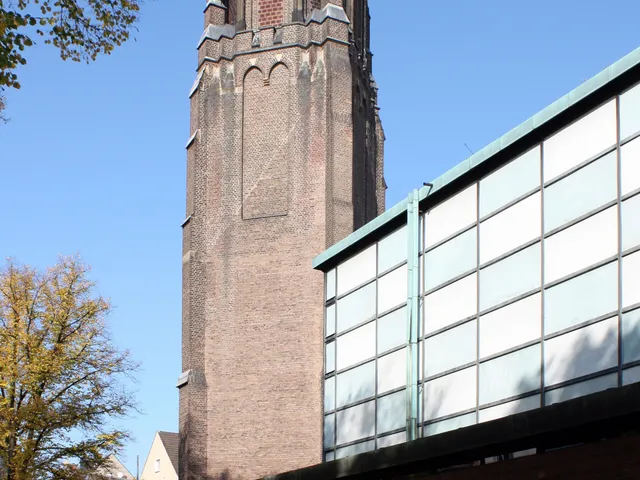
Post-war architecture
10 places in Cologne
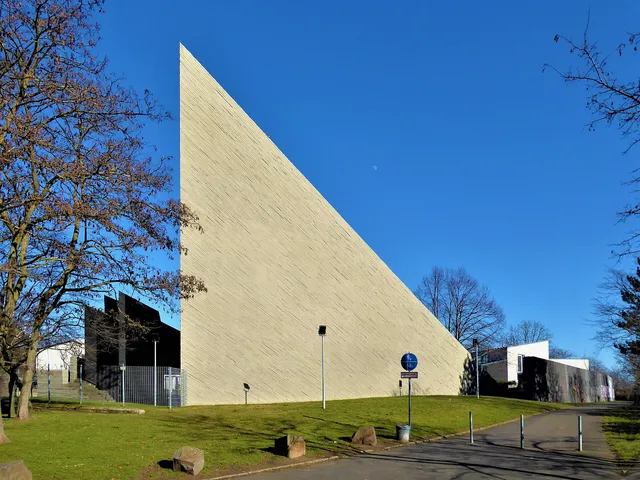
Auferstehungskirche (Cologne-Buchforst)
since 1965Listed Brutalist church from 1968 with a striking tetrahedral form, now operating as the 'Kulturkirche Ost' cultural venue for readings, music, and cabaret.
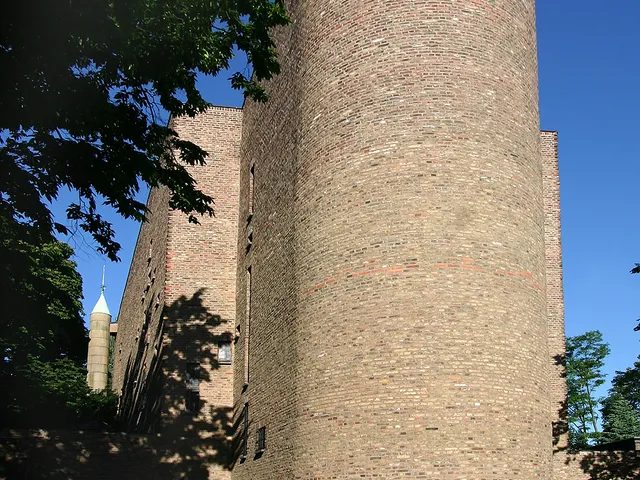
Neu St. Alban
since 1958Post-war church in the Stadtgarten built from rubble bricks of the destroyed Cologne Opera, with a pentagonal floor plan inspired by Le Corbusier.
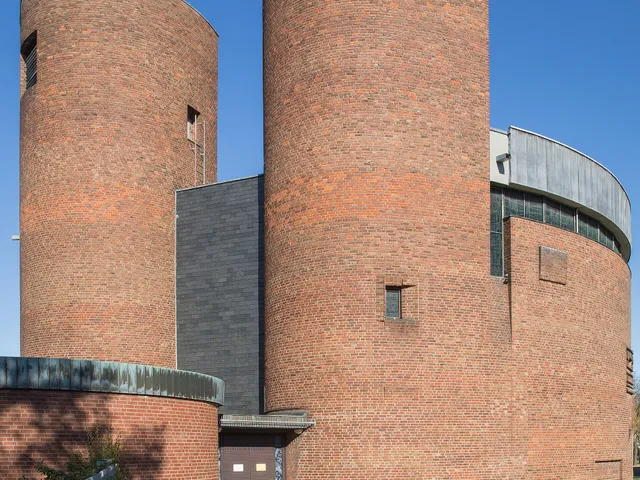
St. Franziskus
since 1957Catholic parish church in Köln-Bilderstöckchen, built by Hans Schilling as a round red-brick structure between 1957 and 1961 and listed as a historic monument since 2003.
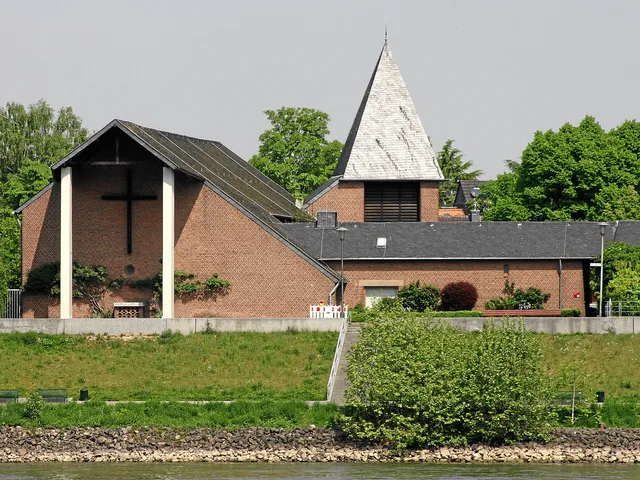
St. Georg (Cologne-Weiß)
since 1953A listed Catholic hall church in Cologne's Weiß district, consecrated in 1954, whose outdoor altar faces directly toward the Rhine.
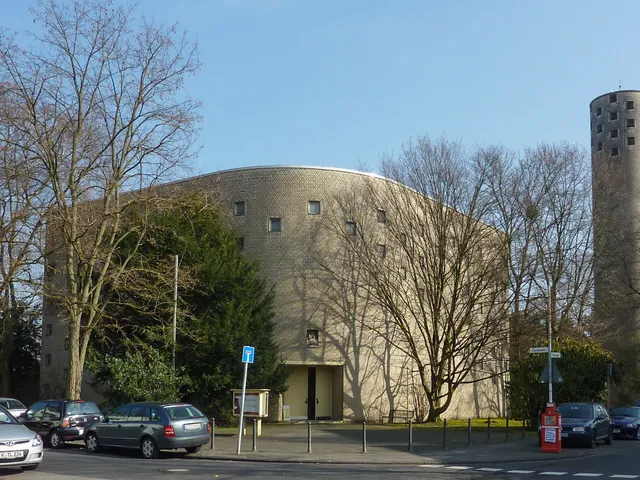 © File:St Hildegard in der Au (Köln-Nippes)1.JPG : Chris06 derivative work: Elya · CC0
St. Hildegard in der Au
since 1961Former Catholic parish church in Cologne-Nippes, built 1960/61, deconsecrated since 2020 and slated for probable demolition.
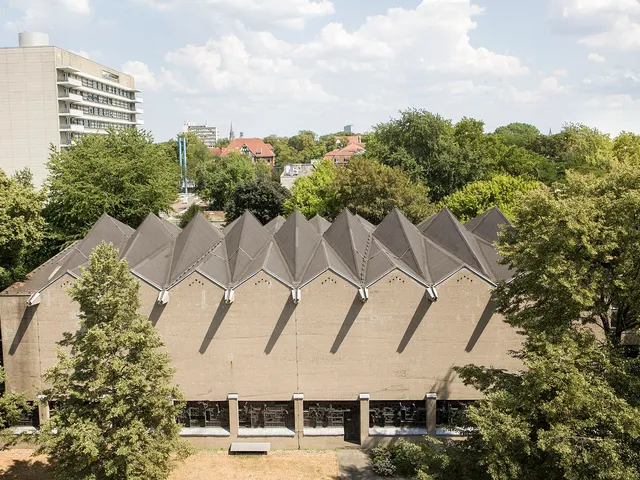
St. Johannes der Täufer
since 1958Listed clinic church of the University Hospital Cologne in Lindenthal, built 1962–1965 by Gottfried Böhm from exposed concrete and connected to the hospital buildings via an underground passage.
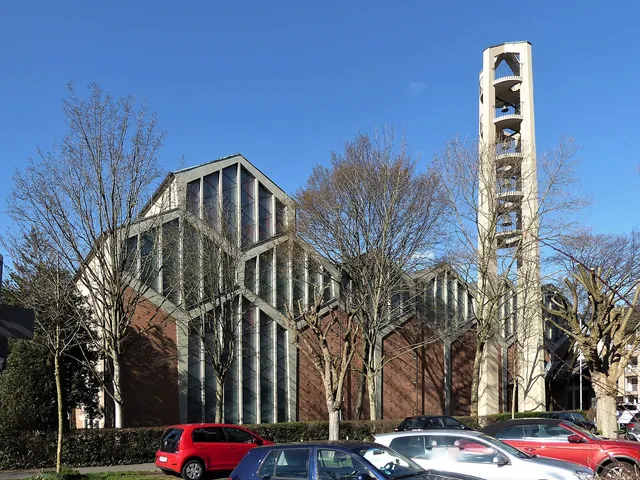
St. Joseph (Braunsfeld)
since 1952Roman Catholic post-war church in Köln-Braunsfeld, built between 1952 and 1954 to designs by Rudolf Schwarz and Joseph Bernard, and listed as a protected monument since 1999.
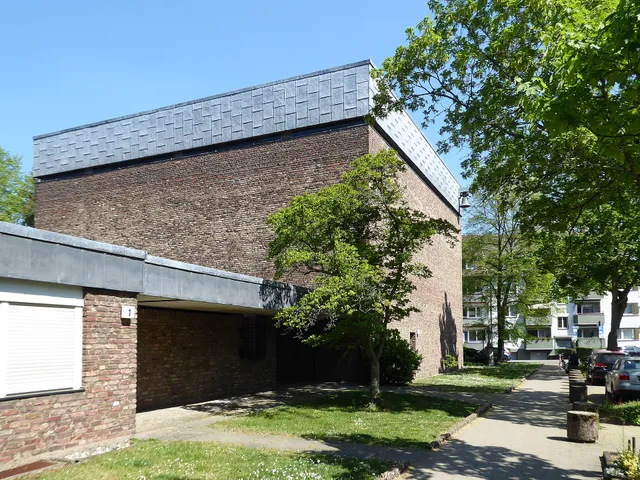
St. Laurentius (Cologne-Lindenthal)
since 1961A plain brick cube by Emil Steffann in Lindenthal, deconsecrated in 2019 and set to become a university lecture hall. Built in 1961/62, it counts as a notable example of Cologne's post-war architecture.
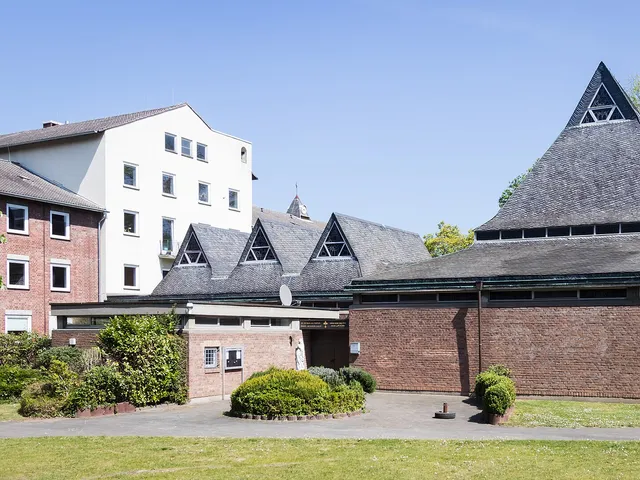
St. Petrus und Paulus (Vom Guten Hirten)
since 1962Built between 1962 and 1964 to designs by Fritz Schaller in Cologne's Lindenthal district, this church began as a convent church for the Sisters of the Good Shepherd and has served the Syriac Orthodox community as St. Petrus und Paulus since 1991.