Gereon-Kaserne
Bundeswehr barracks in Cologne housing the military leadership assessment centre — renamed from Mudra-Kaserne in 2022.
The Gereon-Kaserne in Cologne is home to the Bundeswehr's Assessment Centre for Leadership Personnel. Its name honours Gereon of Cologne, one of the city's patron saints and the patron saint of soldiers.
Source: Wikipedia
At a Glance
- Type
- Bundeswehr military barracks
- Location
- Cologne-Westhoven, Porz district
- Built
- 1937–January 1938
- Former name
- Mudra-Kaserne (until 2 November 2022)
- Current use
- Assessment Centre for Leadership Personnel; Federal Office for Bundeswehr Personnel Management
After World War II, the barracks were completely looted by the local population, and women resorted to prostitution in the blown-up remnants of the ammunition bunkers – before Belgian pioneers moved in in 1951 and renamed it the Nieuwpoort Barracks.
Age comparison
Age compared with other places in Cologne.
History
The site was originally planned as a Wehrmacht barracks for a partially motorised pioneer battalion, named after Infantry General Bruno von Mudra, who had commanded the 1st Westphalian Pioneer Battalion No. 7 in Cologne-Deutz from 1893 to 1898. The complex included Fort IX with a riding ground and stables. After the war, the buildings were looted by the local population, and the ruins became shelter for displaced persons from the east, bombing victims from the west, and the homeless, living in appalling conditions, before they were relocated to a residential area between Porz and Urbach.
Belgian Years and Long Vacancy
From 1951 to 1965, the Belgian 5th Pioneer Battalion used the site, which was then known as Nieuwpoort-Kaserne. The grounds were subsequently abandoned — the Bundeswehr had earmarked them for Heavy Pioneer Battalion 719, but that unit was relocated to Cologne-Longerich. The site sat empty for nine years until a renovation costing around 8 million Deutschmarks made it usable again in 1974. The Bundeswehr's Central Personnel Records Office moved in, consolidating some 2,300 staff who had previously been spread across ten rented buildings in Cologne.
From Personnel Records to Personnel Management
The Central Personnel Records Office was succeeded in 1997 by the Bundeswehr Personnel Office, which operated until 2013. Its functions were then absorbed by the Federal Office for Bundeswehr Personnel Management, which continues to occupy the barracks today.
The 2022 Renaming
On 2 November 2022, the site was officially renamed Gereon-Kaserne. Bruno von Mudra no longer met the standards for honourable tradition set out in the 2018 Tradition Decree. According to legend, Gereon of Cologne refused, on grounds of conscience, to obey a manifestly unjust order and paid for it with his life — his duty-bound conscience and courage are held up as a model for Bundeswehr officers.
Good to Know
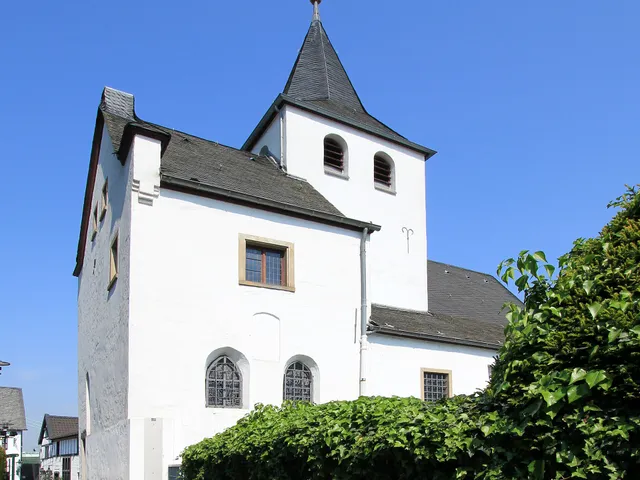
A chapel was built on the grounds in 1953, serving Belgian soldiers and their families as well as Baltic and German residents of the nearby Wasserturm settlement. It no longer forms part of the barracks and today serves a Russian Orthodox parish.
Timeline
- 1937–1938Barracks built (completed 23 January 1938) for a Wehrmacht pioneer battalion
- 1951Belgian 5th Pioneer Battalion takes over; renamed Nieuwpoort Barracks
- 1953Chapel built on the grounds for Belgian soldiers, Baltic Germans and civilians
- 1965Belgian battalion leaves; nine years of vacancy begin
- 1974Renovation for approx. 8 million DM; Federal Armed Forces Personnel Office moves in
- 1997Bundeswehr Personnel Office takes over (from 1 July 1997)
- 2013Federal Office for Personnel Management takes over (from 1 May 2013)
- 2022Renamed Gereon Barracks on 2 November 2022 under the 2018 Tradition Decree
Map
Blue dots: other places nearby — tap to explore.
You might also like
Comments
- Loading comments…
Sources & links
Auto-generated, last verified: 2026-06-26