Cologne Zoo
Founded in 1860 in the Riehl district, Cologne Zoo is Germany's third-oldest zoo — famous for its century-old baboon rock.
The Zoological Garden Cologne is located in the northern district of Riehl, close to the Rhine. Opened in 1860, it ranks as the third-oldest zoo among those still operating in Germany today.
Source: Wikipedia
At a Glance
- Type
- Zoological garden
- Location
- Riehl district, Nippes borough
- Opened
- 22 July 1860
- Animal population
- around 12,000 animals from over 750 species
- Visitors
- over 1.3 million admissions (2019)
- Notable feature
- several listed historic animal houses
Between 1878 and 1932, the Cologne Zoo hosted eight so-called 'human zoos', in which people from non-European cultures – including Inuit, Somali, and Samoans – were exhibited under staged living conditions, sometimes sensationally billed as supposed 'cannibals'.
Age comparison
Age compared with other places in Cologne.
History
At the initiative of Caspar Garthe, the "Actiengesellschaft Zoologischer Garten zu Cöln" was founded in 1858 with a share capital of 100,000 thalers. The company acquired land in Riehl, then part of the municipality of Longerich. The zoo's first director, Heinrich Bodinus, moved into the neoclassical director's villa built in 1859/60 — the oldest surviving residential building in both the zoo and the Riehl district. Two world wars and the Great Depression cost the zoo much of its animal stock and its independence; the city took a majority stake in 1937.
Historic Architecture
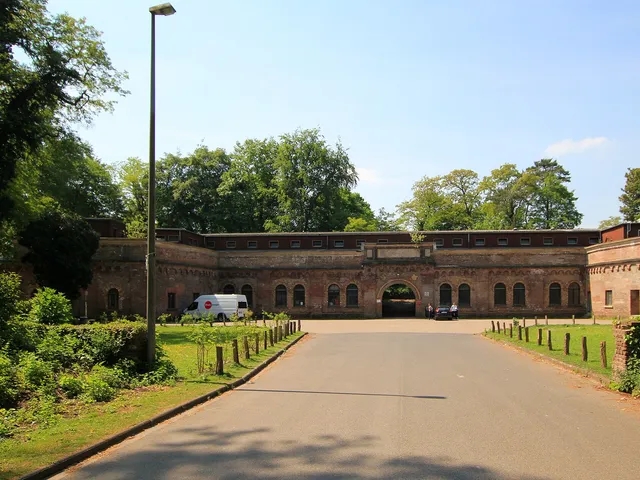
The zoo's earliest enclosures were built in a Moorish architectural style. Surviving from this era is the Giraffe and Antelope House, designed by Josef Felten and erected in 1863, later expanded in 1874 with references to Indian temple architecture to serve as the Elephant House until the new Elephant Park opened in 2004. Still in use as enclosures today are the cattle houses built in 1884 in a Swiss chalet style, the sea lion rock from 1887, and the bird house opened in 1899, inspired by Russian Orthodox churches. These buildings are all listed monuments.
The Baboon Rock
Inaugurated in 1914, the roughly ten-metre-high Baboon Rock followed the cage-free presentation pioneered by Carl Hagenbeck at his Hamburg animal park in 1907. It was designed by Max Stirn on behalf of zoo director Ludwig Wunderlich. Home to a troop of baboons, the rock has been one of the zoo's signature attractions for over a hundred years.
Worth Knowing
Between 1878 and 1932, Cologne Zoo hosted eight so-called "human zoos" (Völkerschauen), in which people from non-European regions were put on public display under staged living conditions.
Timeline
- 1858Foundation of the 'Actiengesellschaft Zoologischer Garten zu Cöln'
- 1860Zoo opens on 22 July; Heinrich Bodinus appointed first director
- 1863Construction of giraffe and antelope house (Moorish style, arch. Josef Felten)
- 1874Extended to elephant house with Indian temple architectural elements
- 1884Cattle houses built in Swiss log-cabin style (Alfred Müller)
- 1899Bird house opens, inspired by Russian church architecture
- 1914Inauguration of the cage-free monkey rock (designed by Max Stirn)
- 1937City of Cologne takes majority stake after persistent financial difficulties
Gallery
Map
Blue dots: other places nearby — tap to explore.
You might also like

Comments
- Loading comments…
Sources & links
- Official Instagram (@koelnerzoo)
- Wikidata (retrieved 2026-06-26)
- Wikipedia (retrieved 2026-06-26)
Auto-generated, last verified: 2026-06-26