Our Lady of Sorrows (Cologne-Lindweiler)
Branch church in Cologne-Lindweiler whose organ traveled from the Netherlands via Bonn before reaching Cologne.
For more than ten years, the Catholic parish of Lindweiler held its services in a temporary chapel before its own church building was finally realized.
Source: Wikipedia
At a Glance
- Type
- Roman Catholic branch church
- Location
- Lindweiler district, Chorweiler borough, Cologne
- Consecration
- 28 June 1981
- Architect
- Wilhelm Dahmen
- Patronage
- Mater Dolorosa
- Construction
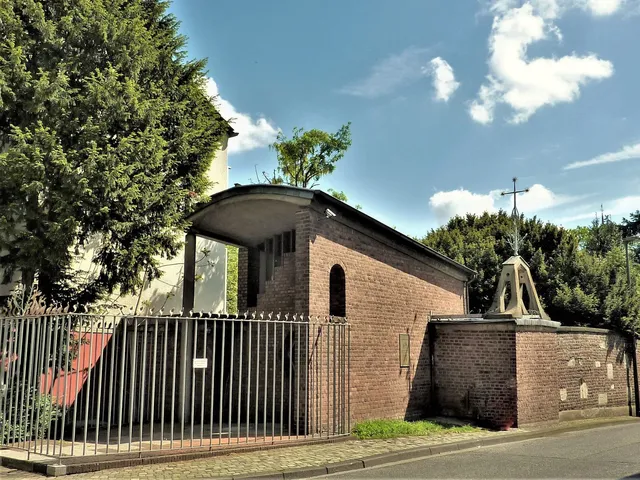
- Unplastered brick building on a polygonal floor plan
- Organ
- 18 stops across two manuals and pedal
The church's organ is a real world traveler: built in 1960 in the Netherlands, it first stood in a Reformed church in Schiedam, moved to Bonn-Limperich in 1974, and only found its way to Cologne-Lindweiler in 2006.
History
In the years after the Second World War, Cologne expanded northward, and the district of Lindweiler took shape in what had until then been rural surroundings. Since the Middle Ages, this area had belonged ecclesiastically to the parish of St. Dionysius in Longerich, whose origins date back to 1080. With the construction of large apartment blocks from the 1960s onward, the desire for a church of its own grew. For his design, Wilhelm Dahmen drew on a scaled-down version of his concept for the Church of St. John the Baptist in Monheim, completed in 1978.
Architecture and Furnishings
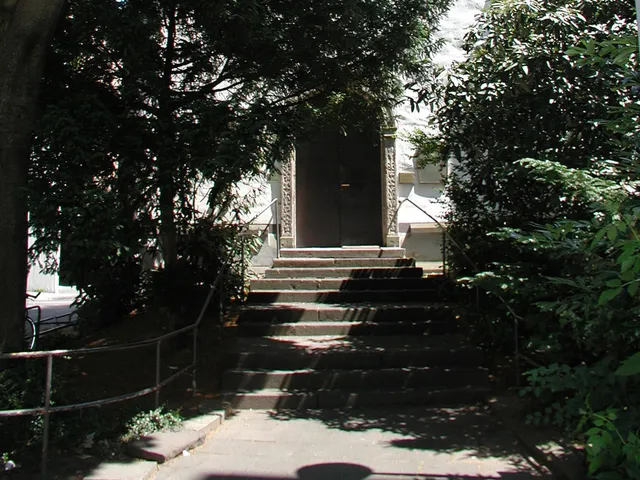
Both outside and inside, the building presents itself as unplastered brick masonry on a polygonal floor plan. The altar, made of basalt stone, contains relics of Saint Matthias that had come to the Longerich parish from Trier. The tabernacle was created by the Aachen sculptor Klaus Iserlohe. Bodo Schramm designed new stained-glass windows in 2002, while the abstract glass artwork on the outer door was made by Karl-Josef Schneider around 1990. The Stations of the Cross consist of wooden relief images passed down from a former monastery chapel in Worringen.
The Organ
The organ was built in 1960 by the Dutch firm Verschueren Orgelbouw for the Reformed Zuiderkerk in Schiedam, Netherlands. In 1974 it moved to Heilig Kreuz in Bonn-Limperich, where Verschueren expanded it and placed it in a new case. After being sold again in 2006, the firm Weyland-Orgelbau reworked the instrument and installed it in Cologne. It now comprises 18 stops across two manuals and pedal, supplemented by three pedal extensions.
Timeline
- 1080First recorded reference of the parish of St. Dionysius in Longerich
- um 1990Glass artwork of the outer door created by Karl-Josef Schneider
- 1960Organ built for the Reformed Zuiderkerk in Schiedam
- 1974Organ sold to Heilig Kreuz in Bonn-Limperich and expanded
- 1978Reference church St. Johannes der Täufer in Monheim completed
- 1981Consecration of the church Schmerzhafte Mutter Maria on 28 June
- 2002New window glazing by Bodo Schramm installed
- 2006Organ resold to Cologne and reinstalled
Gallery
Map
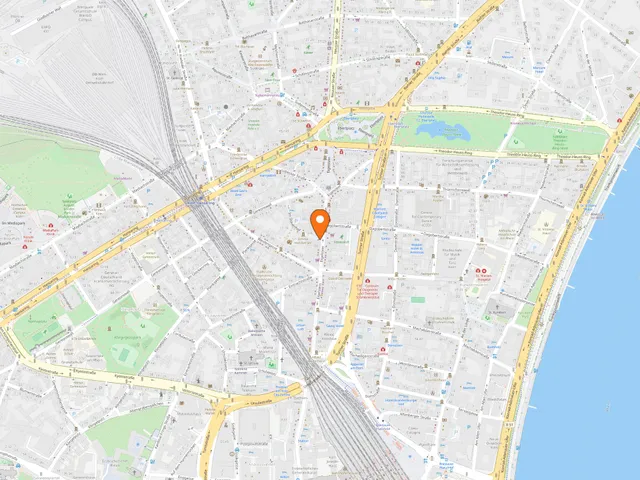
Blue dots: other places nearby — tap to explore.
You might also like — related or nearby
Comments
- Loading comments…
Sources & links
Auto-generated, last verified: 2026-09-05
How this page is made
This page draws on open sources — Wikipedia, Wikidata, official websites and the city’s open data. Every statement is checked against the sources linked here, and pages are refreshed regularly.
Spotted a mistake anyway? Tell us below — we read every submission.