Niehler Hafen
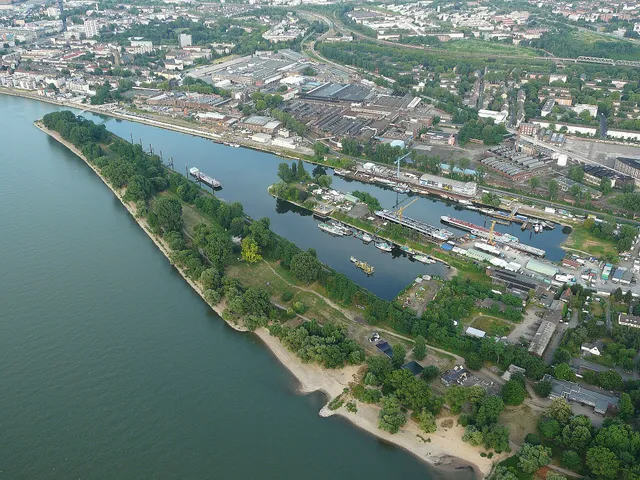
Largest of Cologne's six cargo ports by area – in 1929, a catapult plane carrying overseas mail from the steamer “Bremen” landed here.
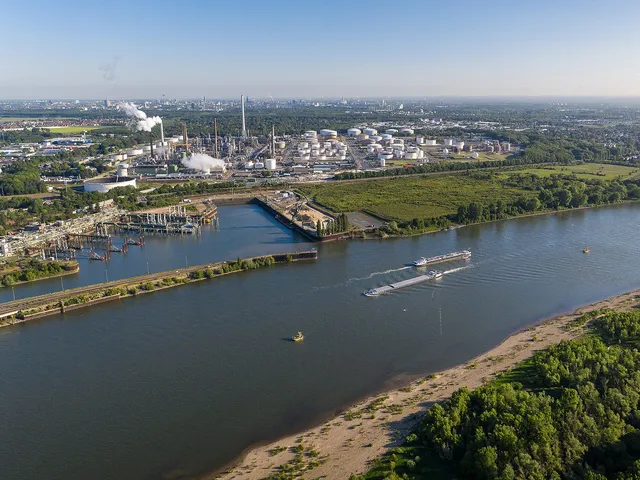
The port in Cologne's Niehl district is operated by RheinCargo. Its entrance opens onto the left bank of the Lower Rhine at kilometer 695.8.
Source: Wikipedia
At a Glance
- Type
- Cargo port, also known as “Hafen Niehl I”
- Location
- Niehl district, Nippes borough
- Total area
- 1.4 million m², of which 472,700 m² is water
- Harbor basins
- Four, numbered by construction period, plus Basin 4a at the pier head
- First stage of construction
- Completed by 1925
- Throughput in 2011
- Around 514,000 TEU, roughly 2.1 million tonnes in total
- For pedestrians and cyclists
- Bridge over the harbor entrance since 1986, part of the Rhine Cycle Route (EV15)
On 19 December 1929, the first catapult aircraft (a Heinkel HE 12), launched from the ocean liner Bremen, landed at the Niehl harbour to deliver mail sacks bound for Germany ahead of the ship; the mail was then distributed nationwide from Butzweilerhof airport.
Airmail from the Ocean Liner
On December 19, 1929, the first catapult aircraft landed at the Niehl port: a Heinkel HE 12 named “New York” (D 1717). The plane was stationed on the steamer “Bremen” and launched from the ship by catapult. It carried mail sacks with items bound for Germany. At the port the mail was re-sorted and then distributed across the country from Cologne Butzweilerhof Airport.
From Relief Project to Major Port
In March 1921, Cologne's city council decided to build the port, and excavation began a year later. By July 1923, more than 3,000 people were working on the site, with a considerable share of their wages paid from unemployment relief funds. Air raids in World War II destroyed the port completely. By 1957 its pre-war condition had been restored, and from 1959 to 1977 Niehl I was expanded into Cologne's largest port by area. The Belgian Forces stationed in Cologne used the port as a fuel depot and for their Rhine flotilla.
Five Quays, Five Roles
At the Westkai, containers, swap bodies and crane-liftable semi-trailers are transferred between ship, rail and truck. The pedestrian bridge runs directly over this terminal and divides the quay into a southern section with crane operations and a northern section without. The Lagerhauskai has a warehouse and a grain silo; an open area there serves as an official parking lot for inland skippers' cars. From the Stapelkai, a scheduled inland-vessel service connects the port with Rotterdam and Antwerp twice a week. The Hansekai is home mainly to freight forwarders.
Technology and Connections
Two of the container cranes reach 36 meters out over the water, allowing two ships moored side by side to be handled at the same time. All quays and the businesses at the pier head are linked to the Deutsche Bahn rail network via HGK freight lines. Three entrance gates serve road traffic.
Timeline
- 1741–1745Construction of the Niehler Damm after the December 1740 flood
- 1921Cologne city council decides on 16 March to build the Niehl harbour
- 1922Earthworks begin in May
- 1925First partial expansion of the harbour completed
- 1929First catapult aircraft (Heinkel HE 12) lands with ship mail on 19 December
- 1948After wartime destruction, quay walls and handling facilities operational again
- 1957Pre-war state regained; current entrance and basin 1 built
- 1959–1977Niehl I expanded into Cologne's largest harbour by area
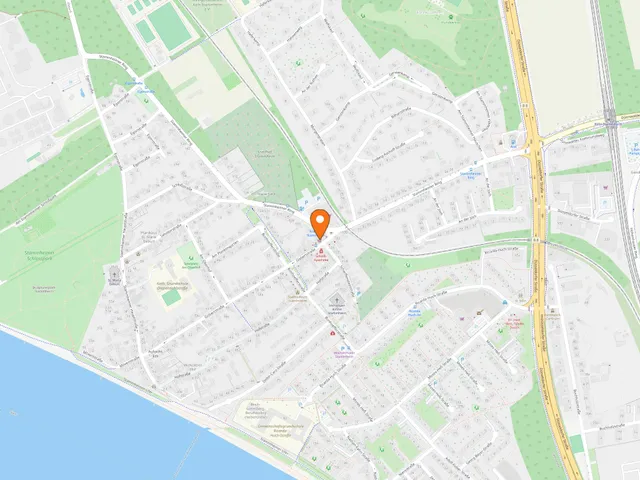
Map
Blue dots: other places nearby — tap to explore.
You might also like — related or nearby
Comments
- Loading comments…
Sources & links
Auto-generated, last verified: 2026-09-28
How this page is made
This page draws on open sources — Wikipedia, Wikidata, official websites and the city’s open data. Every statement is checked against the sources linked here, and pages are refreshed regularly.
Spotted a mistake anyway? Tell us below — we read every submission.