Hafen Niehl II
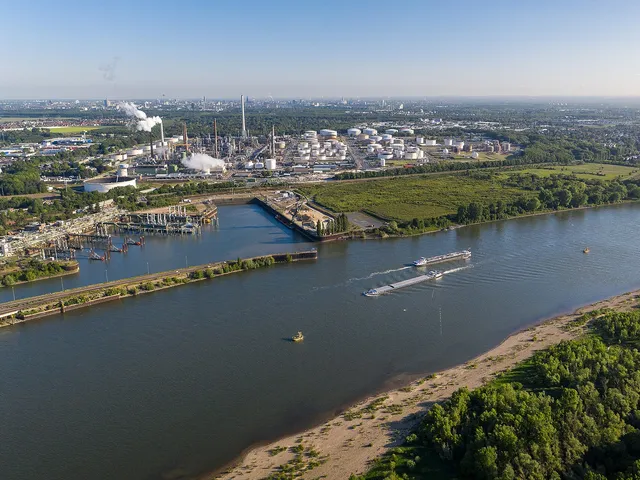
Kölns linksrheinischer Hafen für flüssige und gasförmige Gefahrgüter – am Westufer rollen Ford-Fahrzeuge über eine RoRo-Anlage direkt aufs Schiff.
Der Hafen in Köln-Merkenich wird von der RheinCargo GmbH & Co. KG betrieben, die für alle Kölner Häfen zuständig ist. Sie ist eine Beteiligung der Häfen und Güterverkehr Köln (HGK).
Auf einen Blick
- Type
- Cargo port with a single harbor basin
- Location
- Left bank of the Rhine, river kilometer 699.1, Chorweiler district
- Opened
- 1958
- Area
- 87,900 m² of water, 59,700 m² of land
- Cargo handled
- 412,800 t (as of 2011)
- Access
- Port facilities not open to the public
When the Esso refinery closed in 1985 and the Niehl II oil port lost its biggest customer, the port company built two roll-on/roll-off facilities that same year, used to load car transporters with vehicles from the nearby Ford plant.
History
Oil port Niehl II opened as a port for liquid chemical goods, after Niehl I had already been completed. Its main customers were the Esso refinery and Wacker-Chemie. When the Esso refinery closed in 1985, the port lost its biggest customer. That same year, the port company had two roll-on/roll-off ("RoRo") facilities built, which are used to load car transporters along with vehicles from the nearby Ford plant. The entire port complex was fully renovated in 2006 and 2007.
Hazardous goods and car loading
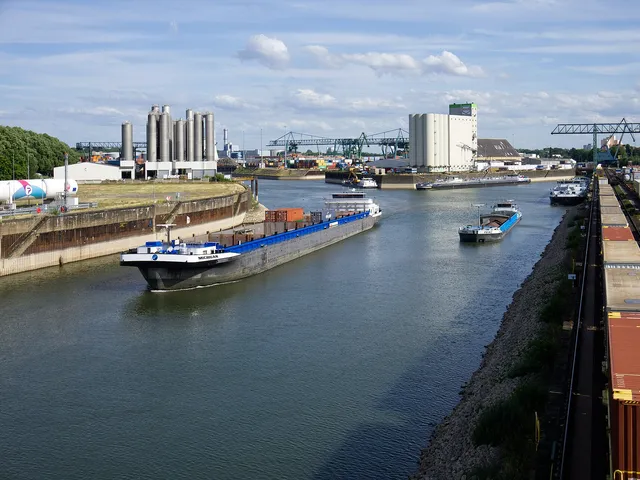
The port has two facilities for handling liquid and gaseous hazardous goods. The RoRo car-loading facility on the west bank is designated for Ford vehicles. The port thus combines the handling of chemical goods with the loading of cars.
Power plant and industrial park
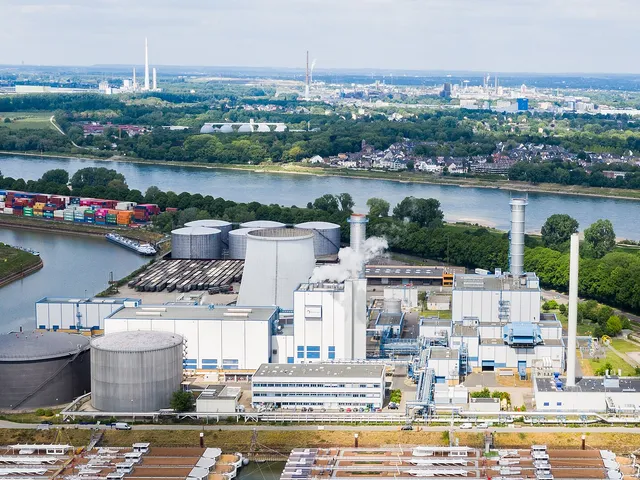
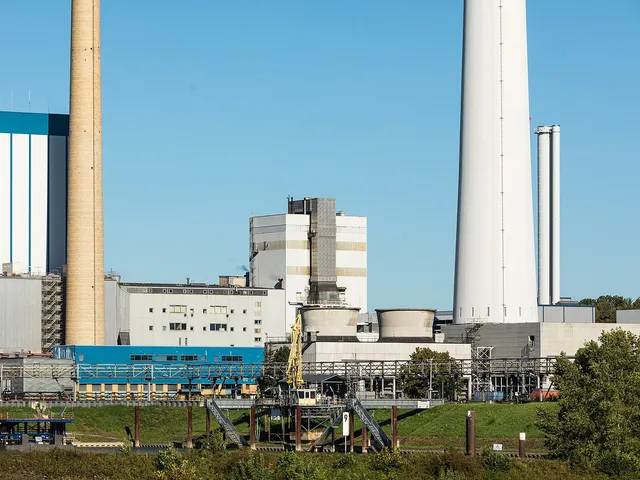
The Köln-Merkenich combined heat and power plant, now part of RheinEnergie, was built on the western bank at the same time as the oil port. In its early years it was fired with heavy fuel oil. To the west of the port, on the former Esso refinery site, lies the Industriepark Nord. It has a pipeline connection to the oil port and to the international pipeline network for nitrogen, natural gas, oil and industrial gases such as ethylene and propylene.
Timeline
- 1958Oil port Niehl II opens for liquid chemical goods
- 1985Esso refinery closes, port loses its largest customer
- 1985Two RoRo facilities built for car carriers (Ford vehicles)
- 2006–2007Complete renovation of the port facilities
Gallery
Map
Blue dots: other places nearby — tap to explore.
You might also like — related or nearby
Comments
- Loading comments…
Sources & links
- Official website (retrieved 2026-11-08)
- Wikidata (retrieved 2026-11-08)
- Wikipedia (retrieved 2026-11-08, rev 270116709)
Auto-generated, last verified: 2026-11-08
How this page is made
This page draws on open sources — Wikipedia, Wikidata, official websites and the city’s open data — plus basic place data and photos from Google Maps where a place is listed there. Every statement is checked against the sources linked here, and pages are refreshed regularly.
Spotted a mistake anyway? Tell us below — we read every submission.