Glaub Cutlery Museum
A Cologne specialty museum (1951–1995) housing what was likely one of the world's most extensive cutlery collections — from Stone Age knives to the present day.
The museum grew out of the personal collection of Bodo Glaub, a collector and cutlery dealer who opened a specialty shop in Cologne in 1951 dealing exclusively in cutlery.
Source: Wikipedia
At a Glance
- Type
- Cultural-historical specialty museum (Bodo Glaub Collection)
- Holdings
- Over 1,200 exhibits (as of 1987) from European and non-European countries
- Time span
- From Stone Age knives to modern cutlery, with a focus on the 16th to 18th centuries
- Distinction
- The only private cutlery museum of its kind
- Location
- Cologne, Altstadt-Nord district, Innenstadt borough
- Operating period
- 1951 to 1995
Bodo Glaub, the museum's founder, appeared in 1957 as the Virgin „Bodi" in Cologne's famous carnival trio (Kölner Dreigestirn) – an unusual dual role for the cutlery dealer and collector.
The Collection
The holdings came from both European and non-European countries, ranging from the earliest Stone Age knives to contemporary cutlery, with a particular emphasis on the 16th to 18th centuries. Pieces were shown in rotating themed exhibitions, each accompanied by a short catalogue up until the 1990s. Topics ranged from fish and children's cutlery to travel sets and Art Nouveau flatware.
The Collector
Bodo Glaub was born in Bonn in 1925 and grew up in Cologne. After World War II he opened his shop, which he claimed was the only one in Europe dealing exclusively in cutlery. He was also active as an art collector and gallery owner, and took part in Cologne's carnival, notably as the "Virgin" (Jungfrau) "Bodi" in the traditional Dreigestirn trio in 1957. He died on 12 June 1995.
End and Legacy
A legal dispute with tax authorities, which ended unfavorably for Glaub, led to the collection being auctioned off in 1991. Part of it went to the German Blade Museum (Deutsches Klingenmuseum) in Solingen, while only a small portion remained with the successor business. Museum operations ended with Glaub's death in 1995. The cutlery shop itself was continued by his widow Magret Glaub and Hermann Freiß together until 2018, then by Freiß alone, until its closure in summer 2022.
Location and Premises
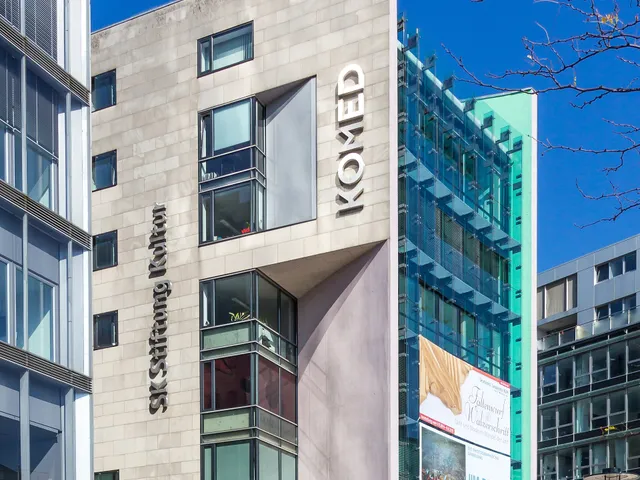
From its founding until 1958, the museum was located at Burgmauer 68; it then moved within the same building to Komödienstraße 107–113. The 1958 interior design was created by Wilhelm Koep, the in-house architect for the 4711 cologne company. Because the interior remained well preserved, its 1960s ambiance occasionally made the rooms a sought-after location for film shoots.
Timeline
- 1925Bodo Glaub is born in Bonn.
- 1951Glaub opens his specialty cutlery shop in Cologne.
- 1957Glaub appears as the Virgin 'Bodi' in the Cologne Carnival trio.
- 1958Museum relocates to Komödienstraße 107–113.
- 1964Exhibition at the Kunstgewerbemuseum Zürich (Feb 8–Mar 8).
- 1966Exhibition at the Goud- en Zilvermuseum Utrecht (June–Sept 19).
- 1983–1984Exhibition 'Das Messer' at the Deutsches Klingenmuseum Solingen.
- 1991Collection is auctioned following a legal dispute.
- 1995Bodo Glaub dies on June 12; museum operations cease.
- 2018Magret Glaub dies; Besteckhaus continued solely by Hermann Freiß.
- 2022Besteckhaus closes in summer.
Gallery
Map
Blue dots: other places nearby — tap to explore.
Address
Komödienstraße 107-113
50667 Köln
You might also like — related or nearby
Comments
- Loading comments…
Sources & links
Auto-generated, last verified: 2026-09-02
How this page is made
This page draws on open sources — Wikipedia, Wikidata, official websites and the city’s open data. Every statement is checked against the sources linked here, and pages are refreshed regularly.
Spotted a mistake anyway? Tell us below — we read every submission.