Villa Vorster
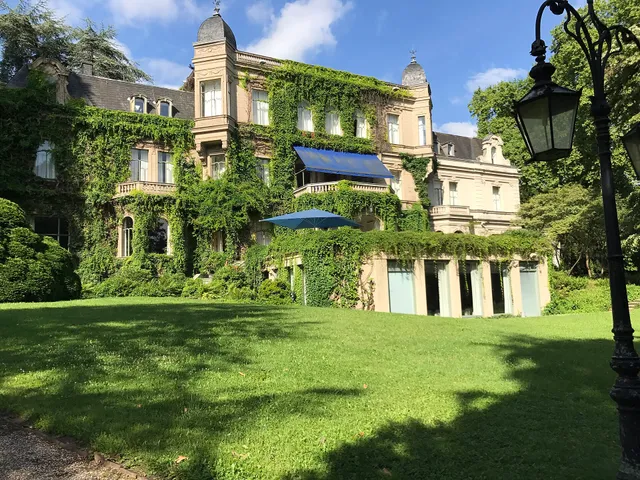
Eines der ersten nahezu stilreinen englischen Landhäuser Deutschlands: die von Otto March entworfene Villa in Köln-Marienburg, einst belgisches Militärgericht.
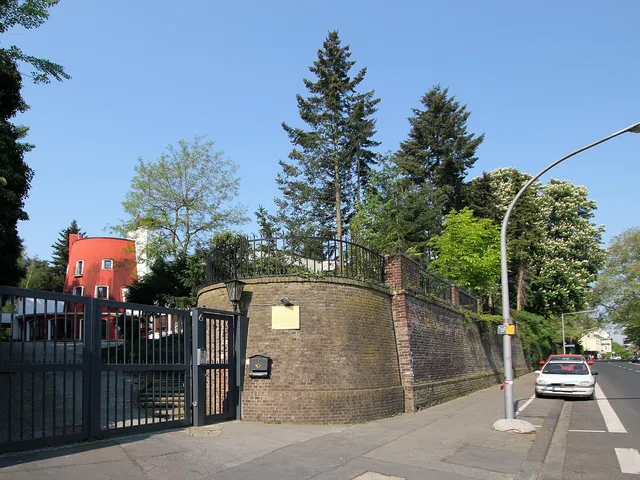
Die Villa liegt im Stadtbezirk Rodenkirchen und ist eine Station auf dem dortigen Kulturpfad. Zum Anwesen gehören ein ehemaliges Pförtnerhaus und eine Zaunanlage, die ebenfalls unter Denkmalschutz steht.
Source: Wikipedia
At a glance
- Type
- Residential building, listed monument in North Rhine-Westphalia
- Location
- Unter den Ulmen 148, Köln-Marienburg
- Built
- 1891–1894
- Architect
- Otto March (Berlin)
- Today
- 6 apartments with a total of 1,500 m² of living space
The Villa Vorster was converted in 1953 for the Belgian military court and served as one until 2003; the conversion cost the interior its fireplaces and glazing.
An English model
Fritz Vorster, the architect's brother-in-law, had lived in England for several years and expressly asked for this style. Through him, Otto March had come to appreciate English country house architecture. For the design, March also carried out studies on site. As an early example of this house type in Germany, the building is of particular value to architectural history as a historical document.
Façade and materials
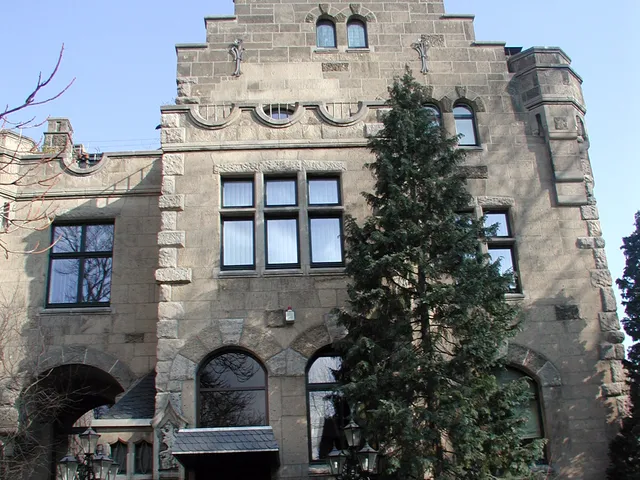
The surfaces between the sandstone articulation are faced in red brick with white pointing. The stucco was made by the Berlin firm Jäger & Drechsler. Tiles from Rathenow were used for the roof. In 1904 the house was extensively extended, with the addition blending in with the existing style.
Seat of a Belgian military court
The villa survived both World Wars. In 1953 it was converted for the Belgian military court: fireplaces and glazing disappeared from the interior, while the exterior changed little. Belgian soldiers used the building as a military court until 2003. The former gatehouse, with roughly 80 m² of living space, also served the Belgian military, though only intermittently.
Restoration and residential use
After the soldiers withdrew, the villa passed to the Federal Institute for Real Estate (Bundesanstalt für Immobilienaufgaben). It sold the building to the highest bidder in 2004. The house and grounds were then restored in keeping with heritage requirements and divided into apartments.
Timeline
- 1891–1894Villa built by Otto March in the English country house style
- 1904Extensive, stylistically matched extension of the villa
- 1953Converted for the Belgian military court; interior fittings lost
- 2003Belgian military court use ends; property passes to the federal real estate agency
- 2004Sold to GbR Villa Vorster (Stefan Frey AG), followed by heritage-conscious restoration
Map
Blue dots: other places nearby — tap to explore.
You might also like — related or nearby
Comments
- Loading comments…
Sources & links
Auto-generated, last verified: 2026-10-20
How this page is made
This page draws on open sources — Wikipedia, Wikidata, official websites and the city’s open data. Every statement is checked against the sources linked here, and pages are refreshed regularly.
Spotted a mistake anyway? Tell us below — we read every submission.