Judenbüchel
Medieval Jewish cemetery in Cologne-Raderberg, also a site of executions. Today the Cologne Central Market Hall stands on the grounds.
In the Cologne dialect, the place was called "Dude Jüd", meaning "Dead Jew". It is also recorded under the name Judenhügel ("Jews' Hill").
Source: Wikipedia
At a Glance
- Type
- former Jewish cemetery
- Location
- Köln-Raderberg, Rodenkirchen borough
- Earliest record
- mid-12th century
- Other uses
- execution site, venue for weddings and tournaments, leper house
- Today
- grounds of the Cologne Central Market Hall (Großmarkthalle)
- Memorials
- Bocklemünd cemetery and the main gate of the Großmarkt
The Jewish cemetery Judenbüchel was used from 1474 as a public execution site by the city of Brühl, even though Archbishop Engelbert II had banned executions there in 1266 and guaranteed the burial ground's inviolability; construction work in 1922 uncovered skeletons of executed people.
Origins and the Plague Pogrom
It is not documented when the cemetery was established or how large it originally was. The oldest source mentions a farmstead next to which the burial ground was to lie. An extension by five Morgen of land is documented for 1174. The plot belonged to the provost of St. Severin, to whom the Jewish community paid annual rent. When Jews were blamed for the plague in 1349, Cologne citizens stormed the Jewish quarter, plundered it and murdered many of its residents. Gravestones were desecrated and reused as building material. The newly established community only regained the cemetery in 1372.
After the Expulsion
Even after the Jews were expelled from Cologne in 1424 and settled in Deutz on the right bank of the Rhine, burials continued here. The cemetery was destroyed in 1474 during Charles of Burgundy's siege of Cologne. Even so, the burial ground was not relocated to Deutz until the end of the 17th century.
Execution Site
Public executions are recorded on the site from 1163. Archbishop Engelbert II banned them by decree in 1266 and guaranteed the Jewish community the inviolability of its burial ground. According to Wikipedia, from 1474 the court of the town of Brühl used the place again for public executions and paid the Severinsstift the rent previously paid by the Jewish community. Another execution site lay opposite today's Melaten Cemetery.
Festival and Tournament Ground
Thanks to its convenient location, the open space was also used for larger secular events. Weddings and tournaments took place here, and a public tournament is documented for 1384. A leper house on the grounds is first mentioned in 1463.
Rediscovery and Remembrance
The cemetery came to light again in 1922 during construction work for the Bonntor freight station and road widening. Skeletons of executed persons were also found, and the remains of the dead were reburied. After desecrations between 1928 and 1934, the final closure was decided in 1936. Remains and a few gravestones were moved to the Jewish section of the Bocklemünd cemetery, where a memorial stone was eventually placed. Also in 1936, the Raderberg Großmarkt was built on the cemetery grounds; a further memorial plaque at its main gate commemorates the Judenbüchel.
Timeline
- 1163First executions recorded at the cemetery
- 1174Cemetery expanded by five Morgen of land
- 1266Archbishop Engelbert II bans executions by decree
- 1349Plague pogrom: gravestones desecrated and reused as building material
- 1372Cemetery returned to the newly established Jewish community
- 1474Destroyed in siege by Charles of Burgundy; executions resume
- 1922Cemetery uncovered by construction work, remains reinterred
- 1936Final closure; remains moved to Bocklemünd
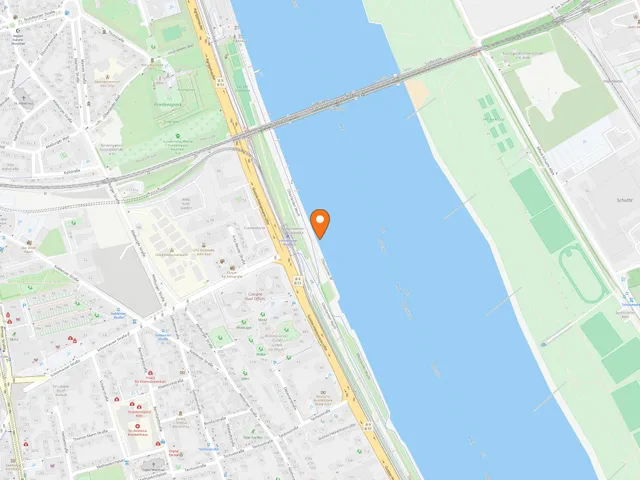
Map
Blue dots: other places nearby — tap to explore.
You might also like — related or nearby
Comments
- Loading comments…
Sources & links
Auto-generated, last verified: 2026-11-08
How this page is made
This page draws on open sources — Wikipedia, Wikidata, official websites and the city’s open data — plus basic place data and photos from Google Maps where a place is listed there. Every statement is checked against the sources linked here, and pages are refreshed regularly.
Spotted a mistake anyway? Tell us below — we read every submission.