Bottmühle
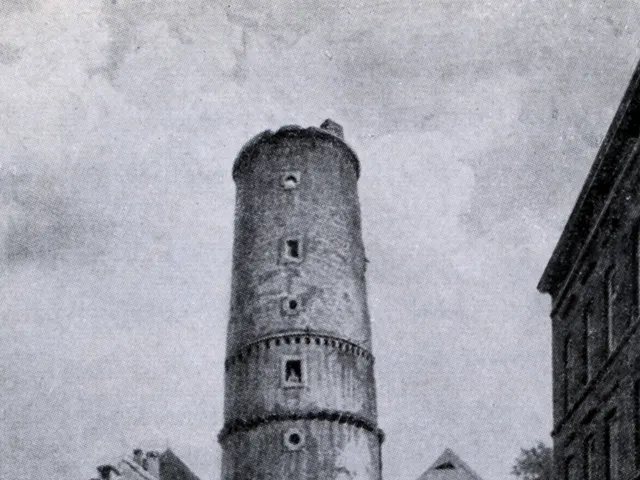
The Bottmühle in Cologne's southern Old Town is a 17th-century stone tower windmill standing on an old fortification platform behind the medieval city wall.
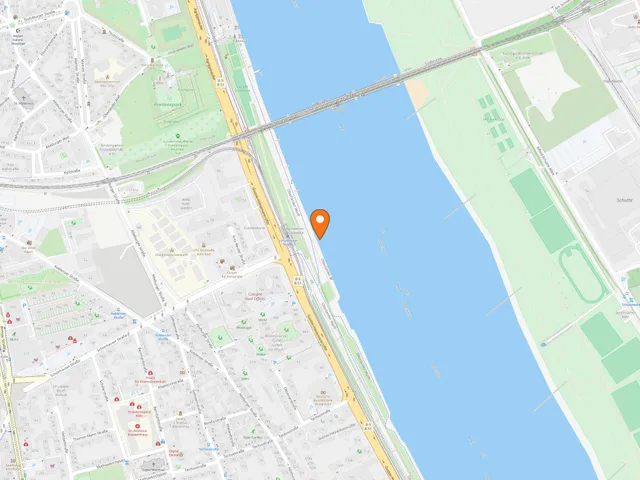
The Bottmühle is a former wind and grain mill in the southern Old Town of Cologne. It sits between the Bayenturm and the Severinstorburg, but is not itself part of the medieval city wall.
At a Glance
- Type
- Former wind and grain mill, stone tower windmill
- Location
- Southern Old Town of Cologne, between the Bayenturm and the Severinstorburg
- Form
- Four-storey round tower with a lower arcade and round-arched windows
- Built
- 1677–1678 (timber predecessor 1588)
- Heritage protection
- Since 1 July 1980
- Current occupant
- Die Falken (since 1970)
- Owner
- City of Cologne (since 1921)
History
The name derives from the „Bott“, a defensive or rampart platform laid out by the Italian fortress builder Alessandro Pasqualini between 1550 and 1552 behind the city wall as an artillery position. Pasqualini had been involved in building Cologne's defences since 1520 and worked on them until his death in 1559.
In 1587 the grain masters were ordered to have a windmill built on the site behind St. Severin. They commissioned Peter von Gleuel, who had qualified in Holland, to build it for 500 guilders. The timber post mill was completed in February 1588.
Between June 1677 and July 1678 town stonemason Arnold von Gülich replaced it with today's stone tower windmill, building it according to Pasqualini's old plans.
Architecture and Setting
The four-storey round tower stands on a raised area, surrounded by a green space that drops steeply to street level. On it stands a remnant of the 60-metre-long city wall. The Bottmühle is one of four mills built on or beside the city wall.
Changing Uses
In 1832 the City of Cologne sold the Pantaleon and Bott mills to private owners. From at least 1879 the mill belonged to Jakob Flammerheim, who restored it until 1883. From 1911 to 1945 it housed student fraternities, including the ATV Markomannia-Westmark.
Since 1921 the mill has again belonged to the City of Cologne. After 1945 the British military administration handed it to the „Deutsche Jungenschaft“ for youth work; since 1970 Die Falken have had their seat here. The Bottmühle was renovated and freed of ivy up to July 2011.
Good to Know
The 238-metre-long street An der Bottmühle runs around the mill. At No. 2 stands the former Institute for Traffic Safety, built in 1923 by Wilhelm Riphahn, which has been under heritage protection since 1 July 1980.
Gallery
Map
Blue dots: other places nearby — tap to explore.
Address
An der Bottmühle
Köln
Contact
You might also like — related or nearby
Comments
- Loading comments…
Sources & links
- Official website
- Official website (retrieved 2026-07-09)
- Wikidata (retrieved 2026-07-09)
- Wikipedia (retrieved 2026-07-09, rev 260678413)
Auto-generated, last verified: 2026-07-09
How this page is made
This page draws on open sources — Wikipedia, Wikidata, official websites and the city’s open data. Every statement is checked against the sources linked here, and pages are refreshed regularly.
Spotted a mistake anyway? Tell us below — we read every submission.