Carlswerk, Cologne
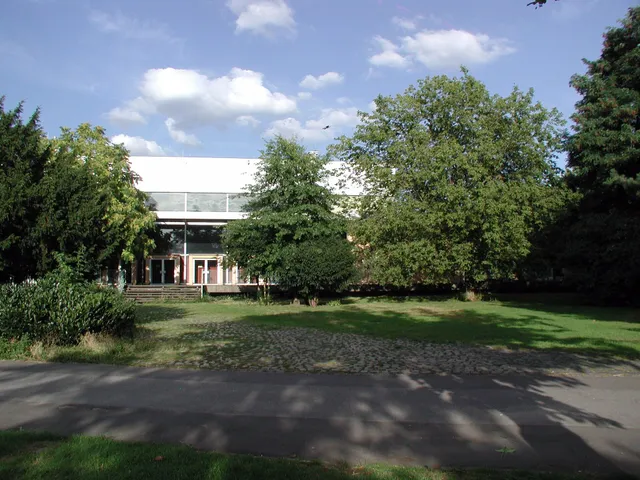
Former cable factory in Cologne-Mülheim where the first transatlantic telephone cable was made in 1904 – now a business campus and cultural venue.
The factory once produced far more than cables: in 1929 it supplied the suspension cables for the Mülheim Bridge, and in 1941 for the Rodenkirchen Bridge across the Rhine.
Source: Wikipedia
At a Glance
- Type
- Former production site, now a business campus and event venue
- Location
- Mülheim district, Cologne, on Schanzenstraße
- Site
- 127,000 m² with over 20 buildings dating from 1896 to 1984
- Main building
- 103 meters long, built in 1961
- Heritage status
- Listed historic building in North Rhine-Westphalia
In 1904, the Carlswerk manufactured the first transatlantic telephone cable connecting Europe with North America.
History
Franz Carl Guilleaume launched operations in the summer of 1874, producing contact wires, overhead line cables, conductor wires, and high-voltage cables from copper and aluminum. In 1904, Felten & Guilleaume rolled out the first transatlantic telephone cable, establishing a link between Europe and North America. Wartime damage was minor, allowing reconstruction to begin as early as June 1945, and by the 1960s the workforce had grown to 23,560 employees.
Change of Ownership
After several restructurings and transactions, majority shareholder GEW Köln sold its stake in Felten & Guilleaume to Moeller GmbH, which was in turn acquired by the Irish company Eaton Corporation in 2008.
From Factory to Campus
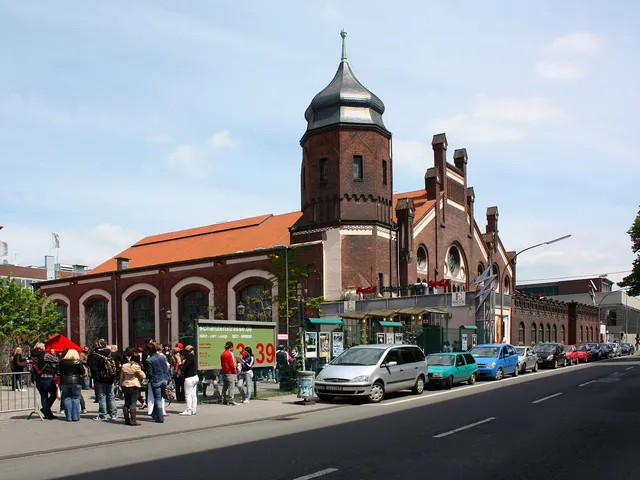
Beos GmbH purchased the disused site in December 2007 to convert it into space for offices, trade, and services. Publisher Bastei Lübbe moved into the main building in January 2010. Several older structures were also renovated, including the coil factory (1938–1948), the 1922 laboratory building, and Quarters 1, 2, and 4 dating from 1897, 1917, and 1896 respectively. Tenants, mostly from the media industry, gradually moved in starting August 2009, with the first leases signed in 2011.
Culture and Events
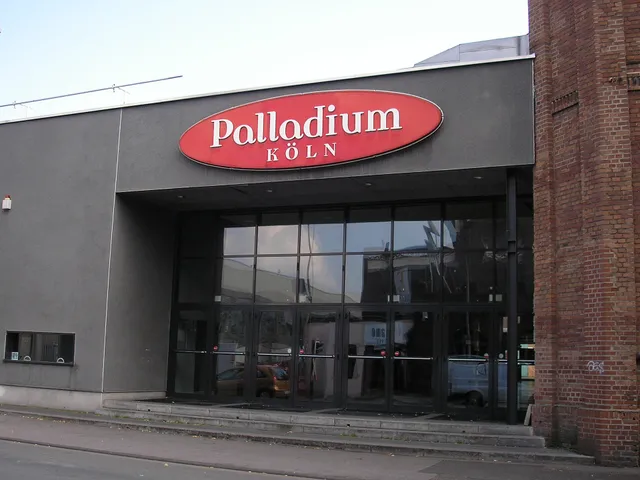
Since opening in 2018, Carlswerk has served as a cultural venue hosting exhibitions, film, cabaret, concerts, readings, conferences, dance, theater, and workshops, staged across its two halls, Carlswerk Victoria and Club Volta. Cologne's Schauspiel theater has used it as a temporary home since September 2013 while its Offenbachplatz venue undergoes renovation. Although a return was planned for the 2024/2025 season, Cologne's culture director Stefan Charles announced in late August 2024 that the 2025/2026 season would also take place at Carlswerk.
Trivia
On July 7, 2021, Vodafone and Rewe briefly tested an autonomous snack-delivery vehicle on the grounds, which crawled along test routes from 10 a.m. to 4 p.m. and could be tracked via app thanks to its mobile modem.
Timeline
- 1874Franz Carl Guilleaume opens the Carlswerk
- 1904First transatlantic telephone cable produced at the Carlswerk
- 1929Suspension cables for the Mülheim Bridge manufactured
- 1941Suspension cables for the Rodenkirchen Bridge manufactured
- 1945Reconstruction of the plant begins in June
- 2007Beos GmbH acquires the disused plant site
- 2010Bastei-Lübbe publishing house moves into the main building in January
- 2018Opening as a cultural and event venue
Gallery
Map
Blue dots: other places nearby — tap to explore.
You might also like — related or nearby
Comments
- Loading comments…
Sources & links
Auto-generated, last verified: 2026-09-15
How this page is made
This page draws on open sources — Wikipedia, Wikidata, official websites and the city’s open data. Every statement is checked against the sources linked here, and pages are refreshed regularly.
Spotted a mistake anyway? Tell us below — we read every submission.