St. Joseph (Cologne-Kalk)
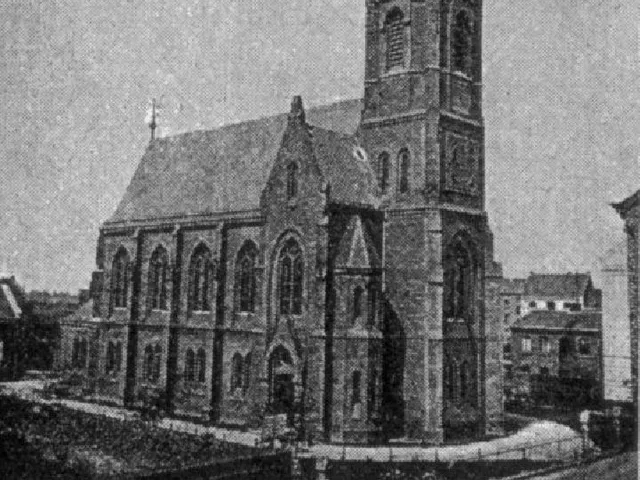
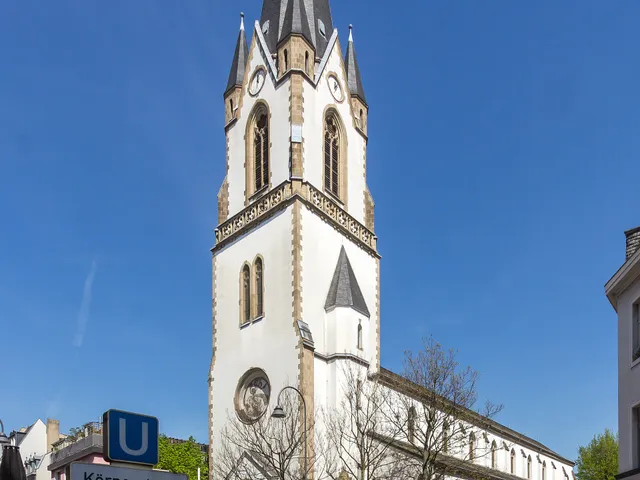
Neo-Gothic brick hall church in Cologne-Kalk featuring stained-glass windows by Dominikus Böhm, including seven Stations-of-the-Cross windows in the transept.
Rebuilt in simplified form after wartime destruction, the church's furnishings bear the distinctive hand of the Böhm family workshop, father and son alike.
Source: Wikipedia
At a Glance
- Type
- Roman Catholic church, Neo-Gothic style
- Location
- Kalk district, on the right bank of the Rhine in Cologne
- Structure
- Three-aisled brick hall church
- Built
- 1899–1902, rebuilt 1949–1952
- Architect (original)
- Heinrich Renard
- Highlight
- Stained-glass windows by Dominikus Böhm
- Heritage status
- Listed since 12 April 1983, no. 1413
The church was destroyed in 1943 and rebuilt from 1949 to 1952 in simplified form by the renowned architect family Böhm – Dominikus and his son Gottfried – with one stained-glass window even recording these building phases 1902/1943/1952 directly.
History
By the late 19th century, the parish church of St. Marien (built 1863–1866) could no longer accommodate Kalk's growing Catholic community. A second church, designed by Heinrich Renard and dedicated to St. Joseph, was built between 1899 and 1902 in the historic heart of Kalk. Both St. Joseph and St. Marien suffered heavy damage in the Second World War. St. Joseph was rebuilt from 1949 to 1952 in a much-simplified form, following plans by Dominikus Böhm and his son Gottfried Böhm. In 1953 an organ with 21 stops, built by Romanus Seifert & Sohn of Kevelaer, was installed.
Stained Glass
Most of the church's stained-glass windows were created by Dominikus Böhm between 1952 and 1954. Seven windows in the transept each depict two Stations of the Cross. The chancel windows carry symbolic ornamentation referencing the Eucharist, the Virgin Mary, the parish patron Joseph, the Kolping Society, and the site of the church itself. One ornamental window records key dates along its lower edge: built 1902, destroyed 1943, rebuilt 1952. Böhm designed two aisle windows with geometric patterns, while the tower window with baptismal symbols was created by his son Gottfried Böhm. The chapel windows, freely composed by unknown artists, date from around 1960.
Context
St. Joseph belongs to the Cologne-Deutz deanery within the Archdiocese of Cologne and forms part of the Cologne-Kalk/Humboldt/Gremberg pastoral care area.
Timeline
- 1899–1902Neo-Gothic church St. Joseph built to designs by Heinrich Renard
- 1943Church heavily destroyed during World War II
- 1949–1952Rebuilt in simplified form by Dominikus and Gottfried Böhm
- 1952–1954Stained glass windows created by Dominikus and Gottfried Böhm
- 1953New 21-register organ installed by Romanus Seifert & Sohn
- um 1960Chapel windows created by unknown artists
- 1983Listed as a protected monument (No. 1413) on 12 April
Gallery
Map
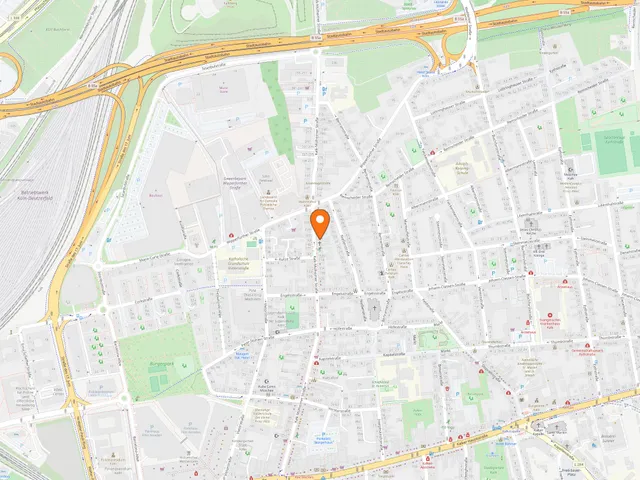
Blue dots: other places nearby — tap to explore.
You might also like — related or nearby
Comments
- Loading comments…
Sources & links
Auto-generated, last verified: 2026-09-05
How this page is made
This page draws on open sources — Wikipedia, Wikidata, official websites and the city’s open data. Every statement is checked against the sources linked here, and pages are refreshed regularly.
Spotted a mistake anyway? Tell us below — we read every submission.