St. Aegidius (Cologne-Wahn)
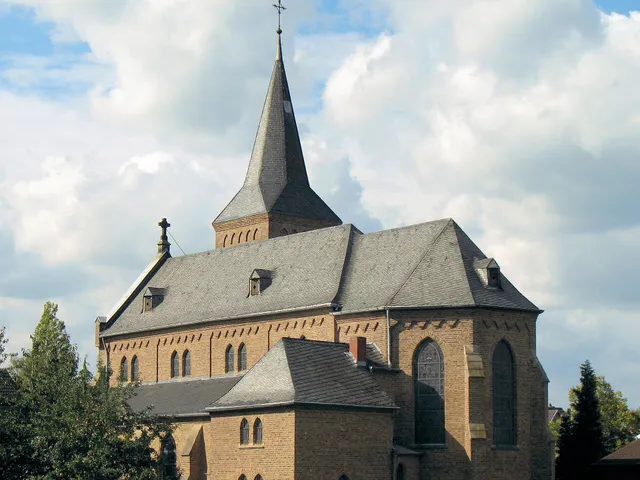
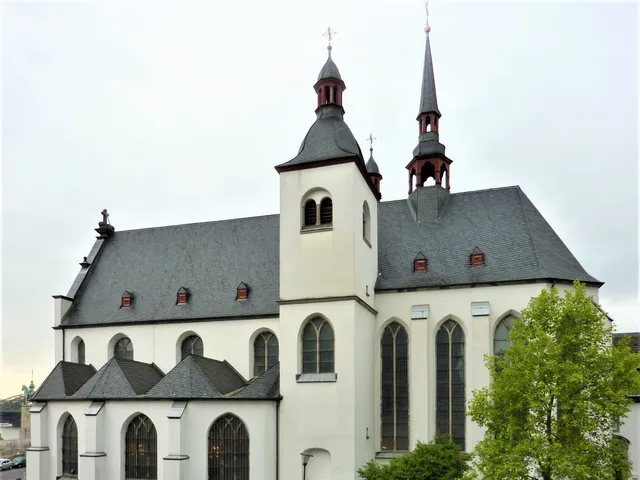
Neo-Gothic parish church in Cologne-Wahn, unusually aligned north–south instead of the traditional east-facing orientation.
Before the present building was erected, a repeatedly altered predecessor church stood on the site; when it was demolished, remains of an 11th-century chapel came to light.
Source: Wikipedia
At a Glance
- Type
- Roman Catholic parish church
- Location
- Wahn district, Porz borough, Cologne
- Architectural style
- Neo-Gothic
- Construction period
- 1893 to 1895
- Design
- Three-aisled brick hall church with a square tower
- Affiliation
- Deanery of Cologne-Porz, Archdiocese of Cologne
- Heritage status
- Listed as a protected monument on 9 February 1983 (no. 1321)
Unusually, the church is oriented north–south instead of the customary east–west axis, because otherwise the entrance would only have been accessible via many steps.
History
An early chapel in Wahn is already documented in 1358. The present church was built between 1893 and 1895, with financial support from the then lord of the manor, Kuno Freiherr von Eltz-Rübenach. It was consecrated on Whit Monday 1895 by Dean Caumanns of Mülheim, followed by the episcopal consecration performed by Auxiliary Bishop Schmitz on 7 June 1896. During a major post-war renovation in 1954, the wall paintings were painted over and the side windows, damaged during the war, were replaced.
Orientation
Unlike many churches whose choir and altar face east, St. Aegidius runs along a north–south axis. The decisive factor was that access from the east would otherwise have required climbing a long flight of steps.
Furnishings
Much of the original interior has survived. Floral motifs decorate the cross-ribbed vaulting, restored between 1990 and 1992. The tower vestibule houses a Baroque epitaph in black marble, created between 1656 and 1685. The high altar, two side altars, a Madonna of Mercy, the pulpit, the Stations of the Cross, a Pietà in the Lady Chapel, and a baptismal font are largely Neo-Gothic in style. Outside, partly Baroque grave crosses from the former cemetery and a memorial cross on the outer wall commemorate deceased parish priests.
Church Windows
Cologne artist Hans L. Palm created two stained-glass windows in 1991. Above the organ loft, a dove symbolising the Holy Spirit appears, with fragments of glazing destroyed in the Second World War set into the tracery. In the Lady Chapel—formerly the sacristy—a Madonna of Mercy is depicted over the village of Wahn, alongside local motifs such as the parish churches of St. Aegidius and St. Margaretha, the old chaplaincy, and Wahn Castle. The ornamental windows of the side aisle from 1960 likewise contain remnants of the earlier glazing in their tracery. Three choir windows from 1893 show the saints Aegidius, Mary, John, and Sebastian in medallions.
Timeline
- 1358First chapel in Wahn documented.
- 1893–1895Neo-Gothic hall church built on the same site.
- 1895Consecration of the new church on Whit Monday by Dean Caumanns.
- 1896Episcopal consecration by auxiliary bishop Schmitz on 7 June.
- 1954First major restoration after World War II.
- 1983Listed as a heritage monument on 9 February under no. 1321.
- 1990–1992Renewal of the ribbed vault with floral motifs.
- 1996Installation of a new organ by the Schulte company.
Gallery
Map
Blue dots: other places nearby — tap to explore.
You might also like — related or nearby
Comments
- Loading comments…
Sources & links
Auto-generated, last verified: 2026-09-01
How this page is made
This page draws on open sources — Wikipedia, Wikidata, official websites and the city’s open data. Every statement is checked against the sources linked here, and pages are refreshed regularly.
Spotted a mistake anyway? Tell us below — we read every submission.