GeoMuseum
Cologne's only natural history museum: meteorites, minerals, gemstones and fossils at the University of Cologne.
The GeoMuseum is Cologne's only natural history museum, presenting an earth sciences exhibition featuring minerals, gemstones, meteorites and fossils.
At a Glance
- Type
- University museum of natural sciences
- Operator
- Faculty of Mathematics and Natural Sciences, University of Cologne
- Location
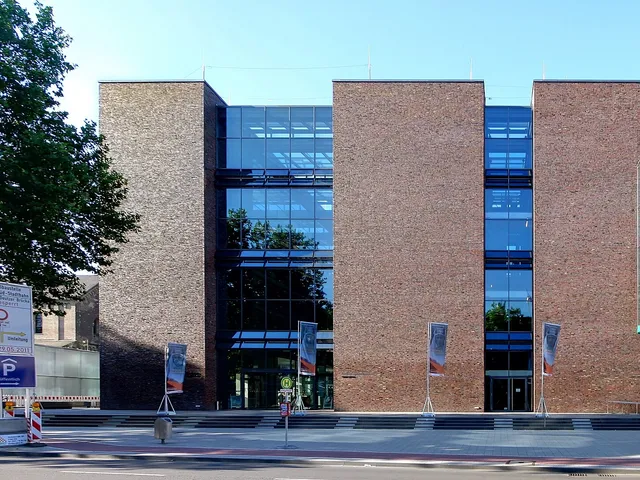
- Lecture hall wing of the Geosciences Institutes, Zülpicher Straße 49 b, Südstadt district
- Collection size
- Around 50,000 pieces, only a small portion on display
- Exhibition area
- A single hall
- Focus areas
- Meteorites, minerals, precious and ornamental stones, Earth history
The GeoMuseum holds type specimens for several globally newly described minerals – including Jasmundit and Mayenit – making it an officially recognized reference repository of the International Mineralogical Association (IMA).
Things to do here
- Marvel at meteorites, gemstones and sparkling minerals in the display cases
- Walk the Earth-history wall from the birth of the solar system to today
- Discover real fossils and ancient sequoia tree slices
- View the large coral display in the foyer – even outside opening hours
- Compare quartz varieties and glittering crystals from around the world
History
The museum traces its origins to two independent collections: the Museum für Naturkunde, founded in 1881, and the Mineralogical-Geological Collection, begun in 1920. Both were largely destroyed during World War II before the then-institute directors rebuilt them from scratch. In 1962, salvaged minerals and rocks from the Museum für Naturkunde were added as a loan from the City of Cologne. When the new GeoLibrary required additional space, the most important exhibits were consolidated, and since 2000 the collection has operated under the name GeoMuseum.
Collection
Highlights include meteorites and tektites, minerals from the Siegerland mining region and from Russia, quartz varieties, calcite, zeolites, precious and ornamental stones, and synthetic crystals. Along one wall, display cases trace Earth's history from the formation of the solar system to the present day, including fossils. A large display case in the foyer featuring corals and other reef-building organisms can be viewed outside opening hours. Near the entrance to the GeoLibrary, visitors can see a cross-section of a 1,400-year-old giant sequoia from the United States and the stump of a fossilized Miocene sequoia from the Berrenrath West lignite mine near Frechen.
Notable Facts
The German Type Mineral Catalogue lists the GeoMuseum as the official repository for the type material of the minerals brownmillerite, jasmundite and mayenite. The Type Mineral Catalogue of the International Mineralogical Association additionally designates it as the repository for chlormayenite.
Timeline
- 1881Museum of Natural History established
- 1881–1902Museum of Natural History housed in Severinstorburg
- 1902–1945Museum of Natural History relocated to Stapelhaus
- 1920Mineralogical-Geological Collection established
- 1938Collection moved to Geological-Mineralogical Institute in the Rundbau
- 1962Rescued minerals and rocks from Stapelhaus taken on loan from the city
- 1967New building of the Institute for Mineralogy and Geology-Palaeontology completed
- 2000Collections merged and reopened under the new name GeoMuseum
Gallery
Map
Blue dots: other places nearby — tap to explore.
Address
Zülpicher Str. 49
50674 Köln
Hours
Mi: 14:00–19:00
You might also like — related or nearby
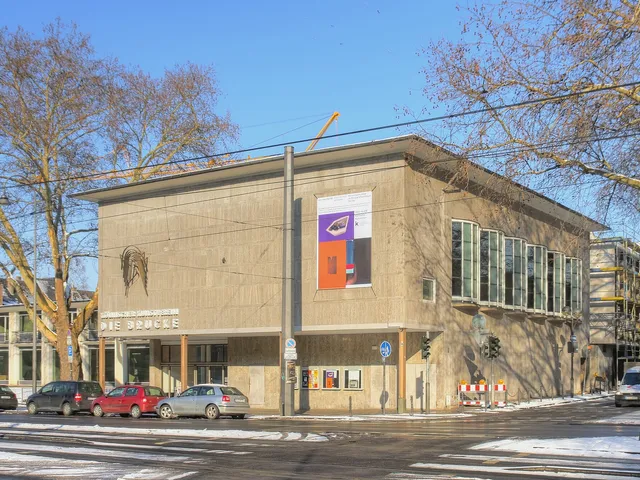
Kölnischer Kunstverein (Cologne Art Association)
since 1839Founded in 1839, the Kölnischer Kunstverein is one of the oldest and most respected institutions for contemporary art in Germany. Today it resides in the striking building "Die Brücke" on Hahnenstraße, presenting current international art in Cologne.
Comments
- Loading comments…
Sources & links
- Official website
- Wikidata (retrieved 2026-06-24)
- Wikipedia (retrieved 2026-06-24, rev 260917349)
- Official website (retrieved 2026-06-24)
Auto-generated, last verified: 2026-06-26
How this page is made
This page draws on open sources — Wikipedia, Wikidata, official websites and the city’s open data. Every statement is checked against the sources linked here, and pages are refreshed regularly.
Spotted a mistake anyway? Tell us below — we read every submission.