Puszta-Hütte
A cult Cologne snack stand since 1948 on Fleischmengergasse, serving a single dish: Hungarian Gulasch made to a handed-down recipe.
Since 1948, a spot on Cologne's Fleischmengergasse near Neumarkt has served only a single dish: a spicy Hungarian Gulasch. The Puszta-Hütte began as an improvised post-war snack stand and remains to this day a cult Cologne address for anyone who likes their food hearty.
At a Glance
- Type
- Fast-food restaurant with just one dish (Hungarian Gulasch)
- Since
- 1948, founded by Max Lippert
- Location
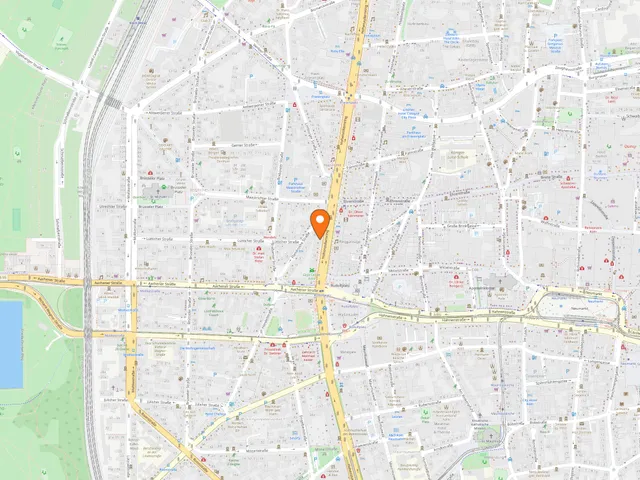
- Fleischmengergasse, Altstadt-Süd, near Neumarkt
- Served
- Gulasch in a stainless-steel bowl, with a bread roll and a top-up of sauce
- Run today by
- The Sardis family – Günter Sardis since 2019 (previously his father Nikolas)
- What makes it special
- No menu, because there's nothing to choose from
- Extras
- Tinned cans sold by mail order, branches in Hürth and Wesseling, mobile stands
A Rubble Stand of the Post-War Years
Just a few months after the introduction of the Deutsche Mark, the Puszta-Hütte opened in a largely destroyed Cologne – one of many simple "rubble stands" (Trümmerbuden) that first made street food popular in Germany at the time. This snack-bar culture was brought over by the American and British occupying soldiers, whose habit of eating on the go and standing up had been all but unknown here before. From such makeshift stands you could get things like Frikabrötchen (rissole rolls), baked goods or occasionally Reibekuchen (potato pancakes) – for immediate consumption and at comparatively high prices. Founder Max Lippert initially sold his Gulasch to passing customers from a makeshift hut near Neumarkt. Cultural anthropologist Gunther Hirschfelder sees the Puszta-Hütte as an early example of that "pluralization of taste" which shaped West Germany in the 1950s.
One Recipe, One Soup
According to the restaurant, the Gulasch goes back to the recipe of a Hungarian farmer's wife, with whom Lippert is said to have found shelter in Hungary after his time as a prisoner of war – a handed-down, unconfirmed origin story. Back in Germany, he recreated the soup and brought it to market. A portion initially cost the then-considerable sum of one Mark, yet it was still met with great enthusiasm. To this day, the ingredient list for the preparation reads: beef, water, paprika, animal fat, onions, salt, garlic and spices. It is served in a stainless-steel bowl, a bread roll comes with it, and on request there's a top-up of Gulasch sauce. At the end of 2015, the Puszta-Hütte and its Gulasch prevailed over two other Cologne establishments on the docu-soap Mein Lokal, Dein Lokal.
From Street Stand to Family Business
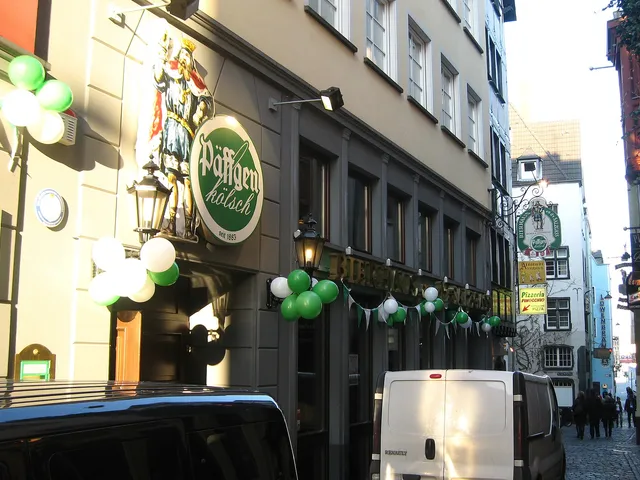
In the early 1950s the business moved around 30 metres further along into a building on Fleischmengergasse – Cologne's traditional street of the butchers' trade – where it was expanded into a fast-food restaurant with seating. This is still the home location today. The Sardis family has run the Puszta-Hütte since 1992 – first Nikolas Sardis, and since 2019 his son Günter. Under the advertising slogan "Our Gulasch gets even the oldest vintage back on a bicycle," the Gulasch is also canned according to the "farmer's wife's handed-down recipe" and sold by mail order; "Original Ungarischer Gulasch aus der Puszta-Hütte" is a registered trademark. There are branches in Hürth and Wesseling, plus mobile sales stands.
Map
Blue dots: other places nearby — tap to explore.
Address
Fleischmengergasse 57
50676 Köln
Hours
Mo: 10:00–20:00
Di: 10:00–20:00
Mi: 10:00–20:00
Do: 10:00–20:00
Fr: 10:00–20:00
Sa: 10:00–20:00
Contact
You might also like — related or nearby




Comments
- Loading comments…
Sources & links
- Official website
- Official website (retrieved 2026-08-19)
- Wikipedia (retrieved 2026-08-18, rev 266567714)
- Wikidata (retrieved 2026-08-18)
Auto-generated, last verified: 2026-08-18
How this page is made
This page draws on open sources — Wikipedia, Wikidata, official websites and the city’s open data. Every statement is checked against the sources linked here, and pages are refreshed regularly.
Spotted a mistake anyway? Tell us below — we read every submission.