St. Matthias
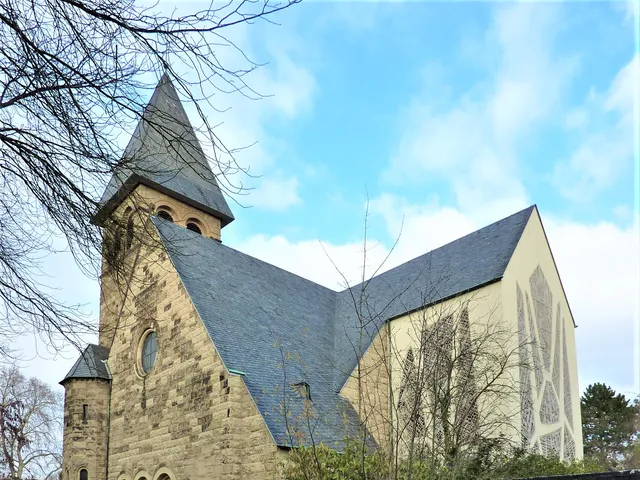
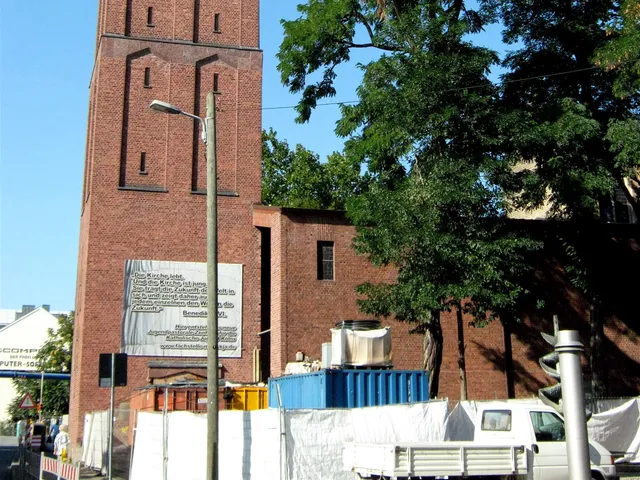
Neo-Gothic Catholic church in Cologne-Bayenthal, of which essentially only the tower survived the destruction of the Second World War.
The church traces its origins to a small chapel built for the growing Catholic population of the industrial settlement of Bayenthal.
Source: Wikipedia
At a Glance
- Type
- Roman Catholic church in the Archdiocese of Cologne
- Location
- Bayenthal district, Rodenkirchen borough
- Style
- Neo-Gothic
- Consecrated
- 25 September 1904
- Architects
- Theodor Kremer (original building), Dominikus Böhm (reconstruction)
- Heritage status
- Listed monument
The predecessor chapel of St. Matthias was damaged by a tornado in 1898, which triggered the construction of today's much larger church.
History
In the 19th century Bayenthal developed into an industrial site on the outskirts of Cologne, and workers increasingly settled near the factories. By 1860 the area counted 1,000 Catholics, prompting plans for a church of its own. A first chapel dedicated to the Apostle Matthias was built in 1862 at the corner of Goltstein- and Bonifazstraße, funded by a donation from then-cathedral master builder Vinzenz Statz. In 1896 it became the church of the independent parish of St. Matthias. After a storm damaged the chapel in 1898, the growing congregation opted for a larger new building.
Construction and Rebuilding
The design came from Cologne architect Theodor Kremer, financed through donations and the church-building association founded back in 1876. Cardinal Fischer, then Archbishop of Cologne, consecrated the church on 25 September 1904. It was heavily destroyed in 1943 during the Second World War. Dominikus Böhm oversaw the reconstruction, undertaking a fundamental redesign in which only the neo-Gothic tower retained its original form. The roofs of the side aisles and transept were removed and replaced with a single sloping roof.
Surroundings and Today
The park in front of the church at Mathiaskirchplatz was designed in 1904 by municipal garden director Fritz Encke. The parish is no longer independent today; together with St. Maria Königin it forms a combined parish belonging to the pastoral area "Am Südkreuz".
Timeline
- 18601,000 Catholics counted in Bayenthal, idea of own church building
- 1862First church (chapel) built by cathedral architect Vinzenz Statz
- 1876Church building association founded for financing
- 1896Chapel becomes church of the independent parish St. Matthias
- 1898Chapel damaged by a whirlwind/storm
- 1902Construction/opening of the new church (per Wikidata)
- 1904Church consecration on 25 September by Cardinal Fischer; park designed
- 1943Church heavily destroyed during World War II
Gallery
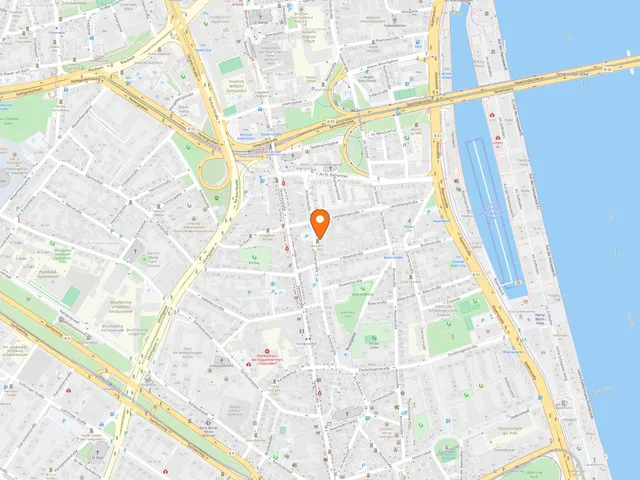
Map
Blue dots: other places nearby — tap to explore.
You might also like — related or nearby
Comments
- Loading comments…
Sources & links
Auto-generated, last verified: 2026-09-05
How this page is made
This page draws on open sources — Wikipedia, Wikidata, official websites and the city’s open data. Every statement is checked against the sources linked here, and pages are refreshed regularly.
Spotted a mistake anyway? Tell us below — we read every submission.