St. Maria Magdalena und Lazarus
An early Gothic chapel on Melaten Cemetery, rooted in a medieval leper hospital and older than Cologne Cathedral.
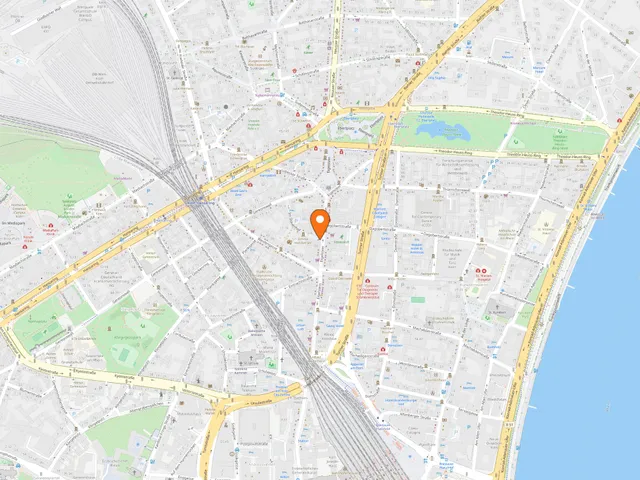
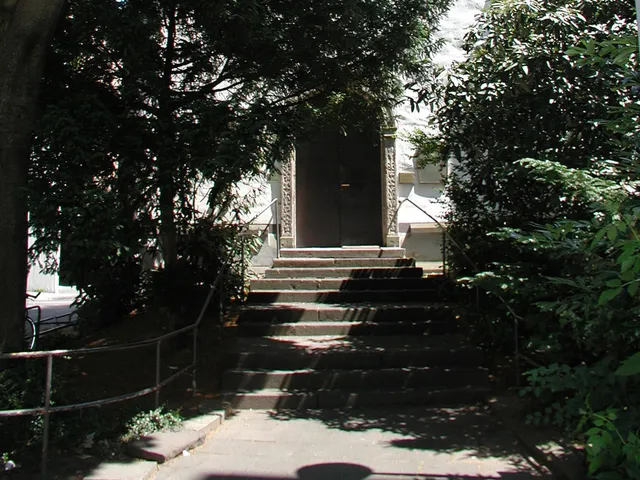
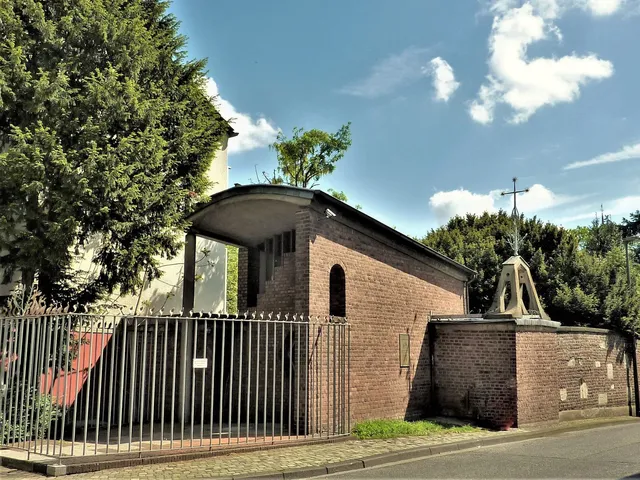
The chapel of St. Maria Magdalena und Lazarus stands in the southern part of Melaten Cemetery in Cologne-Lindenthal, on Aachener Straße near the "Melaten" tram stop. The early Gothic building traces back to a medieval home for lepers that once occupied today's cemetery grounds.
Source: Wikipedia
At a Glance
- Building type
- Sacred building, former hospital and cemetery chapel
- Year built
- Foundation stone 1243, consecrated 1245
- Style
- Early Gothic
- Dedication
- Mary Magdalene and Lazarus (formerly John and Lazarus)
- District
- Cologne-Lindenthal (Melaten Cemetery)
- Denomination
- Roman Catholic
- Owner
- City of Cologne
Consecrated in 1245, the chapel is a few years older than Cologne Cathedral, whose construction only began in 1248.
Things to do here
- View Hermann Gottfried's four stained-glass windows in the choir and altar area
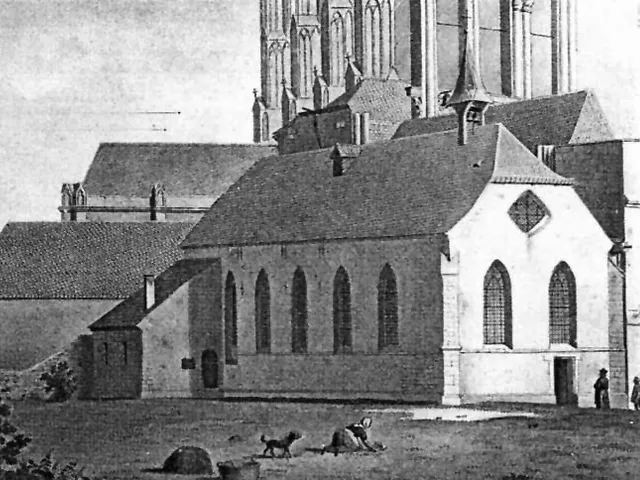
- Explore the early Gothic architecture of the once two-naved chapel
- Visit the chapel during a walk through Melaten Cemetery
- Experience cultural exhibitions in the interior used by the association
History
By 1180 at the latest, the site held a leper hospital (campus leprosi) with several dwellings for those afflicted with leprosy. According to the records, the chapel's foundation stone was laid in 1243, and two years later the finished building was consecrated by Cologne's Archbishop Konrad von Hochstaden. This makes it a few years older than Cologne Cathedral, whose construction only began in 1248. The chapel was remodelled in the 15th century. After the leper hospital closed in 1767, it lost its purpose for a long time. Under Napoleonic legislation in the occupied Rhineland, Cologne was to gain a cemetery outside the city walls, and the Melaten site was chosen. The old hospital houses were demolished and the former leper chapel became the cemetery chapel. In 1919 it briefly served as the first parish church for new residents in Lindenthal and Braunsfeld, until Christi Auferstehung took over that role a few years later.
Architecture and Fittings
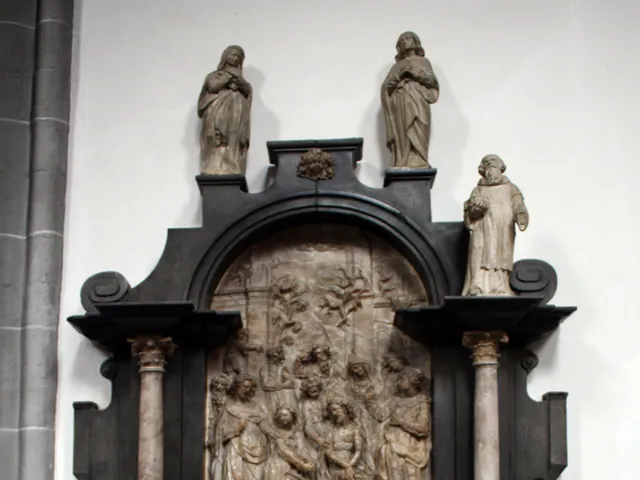
The chapel originally had two naves: one for the sick, the other for the healthy. Over the years several windows were bricked up, so that only ten glazed openings remain today. The four coloured glass windows in the choir and altar area were created by Hermann Gottfried in 1975; they depict Saint Lazarus, John the Baptist, Mary Magdalene, Saint Pantaleon and the Archangel Michael. A roof turret crowns the building, its bell originating from the town hall chapel St. Maria in Jerusalem.
Use Today
Damaged in the Second World War and later rebuilt, the chapel was handed over to the Catholic Church for use in 1952, though like the cemetery it remains the property of the City of Cologne. Founded in 2014, the St. Maria Magdalenen Verein Köln e. V. holds the right of use under a contract with the city and the Archdiocese of Cologne, supporting the building's restoration and its use for worship, funeral services and as a cultural exhibition space. In spring 2019 the association had the interior renovated: the soot-blackened walls were replastered and whitewashed.
Timeline
- 1180By this date at the latest, a leper hospital (campus leprosi) stands on the site.
- 1243The foundation stone of the chapel is laid.
- 1245Archbishop Konrad von Hochstaden consecrates the completed chapel.
- 1767The Melaten leper hospital closes; the chapel loses its purpose.
- 1919The chapel briefly becomes the first parish church for Lindenthal and Braunsfeld.
- 1952After war damage and reconstruction, it is handed over to the Catholic Church for use.
- 1975Hermann Gottfried creates the four coloured glass windows in the choir and altar area.
- 2014The St. Maria Magdalenen Verein Köln e. V. is founded.
- 2019In spring the association has the soot-blackened interior replastered and whitewashed.
Gallery
Map
Blue dots: other places nearby — tap to explore.
You might also like — related or nearby
Comments
- Loading comments…
Sources & links
Auto-generated, last verified: 2026-08-26
How this page is made
This page draws on open sources — Wikipedia, Wikidata, official websites and the city’s open data. Every statement is checked against the sources linked here, and pages are refreshed regularly.
Spotted a mistake anyway? Tell us below — we read every submission.