Siedlung Kunstfeld
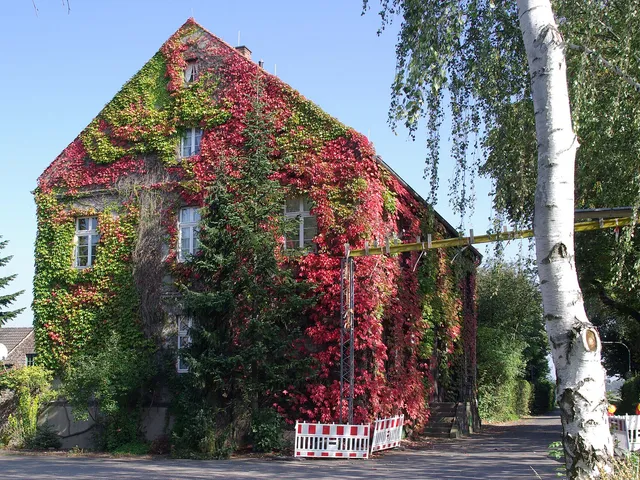
Oldest surviving workers' settlement in the Rhineland: built from 1820 in the woods near Dünnwald to house the workers of a chemical works.
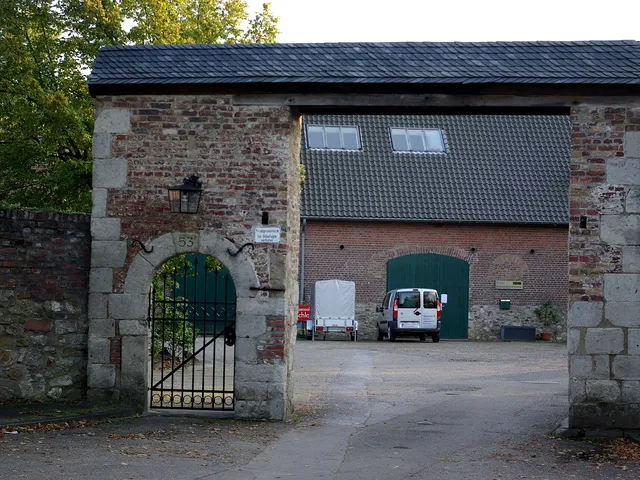
Kunstfeld got its name from the “artificial” products that the chemist Johann Gottfried Wöllner had made there. For several centuries before, the site had been home to the farmstead “Backeshof”.
Source: Wikipedia
At a Glance
- Type
- Workers' settlement, buildings listed as protected monuments
- Location
- Cologne, Dünnwald district, Mülheim borough
- Grounds
- 20 morgen in the “Schlebuscher Heide”, about 1.5 kilometres from Dünnwald
- Employees
- at times up to 25 in the factory
- Population
- 48 (1827), falling to 30 (1840), then rising from 1850 to 179 (1900)
- Explosion
- 25 January 1870, 15 dead
When a Prussian blue factory in Altenberg Abbey exploded in 1815, it even destroyed the roof of the neighbouring Altenberg Cathedral; production then moved to Dünnwald, and after complaints about the smell, to 'Kunstfeld' in 1820, a name derived from the 'artificial' (künstlich) products made there.
From Altenberg to Kunstfeld
After the secularisation of Altenberg Abbey in 1803, Wöllner and Friedrich Mannes leased the monastery buildings in 1809 and began producing Prussian blue, a textile dye used for Prussian uniforms. An explosion in November 1815 destroyed the monastery buildings and the roof of the neighbouring Altenberg Cathedral. The two partners then moved production to the former Premonstratensian monastery in Dünnwald, northeast of Mülheim am Rhein. Villagers complained about the strong smell, and in 1820 the Cologne district government banned Wöllner from producing within the village limits. He then bought land in the forest, which was known at the time as Maikammer.
Living and Working in the Settlement
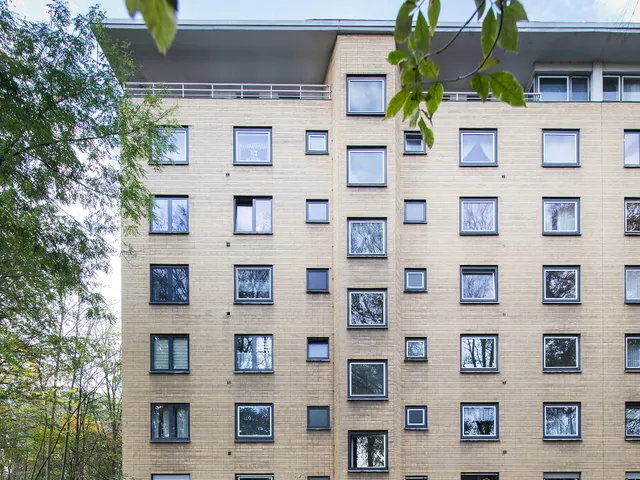
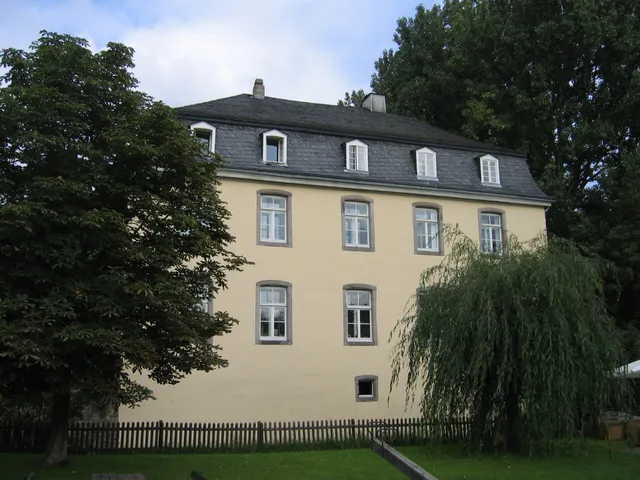
Labour was hard to recruit from the surrounding area. The entrepreneurs therefore brought Protestant workers from the Bergisches Land into what had been a purely Catholic village. Some houses wove textiles as home-based work. The buildings of the settlement have survived and are listed as protected monuments.
Products and Operators
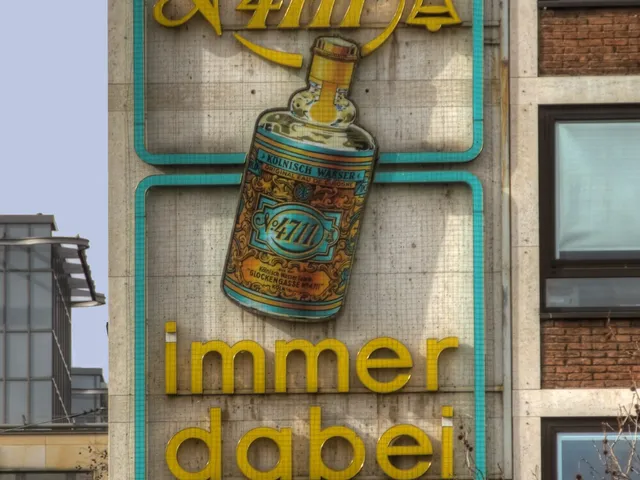
Production initially consisted mostly of paints made from minerals of the Bergisches Land and/or Prussian blue, along with sal ammoniac, wood vinegar and sugar of lead, and around 1835 also eau de Cologne. Goods were sold as far as Brabant and Holland. Annual sales of 60,000 to 70,000 thalers would have been possible, but cheap imports from England prevented this. Later, several companies held licences, among them Christian Wöllner, a son of Johann Gottfried Wöllner, and Friedrich Mannes, the brothers Friedrich and Benjamin Sternenberg, and Ed. Halbach from Wald near Solingen. The historian Josef Thur names two chemical operations: coloured paints by the Mannes brothers from 1820 to 1840, and paints and sal ammoniac by the Sternenbergs until the 1830s.
Other Trades
Kunstfeld also had a horn and bone mill, which gave rise to the name “Hornpottweg”. A wire-weaving workshop and the production of perforated metal sheets, which hung in windows in place of curtains, are known only from oral tradition.
The Explosion of 1870
In the late 1860s, Friedrich Sternenberg experimented with nitroglycerine and nitric acid to produce explosives, following the example of Alfred Nobel; Heinrich, another son of Benjamin Sternenberg, shared responsibility. The authorities demanded that the factory rooms be secured to protect workers and the public. Although Sternenberg initially received no licence, he made preparations without interference from the authorities. On the night of 25 January 1870, an explosion at the factory, which the settlement belonged to, killed 15 people – according to Pastor Christian Bertram, 14 Catholics and one non-Catholic. The shock is said to have been so strong that even in distant Cologne, pictures fell from walls and plaster from ceilings.
Timeline
- 1803Secularisation of Altenberg Abbey
- 1809Wöllner and Mannes lease the abbey buildings and set up a dye factory
- 1815Explosion in Altenberg destroys abbey buildings and cathedral roof; production moves to Dünnwald
- 1820Production banned in Dünnwald; Wöllner buys land and Kunstfeld is founded
- 182748 residents in Kunstfeld
- 1840Population falls to 30
- 1870Severe factory explosion on 25 January, 15 dead
- 1900179 residents in Kunstfeld
Gallery
Map
Blue dots: other places nearby — tap to explore.
You might also like — related or nearby
Comments
- Loading comments…
Sources & links
Auto-generated, last verified: 2026-10-19
How this page is made
This page draws on open sources — Wikipedia, Wikidata, official websites and the city’s open data. Every statement is checked against the sources linked here, and pages are refreshed regularly.
Spotted a mistake anyway? Tell us below — we read every submission.