Klosterhof (Cologne-Dünnwald)
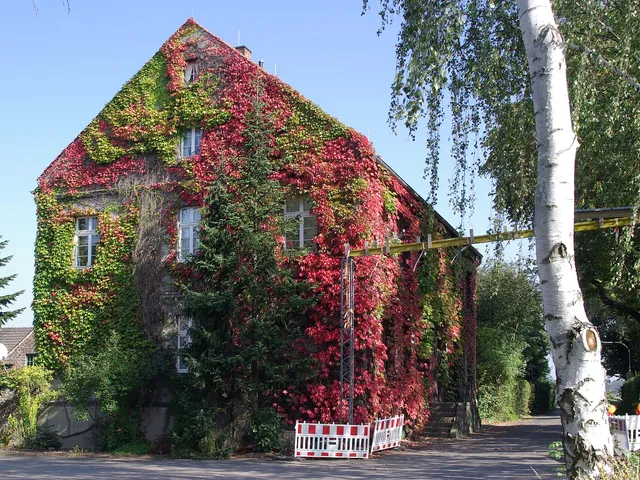
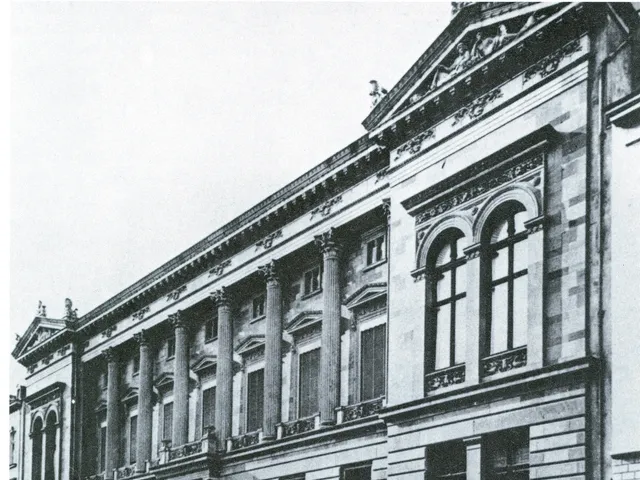
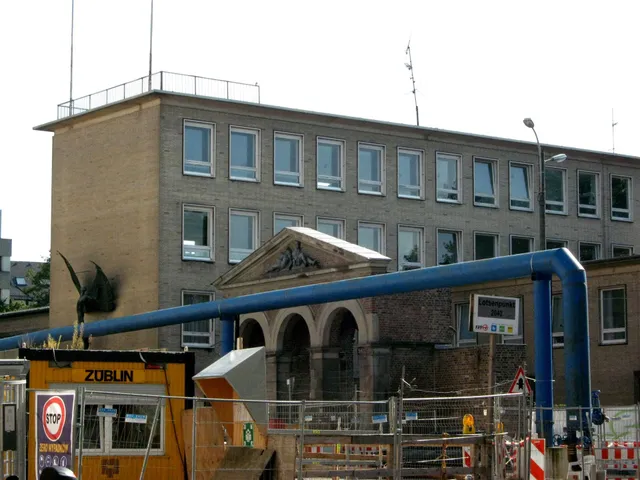
The Klosterhof in Cologne-Dünnwald is the surviving, listed working estate of the former Dünnwald monastery; its eastern wing today serves as a residential and office building.
On the edge of Cologne-Dünnwald, the Klosterhof recalls the once-wealthy monastic complex from which it grew. This surviving working estate – known as "Gut Klosterhof" – has been a protected monument since 1985 and is once again in residential and commercial use.
At a Glance
- Location
- Cologne-Dünnwald, at the edge of the former monastery grounds near the monastery pond and the Mutzbach stream
- Origin
- working and manor estate of the Dünnwald monastery, Premonstratensian from 1142
- Heritage status
- listed since 24 July 1985 under no. 3066 in Cologne's monument register (Dünnwald district)
- Surviving structure
- the eastern wing, now used as a residential and office building
- 19th century
- from 1856 the agricultural "Gut Klosterhof" of the von Diergardt family
- Present use
- a commercial courtyard (Gewerbehof) since 1996
- Note
- a monument in its own right, separate from the neighbouring monastery church of St. Nikolaus
History
The Klosterhof belonged to the Dünnwald monastery, founded in 1117/1118 (other sources say 1121) through an endowment by the Cologne citizen Heidenreich. The secular bailiff Adolf II of Berg and Archbishop Friedrich I of Schwarzenburg of Cologne endowed the young community with extensive estates and privileges. From 1142 the monastery followed the Premonstratensian order and was placed under Steinfeld Abbey in the Eifel; it is regarded as the first Premonstratensian convent on the Lower Rhine.
As a working estate, the Klosterhof formed part of considerable holdings: in the 15th century the monastery held more than 4,000 Morgen of fields, meadows and woodland, along with numerous farms and vineyards across the wider region – from Rheindorf and Schlebusch as far as Bonn and Remagen. This made Dünnwald one of the more prosperous monasteries around Cologne.
The complex did not escape the wars of its time: in 1635 Swedish troops plundered the Klosterhof, and during the War of the Spanish Succession parts of the buildings were destroyed in 1702. In 1643 the monastery passed to monks from Steinfeld, who converted it into a collegiate house of canons linked to Cologne's Collegium Norbertinum. With the German Mediatisation of 1803 the monastery was dissolved and secularised; the buildings went to the Cologne banking house Schaaffhausen, and the furnishings were auctioned off.
From Manor to Commercial Estate
In 1856 the textile manufacturer Baron Friedrich von Diergardt acquired the Klosterhof and ran it as the agricultural "Gut Klosterhof". As at nearby Altenberg Abbey, the cellar and priory buildings temporarily housed a chemical works and later a cloth factory. In 1996 the site was converted into a commercial courtyard. The eastern wing, still standing today, now serves as a residential and office building, keeping a visible remnant of the old monastic economy alive.
Legends and Stories
Many legends surround the Dünnwald monastery. Right beside the grounds lies the old monastery pond, which once supplied the nuns with fish and is fed by the nearby Mutzbach stream. According to tradition, one spot in the pond – the so-called "deepe Pötz" – was regarded with particular dread.
Heritage Protection
Gut Klosterhof was entered on 24 July 1985 under number 3066 in the list of architectural monuments of Cologne's Dünnwald district, protecting it as a cultural monument in its own right.
Map
Blue dots: other places nearby — tap to explore.
Contact
You might also like — related or nearby
Comments
- Loading comments…
Sources & links
- Official website
- Official website (retrieved 2026-07-23)
- Wikidata (retrieved 2026-07-23)
- Wikipedia (retrieved 2026-07-23, rev 252847055)
Auto-generated, last verified: 2026-07-23
How this page is made
This page draws on open sources — Wikipedia, Wikidata, official websites and the city’s open data. Every statement is checked against the sources linked here, and pages are refreshed regularly.
Spotted a mistake anyway? Tell us below — we read every submission.