Glass House (1914)
Bruno Taut's domed building of colored glass, concrete and steel, created for the 1914 Werkbund Exhibition in Cologne, is counted among the works of early Expressionism.
The exhibition management had not commissioned the Glass House. The architectural firm Taut & Hoffmann acted as the client itself and won over several manufacturers, who contributed technical equipment and funding.
Source: Wikipedia
At a Glance
- Type
- Circular domed building, exhibition pavilion (also called the Glass Pavilion)
- Architect
- Bruno Taut
- Built
- 1914 for the Werkbund Exhibition in Cologne
- Materials
- Concrete, colored glass and steel
- Style
- Early Expressionism
- Location
- Exhibition grounds on the right bank of the Rhine in Cologne-Deutz
- Purpose
- Advertising pavilion of the glass industry and experimental building for new glass construction techniques
- Today
- No longer standing; dismantled after falling into disrepair
Bruno Taut's Glass Pavilion was not part of the official building program of the Cologne Werkbund Exhibition at all: he received no commission, bore most of the 20,000 Reichsmark construction costs himself, and was given a site off to the side on a muddy path near the amusement park, which he felt was a 'banishment'.
Architecture
The building stood on a rounded concrete base taller than a person. Glass spheres lined up in a row at its foot. A dome of glass prisms, forming a slightly pointed, rhombohedral shape, rested on 14 slender square supports and a concrete ring. In the lower part of the building, the glass was tinted deep blue.
Taut's Idea
For Taut, the Glass House embodied a unity of nature, art and technology. With its moods and the effects of light and color, it also held a sacred significance for him. In his own words, he wanted to build "a garment for the soul." At the same time, he put the concept of a city crown (Stadtkrone) into practice here, which he later explored further in the fantasies of the Crystal Chain (Gläserne Kette).
A Place on the Margins
Taut was given a building plot and a small contribution toward construction costs; his pavilion was treated like other advertising structures. The Glass House stood on an unpaved path between the amusement park and the actual Werkbund projects. In bad weather, this path turned muddy. The site was not yet part of the Werkbund's actual exhibition area. Taut saw this as a banishment. Only the proximity to the amusement park reconciled him.
Construction and End
The bulk of the costs remained with the architect; at the time, this share amounted to 20,000 Reichsmarks. Because financing was hard to secure and the exhibition management rejected the project, construction began only four months before the exhibition opened. In August 1914, the exhibition had to close due to the mobilization for the First World War. The military then used the grounds. In July 1916, Taut was told to have the ruinous remains removed at his own expense. Karl Ernst Osthaus proposed that the military blow up the ruin for training purposes. The military, however, declined.
Timeline
- 1907Deutscher Werkbund founded
- 1914Bruno Taut builds the Glass Pavilion for the Cologne Werkbund Exhibition
- 1914 (vier Monate vor Ausstellungsbeginn)Construction of the Glass Pavilion begins
- August 1914Exhibition closed due to mobilization for World War I
- Juli 1916Taut ordered to remove the pavilion's remains at his own expense
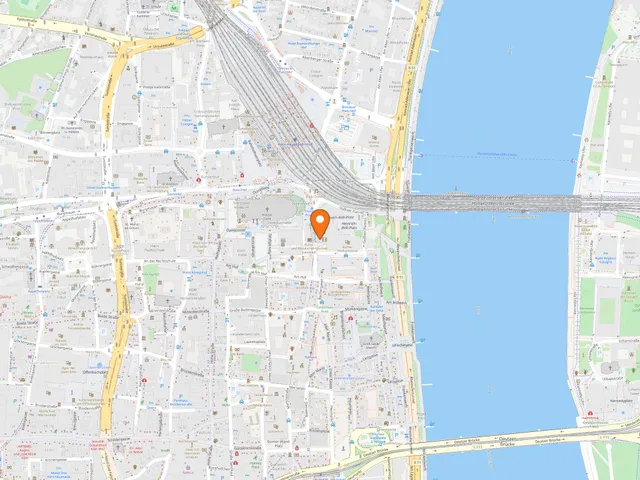
Map
Blue dots: other places nearby — tap to explore.
You might also like — related or nearby
Comments
- Loading comments…
Sources & links
Auto-generated, last verified: 2026-10-20
How this page is made
This page draws on open sources — Wikipedia, Wikidata, official websites and the city’s open data. Every statement is checked against the sources linked here, and pages are refreshed regularly.
Spotted a mistake anyway? Tell us below — we read every submission.