Japanese Garden (Leverkusen)
A serene Japanese garden with koi ponds and a replica of Nikkō's iconic Mikado Bridge, nestled in the Carl Duisberg Park since 1912.
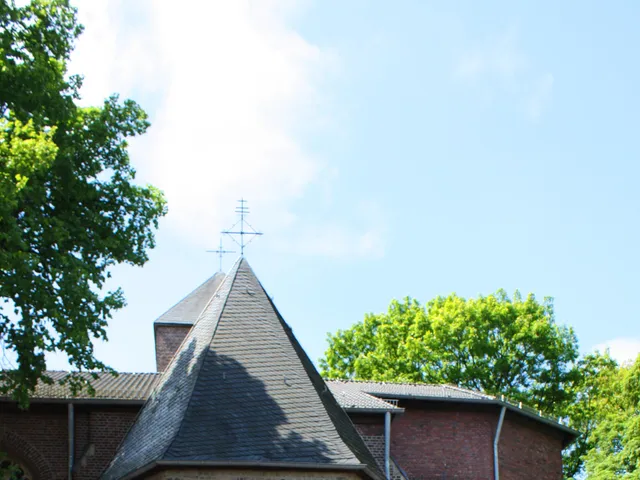
Tucked into the Cologne district of Flittard at the edge of Leverkusen, the Japanese Garden forms part of the Carl Duisberg Park on the grounds of Bayer AG's Chempark Leverkusen.
Source: Wikipedia
At a Glance
- Type
- Japanese garden within Carl Duisberg Park
- Location
- Flittard district, Mülheim borough, Cologne
- Total area
- 15,000 m² landscaped grounds
- Ponds
- 3,000 m² of water surface with koi and turtles
- Access
- open to the public during the day
- Network
- member of the European Garden Heritage Network since 2017
The bronze statues of Buddhas, geishas and water-spouting dragons had to be removed from the park in 2013 – not due to vandalism, but because of systematic metal theft.
Area comparison
Area compared with other Cologne parks and green spaces.
History
The garden was first laid out in 1912 beside Carl Duisberg's villa on Leverkusen territory. A world tour in 1926 that included Japan inspired Duisberg — then chairman of I.G. Farbenindustrie AG — to expand the grounds. From the 1950s onwards the garden was open to all visitors during daylight hours. In 1960 it was relocated roughly 250 metres south onto Cologne's municipal territory in Flittard, where it was completed in 1961 with many newly planted trees. The park grew again in 2012 when the site of a demolished Bayer high-rise was added.
Plants and Design
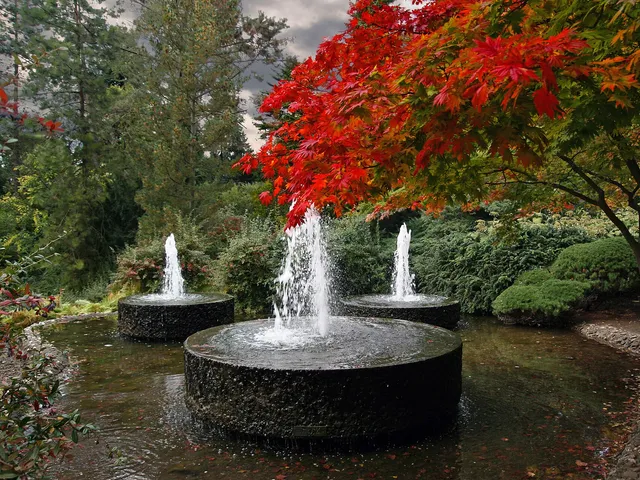
The planting includes ornamental grasses, papyrus, Japanese golden maple, chrysanthemums and giant sequoias. A teahouse on the grounds was built in the Chinese style and furnished in the Japanese manner. The centrepiece bridge — known as the Mikado Bridge — was modelled on a famous bridge in the temple city of Nikkō.
Good to Know
In 2006 the garden ranked among the top five in the competition for Germany's most beautiful park. Following a series of metal thefts, bronze figures of Buddhas, geishas and water-spouting dragons were removed in 2013 for safekeeping. Of the three entrances, one is located on Kaiser-Wilhelm-Allee.
Timeline
- 1912Japanese Garden first laid out next to Carl Duisberg's villa
- 1926Duisberg visits Japan on world tour, decides to expand the garden
- 1950erGarden opens to the public during daytime
- 1960Garden relocated approx. 250 metres south to its current location
- 1961New Japanese Garden completed
- 2006Garden ranked among top five in "Germany's most beautiful park" competition
- 2012Park extended onto the site of the demolished Bayer high-rise
- 2013Bronze statues removed due to metal theft
- 2017Japanese Garden joins the European Garden Heritage Network
Gallery
Map
Blue dots: other places nearby — tap to explore.
You might also like
Comments
- Loading comments…
Sources & links
Auto-generated, last verified: 2026-06-26