Villa rustica (Köln-Müngersdorf)
Roman country estate in western Cologne: bones found here provide the first evidence of the domestic cat in Roman Germania.
In Roman times, this estate was one of the many farms in the hinterland of Cologne. Its remains lay on a site known as “Auf der alten Steinrutsch”.
Source: Wikipedia
At a Glance
- Type
- former Roman country estate (villa rustica)
- Location
- Müngersdorf district, Lindenthal borough, near today’s RheinEnergieStadion
- Distance
- about 5.2 kilometres from the western gate of ancient Colonia Claudia Ara Agrippinensium
- Origins
- probably around AD 50
- Excavation
- March to shortly before Christmas 1926, directed by Fritz Fremersdorf
- Finds
- main house, eleven outbuildings, seven wells, a cremation cemetery, a group of graves with six sarcophagi
- Location of finds
- Römisch-Germanisches Museum Köln
Bone finds from the villa's wells provided the first evidence of the domestic cat in Roman Germania.
Rescue Excavation Before the Construction of the Jahnwiese
South of the main arena in the Müngersdorf sports park, later the Müngersdorf Stadium, a field for games and parades was planned, which required deep excavation of the ground. This threatened to destroy a known Roman ruin site. Mayor Konrad Adenauer approved a “special loan”, and the city assigned 30 unemployed men to the digging. Because the construction company went bankrupt, the archaeologists gained three weeks beyond the original schedule. Large-scale trenches also uncovered part of the estate’s boundary wall, as well as prehistoric remains, some from the Stone Age, made of flint and pottery. The results were published as a monograph in 1933.
Main House and Outbuildings
The buildings were erected on the remains of a timber-framed farmhouse from the Ubian period; nothing is known about the builder. The main building was a portico villa with corner projections and a large central utility room, for which the excavator reconstructed six building phases. It had a living room heated by a hypocaust system, a bath, latrines, a stone cellar, a tiled roof and red-plastered exterior walls. Furnishings include fragments of elaborate wall paintings from Room 16, pieces of marble wall cladding and a few mosaic tesserae. The smaller Building I is interpreted as housing for the farm staff, although the published material notes its resemblance to a small portico villa with a large central hall (Stahl type). The other buildings were apparently barns and stables.
Animal Bones and the First Evidence of the Domestic Cat
Bones from the wells offer insight into livestock farming: horses, cattle, pigs, sheep, geese and chickens are all attested. Among the dogs were large farm dogs and one very small animal about the size of a pinscher. The bones found at Müngersdorf provided the first proof of the domestic cat in Roman Germania.
Economy, Trade and Supply
A small anvil from the main building and loom weights for textile production point to additional economic activities. Oyster shells indicate imported luxury foods, and wine arrived in amphorae. Bathwater flowed through a 16-metre-long masonry channel into a pond, while refuse was dumped in pits in the farmyard. Today’s Aachener Straße follows the course of the Via Belgica, the long-distance road from Cologne via Jülich and Maastricht to Boulogne-sur-Mer, and runs only about 700 metres north of the estate.
Religious Evidence
A dedicatory inscription to Jupiter, Juno and other gods, as well as a fragment of a Matronae altar, were recovered in the farmyard area.
Timeline
- um 50 n. Chr.Buildings erected on the remains of a Ubian-era timber-frame farmhouse
- 1926Planned 'Jahnwiese' field threatens the Roman ruins site
- März 1926Excavation begins under Fritz Fremersdorf
- Dezember 1926Excavation work ends shortly before Christmas
- 1933Excavation results published as a monograph
Gallery
Map
Blue dots: other places nearby — tap to explore.
You might also like — related or nearby
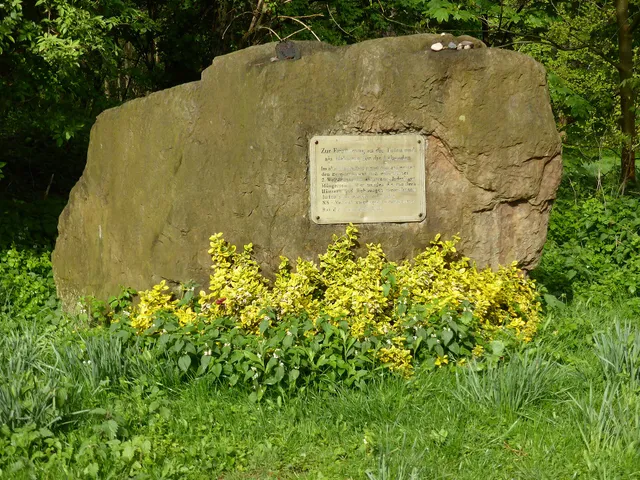
Deportation Camp Cologne-Müngersdorf Memorial
since 2020A freely accessible memorial in Cologne's outer green belt that has commemorated the former Nazi assembly camp since 2020. Around 3,500 Jewish people were deported from here. At its heart is a walkable path and the sculpture "Wall" by Simon Ungers.
Comments
- Loading comments…
Sources & links
Auto-generated, last verified: 2026-10-22
How this page is made
This page draws on open sources — Wikipedia, Wikidata, official websites and the city’s open data. Every statement is checked against the sources linked here, and pages are refreshed regularly.
Spotted a mistake anyway? Tell us below — we read every submission.