Pelzhaus A. Weiss
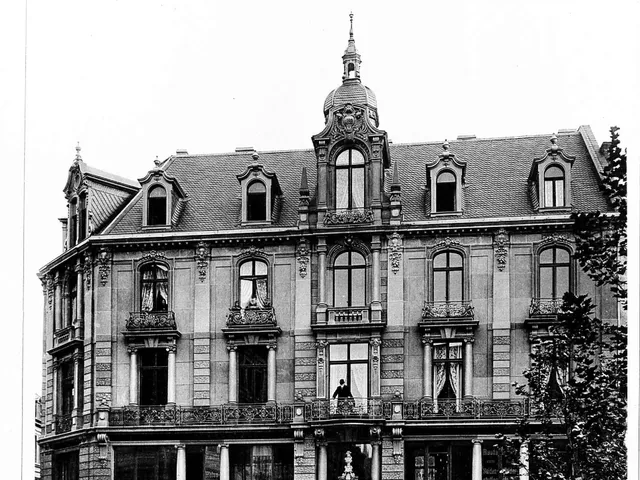
Former Cologne fur shop on Schildergasse, remembered today for its striking Klotz & Fieth commercial building, still standing.
For over a century, the business tracked the evolution of the fur trade itself, moving from bespoke tailoring to ready-made fur fashion as Cologne's shopping street grew ever more prestigious.
Source: Wikipedia
Auf einen Blick
- Art
- Ehemaliges Pelzgeschäft mit Kürschnerei
- Lage
- Schildergasse 14–16, Köln, Altstadt-Nord (Stadtbezirk Innenstadt)
- Gegründet
- 1854 durch Adam Weiß
- Architekten des Geschäftshauses
- Clemens Klotz und Joseph Fieth
- Gebäude
- Sechsgeschossiges Geschäftshaus, bis heute erhalten
- Laden
- Rund 5 Meter breit, etwa 19 Meter tief
- Nachweis
- Im Pelz-Fachverzeichnis 1957 geführt, 1966 nicht mehr
The narrow, awkwardly shaped plot on Schildergasse forced architects Klotz & Fieth into an unusual solution: the sales room was only about 5 meters wide but roughly 19 meters deep – almost like a tube.
Geschichte der Firma
Adam Weiß gründete die Kürschnerei 1854; später führte Ludwig Weiss das Geschäft. Anfangs wurden Pelze ausschließlich nach Maß gefertigt, doch mit der Pelznähmaschine um 1900 und dem wachsenden Modeinteresse stieg die Nachfrage nach Konfektionsware. Ludwig Weiss warb schon früh im 20. Jahrhundert mit fertiger Pelzkonfektion, ein Briefkopf von 1912 belegt zudem ein eigenes Rauchwaren-Lager. Ein zusätzliches Lager unterhielt die Firma im Nachbarhaus Nummer 8–12.
Das Geschäftshaus
Am angestammten Standort ließ die Firma ein sechsgeschossiges Geschäftshaus errichten, entworfen von den Architekten Clemens Klotz und Joseph Fieth und 1930 ausführlich vorgestellt. Das schmale, verwinkelte Grundstück verlangte eine besondere Lösung: Drei Geschosse fügen sich in die Höhe der Nachbarbebauung ein, darüber staffeln sich drei zurückgesetzte Etagen, die schon von der Kreuzung Hohe Straße aus sichtbar sind. Große Kalksteinplatten prägen die Fassade.
Der Laden
Eine große, bronzegefasste Glasfront führte in geschwungener Linie zu den nach hinten verlegten Eingängen und schloss innen mit einer Mahagoni-Rückwand ab. Über dem Eingang leuchtete der Schriftzug „A. Weiss“ in mattem Bronzeton, an der Seitenwand des Nachbarhauses ergänzte ein senkrechter Schriftzug „Pelze A. Weiss“ die Werbung. Ein Rollgitter sicherte den Laden gegen Einbruch.
Timeline
- 1854Furrier Adam Weiß founds a fur workshop with retail sales
- um 1900Rise of ready-made fur garments via fur sewing machine, boom in furriery
- 1912Invoice dated January 1 mentions ready-made furs and pelt warehouse
- 1920Latest photograph date of the newly built commercial building
- März 1930Publication of a detailed description of the new commercial building
- 1955Photos by Carl Detzel show the shop window of the neighboring building
- 1957Company still listed in the fur trade directory
- 1966Company no longer listed at the latest in this edition
Gallery
Map
Blue dots: other places nearby — tap to explore.
You might also like — related or nearby

Comments
- Loading comments…
Sources & links
Auto-generated, last verified: 2026-09-13
How this page is made
This page draws on open sources — Wikipedia, Wikidata, official websites and the city’s open data. Every statement is checked against the sources linked here, and pages are refreshed regularly.
Spotted a mistake anyway? Tell us below — we read every submission.