Heizwerk Köln-Südstadt
Germany's first major alternating-current power plant began operating in Cologne's Südstadt in 1891 – today it's a working district heating plant.
After Cologne's medieval city wall and its outer ramparts were torn down starting in 1880, an entire city block was set aside for new municipal utility buildings. Alongside district heating, the site still houses the drinking water supply for Cologne's inner city today.
Source: Wikipedia
At a glance
- Type
- Historic, still-active district heating plant
- Location
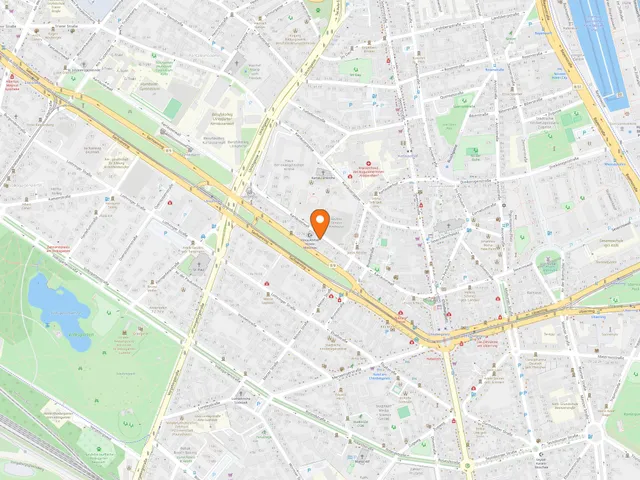
- Südstadt, Innenstadt district; city block between Zugweg, Bonner Wall and Ohmstraße
- Construction period
- 1883 to 1909
- Architect
- including Heinrich Deutz
- Drinking water
- Underground reservoir holding 20,000 cubic metres
- Electricity generation
- Until end of 2017
In 1903, the tram network alone consumed around 62 percent of the alternating current generated at the plant – by far its largest customer.
Pioneer of alternating current
With an output of around 1.2 megawatts, the plant was, at its launch, the first major power station in Germany built on alternating current. On 12 September 1891 the first electricity flowed to Cologne's Volksgarten, lighting the 21st German Jurists' Convention there. The plant formally began operations on 1 October 1891, initially supplying the Old Town and the Ring boulevards: parts of the public street lighting, small motors in trades and factories, and lamps in a number of households.
Growth driven by the tram
New districts, trades and industry soon demanded more power, so additional generators were added. From October 1901 Cologne's first electric tram ran; within two years it alone consumed around 62 percent of the alternating current produced here. By 1909 the plant counted 6,078 customers, with the transport operator still the largest, taking 49 percent of output.
Buildings and architecture
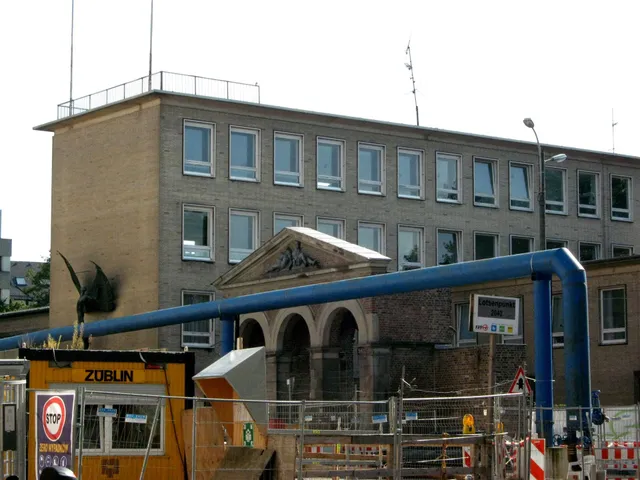
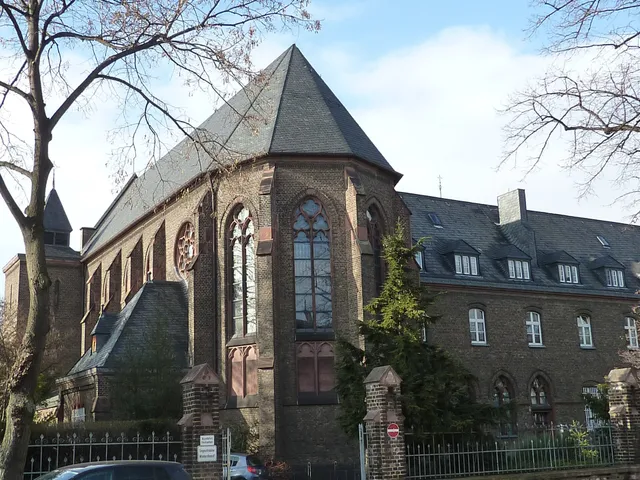
The first structure, built in 1883/84, was the pump house of the Severin I waterworks, followed in 1890/91 by the first electricity works. These early buildings, with their yellow brick façades, draw on German Renaissance and Classicist styles. The later red-brick buildings echo older traditions still further back: the second electricity works in Romanesque forms, the plant housing the alternating-current generators in neo-Gothic style — the latter partially reconstructed in the 1970s. The site was built and operated by the "Gas-, Elektrizitäts- und Wasserwerke Köln AG (GEW)".
War and reconstruction
The last bombing raid, on 2 March 1945, damaged many buildings, leaving Cologne without electricity for eleven days. A diesel generator supplied by the military government got Boiler VII running again, and on 30 March 1945 a six-kilovolt cable was connected from the Pius substation in Ehrenfeld to Zugweg. One generator ran only briefly in November 1945 due to shortages of oil and coal; both generators were not fully back online until 1949.
From power station to heating plant
Since a 1963/64 modernisation, the plant has also supplied district heating; in October 1966 broadcaster WDR became one of its first major customers. In 1994 it was converted into a combined-cycle gas and steam turbine plant, comprising a gas turbine unit, a waste-heat boiler with supplementary firing, and a steam turbine unit. Until the end of 2016 it generated around 100,000 MWh of electricity per year through natural-gas-fired combined heat and power. Electricity generation ended once the new "Niehl 3" unit at the Cologne-Niehl combined heat and power plant, built in 1977, came online.
Timeline
- 1883/84Construction of the Severin I waterworks pump house
- 1890/91Construction of the power plant (Central 1)
- 1891First electricity on 12 September, regular operation from 1 October
- 1898–1900Construction of the second power plant (Central 2)
- 1901Expansion with Severin II pumping station and drinking water reservoir
- 1926Decommissioning and renewal of the outdated AC system
- 1945Bombing on 2 March, generators back online by 1949
- 1994Conversion into a modern combined-cycle heat and power plant with gas turbine
Gallery
Map
Blue dots: other places nearby — tap to explore.
You might also like — related or nearby

Comments
- Loading comments…
Sources & links
Auto-generated, last verified: 2026-09-26
How this page is made
This page draws on open sources — Wikipedia, Wikidata, official websites and the city’s open data. Every statement is checked against the sources linked here, and pages are refreshed regularly.
Spotted a mistake anyway? Tell us below — we read every submission.