Cologne Wholesale Market
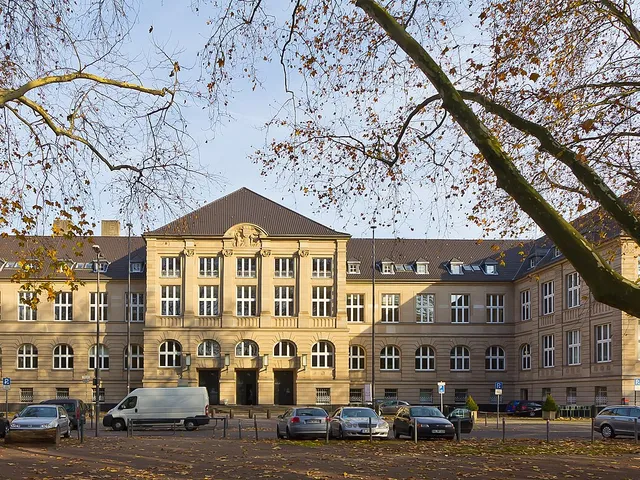
Former wholesale market in Cologne-Raderberg with a 132-metre parabolic vaulted hall — until its closure in late 2025, one of Germany's largest.
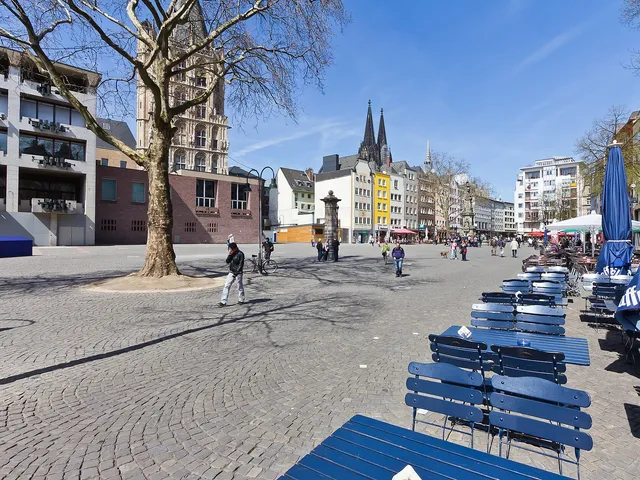
Trade at this site traces back centuries: an early forerunner emerged as far back as 922 as the "Cologne Market" on what is now Alter Markt.
Source: Wikipedia
At a Glance
- Type
- Wholesale market (operations ceased end of 2025)
- Location
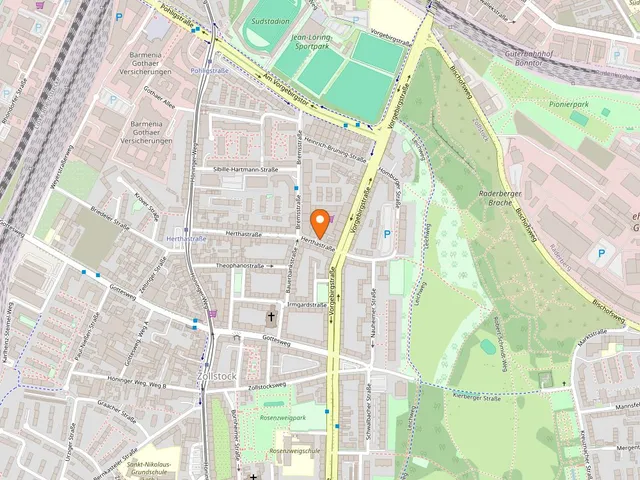
- Cologne-Raderberg, Marktstraße 10, Rodenkirchen district
- Market area
- 238,000 m² (final size)
- Main hall
- 132 m long, 57 m span, 22 m apex height
- Built
- occupied from 1 November 1940
- Heritage status
- protected since 23 October 1989
- Scale
- ranked among Germany's largest wholesale markets
The wholesale market was built on the site of the „Judenbüchel", a Jewish cemetery marked as „Tödten Iuden" on an 1807/1808 map – a location that did not trouble the Nazis when construction began in 1936.
History
The medieval market expanded toward what is now Heumarkt, trading chiefly in food, wine, and grain. A new wholesale market opened at Sassenhof on 29 November 1904, though its location proved impractical. In 1936, the Reich Economics Minister merged the Rhineland grain wholesale markets of Düsseldorf and Neuss into Cologne. The site chosen for the new building in Raderberg lay on a former Jewish cemetery, the Judenbüchel.
Architecture
Mayor Karl Georg Schmidt broke ground on 17 October 1936. The parabolic vault was designed by senior building official Theodor Teichen, with the topping-out ceremony held on 21 May 1939. Vaulted cold-storage cellars run beneath the entire hall, connected to the Cologne-Bonntor freight yard. Refrigerated warehouses were added in 1968.
Trade and Operations
The market sourced goods from surrounding growing regions, the Frankfurt area, and at least 70 percent from abroad. At least 220 companies sold around 300,000 tonnes of goods annually to more than 5,000 customers. Market operations were governed by a set of bylaws from 1994, overseen by a market authority.
Relocation and Closure
As early as 2007, the city council decided to relocate the market to Cologne-Marsdorf. Doubts over the traffic concept and the review of alternative sites repeatedly delayed the timeline. Operations finally ceased at the end of 2025. The site is slated for redevelopment as part of the "Parkstadt Süd" building project.
Good to Know
The old Bauhaus-style vegetable auction hall is no longer part of the market hall complex and has been used for events since 2007.
Timeline
- 922First predecessor established as "Kölner Markt" on Alter Markt.
- 1904New Cologne wholesale market opened at Sassenhof (29 November).
- 1936Merger of Düsseldorf and Neuss grain markets into Cologne; groundbreaking in Raderberg (17 October).
- 1939Topping-out ceremony of the parabolic vaulted hall (21 May).
- 1940Move into new halls in Cologne-Raderberg (1 November); old Sassenhof market used until 12 July.
- 1968Construction of cold storage facilities.
- 1989Wholesale market hall placed under heritage protection (23 October).
- 2007City council decision to relocate to Cologne-Marsdorf by 2020 (13 December).
- 2025Final closure of the Cologne wholesale market at year-end.
Gallery
Map
Blue dots: other places nearby — tap to explore.
You might also like — related or nearby
Funkhaus Köln (Deutschlandfunk Tower)
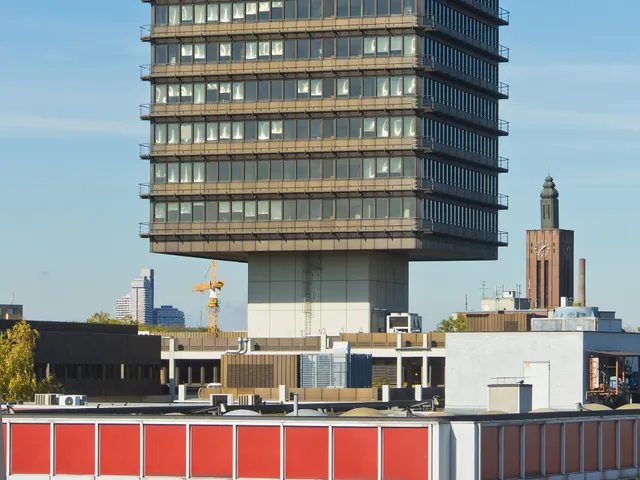
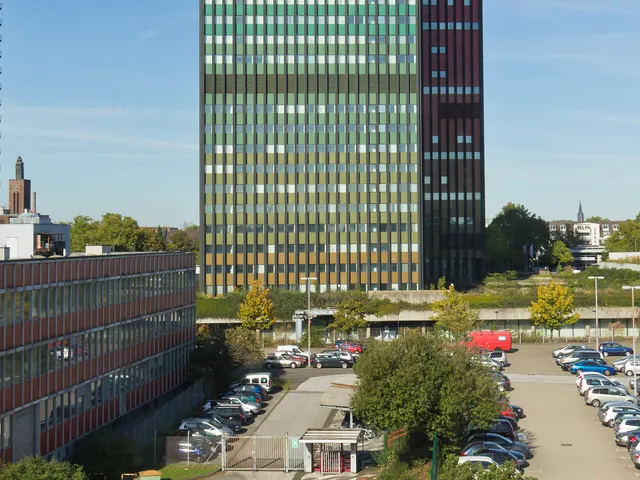
since 1978The 102-metre Funkhaus Köln in the Raderthal district has housed the studios and editorial offices of Deutschlandfunk since 1979. Listed as a protected monument since 2024, the tower with its unusual suspended structure can be explored on regular public guided tours.
Comments
- Loading comments…
Sources & links
Auto-generated, last verified: 2026-09-16
How this page is made
This page draws on open sources — Wikipedia, Wikidata, official websites and the city’s open data. Every statement is checked against the sources linked here, and pages are refreshed regularly.
Spotted a mistake anyway? Tell us below — we read every submission.