Gräfenmühle (Köln-Dellbrück)
Former watermill on the Strunde that became a bicycle factory and, from 1905, a rubber factory – its machines ran on the mill's water wheel until after the Second World War.
Nothing is documented about the origins of the Gräfenmühle. The earliest surviving record reports that it was destroyed during the Thirty Years' War.
Source: Wikipedia
At a Glance
- Type
- former watermill
- Watercourse
- Strunde
- Location
- Cologne, Dellbrück district, Mülheim borough
- Drive
- undershot water wheel
- Later uses
- bicycle factory, rubber manufacturing
The Gräfenmühle, which eventually housed a rubber factory, produced items such as bathing caps, balloons, inflatable figures and tennis shoes – and its undershot water wheel still served as the power source until after the Second World War.
From Tenant Mill to Factory
A deed from 1784 records Urban Wiesdorf as the mill's tenant. Towards the end of the 19th century, the Lennartz brothers moved into the Gräfenmühle with a bicycle factory.
Rubber Goods Powered by Water
In 1905, the company Radium Rubber Ltd. was founded here, producing rubber goods. Its range included bathing caps, balloons, hygiene products and inflatable figures, as well as gloves, tennis shoes and boots. The machines still drew their power from the mill's water wheel until after the Second World War.
From Factory to Housing
In 1978, the old mill made way for new factory buildings. These were converted into residential use in the 1990s.
Timeline
- 1784Urban Wiesdorf is documented as tenant of the mill
- Ende 19. JahrhundertLennartz brothers set up a bicycle factory in the mill
- 1905Radium Rubber Ltd. founded with rubber manufacturing
- 1978Old mill demolished to make way for new factory buildings
- 1990erFactory buildings converted into residential use
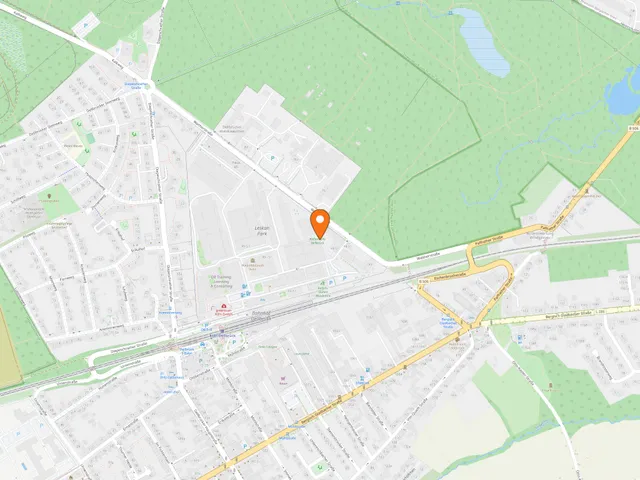
Map
Blue dots: other places nearby — tap to explore.
You might also like — related or nearby
Comments
- Loading comments…
Sources & links
Auto-generated, last verified: 2026-11-08
How this page is made
This page draws on open sources — Wikipedia, Wikidata, official websites and the city’s open data — plus basic place data and photos from Google Maps where a place is listed there. Every statement is checked against the sources linked here, and pages are refreshed regularly.
Spotted a mistake anyway? Tell us below — we read every submission.