Faulbach (Rhine)
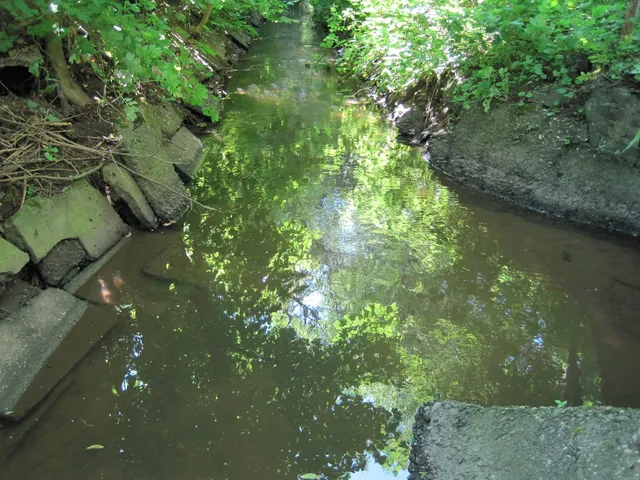
A Cologne stream formed by the confluence of the Flehbach and Bruchbach; its name alludes to the sluggish flow of its waters.
The Faulbach is a stream section within the city of Cologne, beginning where the Flehbach and Bruchbach converge near the BAB 4 motorway interchange — close to the tram depot of Kölner Verkehrsbetriebe in the Merheim district.
Source: Wikipedia
At a Glance
- Type
- Stream section in Cologne
- Origin
- BAB 4 interchange near Köln-Merheim
- Mouth
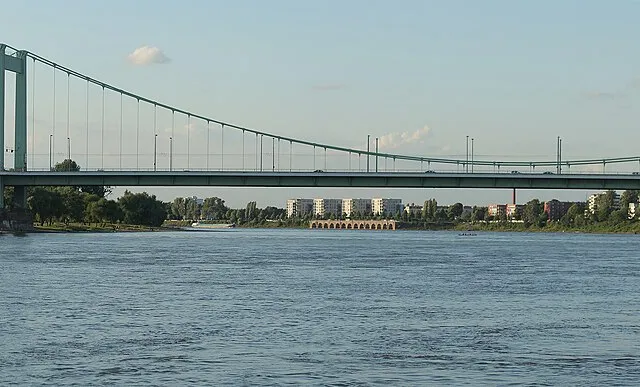
- Flows into the Rhine north of the Mülheimer Brücke
- Location
- Mülheim district and borough
- Name origin
- "faul" — sluggish current, or boggy water quality
To tame the flood-prone Faulbach, engineers dug it a deeper channel and then routed it literally beneath the river Strunde – an underground river crossing with a 1–2 metre height difference between the two waterways.
Things to do here
- Stroll along the dreamy little brook
- Watch the slow, lazily flowing water
- Take photos of the natural urban stream
- Trace the history of the former Merheim marsh
- Enjoy the calm surroundings on a quiet walk
Name and Meaning
The name derives from the stream's slow, lazy flow — water so still it was described as "faul" (idle or rotten). A second interpretation holds that "faul" refers to the brackish, marshy character of the water itself.
History
The Faulbach once fed the fish-rich Merheimer Bruch wetland. After repeated flood damage, engineers dug a deeper channel for the stream — which, paradoxically, drained the wetland entirely, leaving it dry today.
Course
Near Köln-Holweide, at a spot known as the Erk close to Gut Schlagbaum, the stream was routed beneath the Strunde river. From there it continues partly culverted until it reaches the Rhine north of the Mülheimer Brücke. At the crossing with the Strunde, the two watercourses differ in elevation by one to two metres.
Map
Blue dots: other places nearby — tap to explore.
You might also like — related or nearby
Comments
- Loading comments…
Sources & links
Auto-generated, last verified: 2026-06-26
How this page is made
This page draws on open sources — Wikipedia, Wikidata, official websites and the city’s open data. Every statement is checked against the sources linked here, and pages are refreshed regularly.
Spotted a mistake anyway? Tell us below — we read every submission.