Hohe Straße
The Hohe Straße is one of Cologne's best-known shopping streets, running as a pedestrian zone through the heart of the Altstadt-Nord district. Its history goes all the way back to Roman times, when it formed the main north-south axis of the ancient city.
The Hohe Straße is one of Cologne's liveliest pedestrian zones, linking the cathedral area with the Schildergasse. Just eight metres wide, it draws countless visitors every day, weaving between department stores, fashion shops and souvenir stalls.
At a Glance
- Location
- Cologne city centre, Altstadt-Nord district
- Length
- 683 metres
- Route
- north-south between Wallrafplatz and Hohe Pforte
- Street width
- around eight metres
- Character
- pedestrian zone, officially car-free since 1967
- Origin
- the Roman Cardo maximus
- Significance
- eighth-busiest shopping street in Germany in 2023
- Transport
- served by the Dom/Hauptbahnhof, Rathaus, Appellhofplatz and Neumarkt metro stations
In Roman times the Hohe Straße, known as Strata lapidea, was probably the only fully paved street in the city – and the grain stores at the nearby legion base held enough for around two years of emergency supplies.
Roman Roots
The line of the street follows the Roman Cardo maximus, the ancient city's main north-south axis. The Romans called it Strata lapidea, meaning paved street – it was surfaced almost end to end and was probably the only paved road in the early settlement.
At its junction with today's Schildergasse, the ancient Decumanus maximus, stood the forum, the central marketplace. Along the street ran military facilities such as barracks, large kitchens, grain stores and workshops. Notably, the full granaries at the legion's base could secure emergency supplies for around two years.
A Street of Many Names
In the Middle Ages the street changed its name remarkably often, depending on which trade had settled in a given section. There were labels such as "Unter Spormacher" after the weapon smiths, or "Vor den Augustinern" after the nearby monastery. The basis for today's name was laid during the French era: from 1813, Cologne streets could only carry French names, and it became known as rue haute. A Prussian edict abolished these again in 1816 and established the uniform name "Hohe Straße".
The name refers to its elevated position: the street rises between ten and fifteen metres above the average water level of the Rhine.
Trade, Department Stores and Arcades
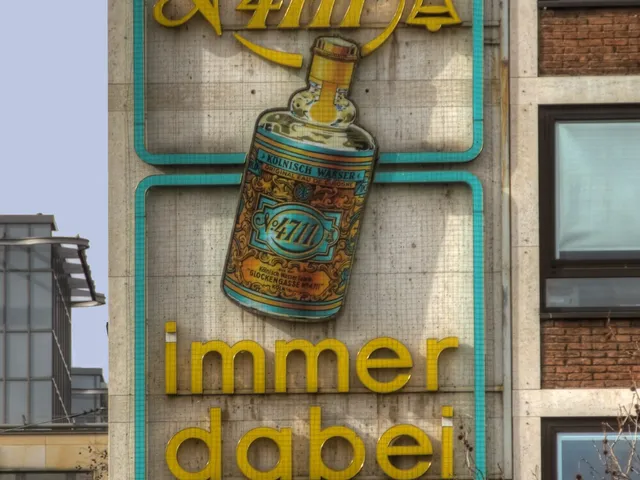
From the 19th century the street grew into a major commercial thoroughfare. Trade in luxury goods took hold here – fashion, eau de Cologne, cigars and books. Well-known names such as Farina (eau de Cologne) and the tobacco merchant Joseph Feinhals shaped the scene.
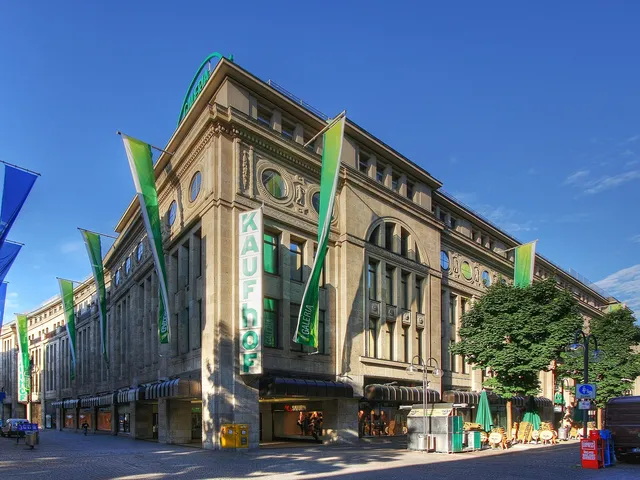
In 1863 the "Königin-Augusta-Halle" opened as the city's first metropolitan shopping arcade – after the Sillem's Bazar in Hamburg, it was the second significant shopping arcade in Germany. Leonhard Tietz's department store eventually gave rise, via several changes, to today's Galeria store. The Stollwerck arcade is the only surviving shopping arcade from the elegant pre-war period.
Destruction and Reconstruction
During the Second World War air raids reduced the street to a field of rubble, destroying around 90 percent of its built fabric. Unlike many other cities, Cologne kept the old, medieval street layout during reconstruction. From 1948 onwards mainly functional modern buildings went up.
In 1948 the Hohe Straße became one of the first commercial streets in Germany to be closed to car traffic. It was turned into a full pedestrian zone in 1967 by Mayor Theo Burauen. Around the same time the jazz producer Gigi Campi ran an ice-cream café here that became a meeting point for Cologne's cultural scene and international celebrities.
The Hohe Straße Today
Because of high rents, high-turnover chain stores – often franchises – dominate, while traditional specialist shops have become rare. The mix ranges from department stores to shoe and fashion outlets, opticians, perfumeries, bookshops and jewellers. Due to the narrow street and dense pedestrian flow, outdoor dining is found almost only in the side streets. Of the roughly 90 retail units, just under 30 percent offer more than 500 square metres of floor space.
Timeline
- 1863The Königin-Augusta-Halle opens as Cologne's first metropolitan shopping arcade
- 1816A Prussian edict establishes the uniform name "Hohe Straße"
- 1907The Stollwerck building with its shopping arcade is inaugurated
- 1948Closed to car traffic as one of the first commercial streets in Germany
- 1967Opened as a full pedestrian zone by Mayor Theo Burauen
- 1974The first McDonald's restaurant in Cologne opens at No. 84
- 2023Ranked eighth among Germany's busiest shopping streets
Gallery
Map
Blue dots: other places nearby — tap to explore.
Address
Hohe Str.
50667 Köln
You might also like — related or nearby
Comments
- Loading comments…
Sources & links
Auto-generated, last verified: 2026-07-13
How this page is made
This page draws on open sources — Wikipedia, Wikidata, official websites and the city’s open data. Every statement is checked against the sources linked here, and pages are refreshed regularly.
Spotted a mistake anyway? Tell us below — we read every submission.