Dreikönigenpförtchen
Tucked away between St. Maria im Kapitol and Marienplatz, the Dreikönigenpförtchen is the only surviving gate of Cologne's former monastic immunity districts.
The tucked-away Dreikönigenpförtchen (Kölsch: „Dreikünnijepöötzche") is the only surviving gate of Cologne's many former monastic immunity districts. It links the Lichhof – the former churchyard of St. Maria im Kapitol – with Marienplatz.
At a Glance
- Type
- Gothic monastery gate
- Location
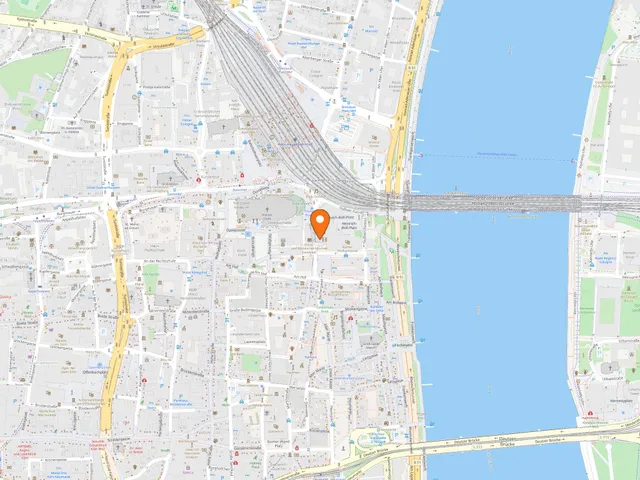
- Between St. Maria im Kapitol (Lichhof) and Marienplatz
- Built
- 1460, on the site of a Romanesque predecessor
- Patron
- Councilman Johannes Hardenrath
- Decoration
- Sculpture group „Adoration of the Magi" from 1310
- Distinction
- Cologne's only preserved immunity gate
Meaning and Name
At the walls of the monasteries and collegiate churches, the city's legal power and tax authority once ended – beyond them began the protected immunity district. The small gate is not to be confused with the medieval Dreikönigenpforte, a passage in the riverside city fortifications that was demolished in 1854.
The gate owes its name to a 19th-century tradition: according to it, the relics of the Three Kings were first brought to St. Maria im Kapitol after their arrival, the most important church in Cologne alongside the cathedral.
The Three Kings in Cologne
On 23 July 1164, Archbishop Rainald von Dassel brought the relics of the Three Kings from Italy to Cologne as spoils of war – a gift from Emperor Frederick I Barbarossa. He had set out from Milan on 9 June and had to use much cunning on the dangerous journey to protect the precious cargo from thieves. He was welcomed enthusiastically before the city and led inside in a procession.
Thanks to the relics, Cologne became one of the most important pilgrimage sites north of the Alps. In honour of the kings, three crowns were added to the city's coat of arms. Whether Rainald von Dassel actually passed through the Romanesque predecessor gate is not historically certain.
Construction and History
The present Gothic gate was newly built in 1460 by councilman Johannes Hardenrath on the site of the Romanesque structure. On the Lichhof side, a sculpture group depicting the Adoration of the Magi from 1310 sits above the passage. The figures were once painted in colour, the niche background decorated dark blue with golden stars.
In 1842 the city architect Johann-Peter Weyer restored the gate. The structure was destroyed in the Second World War and rebuilt from 1946 onwards. Since 1981 the four figures of the Adoration group have been replaced by copies; the originals are held in the Museum Schnütgen.
Good to Know
A Cologne carnival song also immortalised the little gate: „Nor am Dreikünningepöötzge, do weiß die Oma noch Bescheid" (Karl Berbuer, 1953).
Gallery
Map
Blue dots: other places nearby — tap to explore.
Address
Dreikönigenpförtchen
50676 Köln
You might also like — related or nearby
Comments
- Loading comments…
Sources & links
Auto-generated, last verified: 2026-07-11
How this page is made
This page draws on open sources — Wikipedia, Wikidata, official websites and the city’s open data. Every statement is checked against the sources linked here, and pages are refreshed regularly.
Spotted a mistake anyway? Tell us below — we read every submission.