Bahnhof Belvedere
Considered Germany's oldest station building preserved in its original form; in 1839 it ended the first stretch of the Cologne–Aachen–Antwerp line.
The building rose on a wooded hill, set slightly apart from the tracks. From the start it was not just a station but also an inn for day-trippers from Cologne.
Source: Wikipedia
At a Glance
- Type
- former reception building of Müngersdorf station, also called “Haus Belvedere”
- Location
- Belvederestraße, Müngersdorf district, Lindenthal borough, Cologne
- Completed
- 1839, commissioned by the Rhenish Railway Company
- Style
- Neoclassical country-house style, two storeys
- Heritage protection
- listed building, monument number 268
- Network
- part of the Via Industrialis in Cologne
The Belvedere station in Cologne-Müngersdorf is the oldest station building in Germany preserved in its original form – yet it was already shut down in the 19th century, because the public soon lost interest in this "peculiar amusement spot in the middle of the fields."
A Station from the Very Beginning
The station marked the end of a seven-kilometre line that began at Cologne's Am Thürmchen station. It was the first section of the planned Cologne–Aachen–Antwerp route, the world's first international railway line. At the opening on 2 August 1839, a special train carried invited guests to Müngersdorf in ten minutes. From 16 August, six pairs of trains ran each on Mondays, Wednesdays, Fridays and Sundays, with an additional evening return trip on Sundays. A text from the construction period reports that the people of Müngersdorf looked forward to seeing the Cologne visitors arrive by steam carriage.
A Destination with a View
The house was oriented towards Cologne. From here visitors could see both the railway line and the city skyline, and the view survives to this day. A garden was laid out around the station, and an inn was run inside the station building. In the first year of operation, however, revenues fell short of expectations. Visitors came in large numbers at first, but interest soon waned and the trips no longer covered their costs. After the line was extended to Aachen in 1841, the station lost further importance. It was closed down in the 19th century.
Architecture and Garden
Who drew up the plans is uncertain. It was probably Johann Peter Weyer, though Walter Buschmann believes it was Matthias Biercher, a student of the Berlin Bauakademie. The house is one of the few buildings of the Schinkel school in the Rhineland. The plastered building has tall windows, and on the street side a balcony in the middle of the façade rests on volute-shaped brackets. On the garden side, a conservatory and a terraced garden adjoin the house. Since 1991 the grounds have been protected as a landscape feature, and seven plane trees about 150 years old grow there. According to the support association, two of them threaten the building fabric by undermining it with their roots. Heritage and nature conservationists have disputed since the 2010s whether they must be felled.
Residence and Vacancy
In 1892 the building passed to the City of Cologne, which used it as a residential building. From 1935 until her arrest in 1943, Klara Stoffels lived here; she was murdered by the Nazi judiciary in 1944. From the 1950s, two artists lived and worked in the house. It has been a listed monument since 1980 and belongs to the Landschaftspark Belvedere, which is named after it. From 2010 the house stood empty and was in urgent need of renovation.
Support Association and Renovation
The Förderkreis Bahnhof Belvedere e. V. was founded in December 2010. It raised the funds for the renovation, took on the role of developer and aims for cultural use of the building. Following a council decision in 2015, the City of Cologne granted it the house under a heritable building right. The city contributes to the costs of renovation and expansion. For its commitment to preservation, the association received the German Prize for Monument Protection, the Silver Hemisphere (Silberne Halbkugel), in 2018. At the end of 2025 it was followed by the Friedrich Jacobs Prize of the FDP council group in Cologne/Kölner Stadtgesellschaft.
Timeline
- 1839Building completed; Köln–Müngersdorf line inaugurated on 2 August
- 1841Line extended to Aachen; station loses importance
- 1892Building passes to the City of Cologne (used as residence)
- 1980Listed as a protected monument (no. 268)
- 2010Building vacant; support association founded in December
- 2015Council decision: building transferred to the association via leasehold
- 2018German Prize for Monument Protection (Silver Hemisphere) on 29 October
- 2025Friedrich Jacobs Prize awarded to the association (late 2025)
Gallery
Map
Blue dots: other places nearby — tap to explore.
You might also like — related or nearby
Deportation Camp Cologne-Müngersdorf Memorial
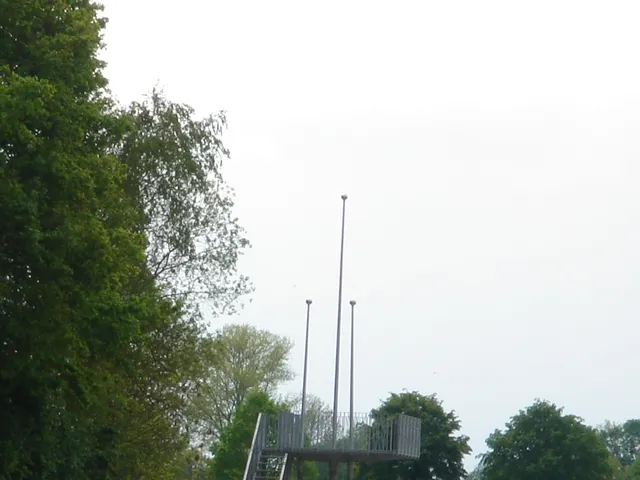
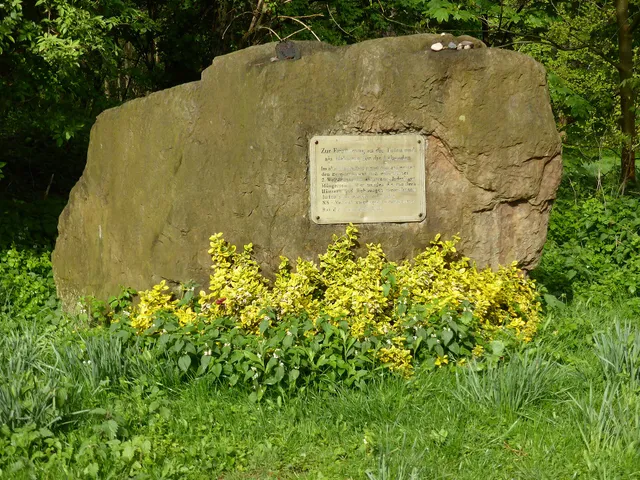
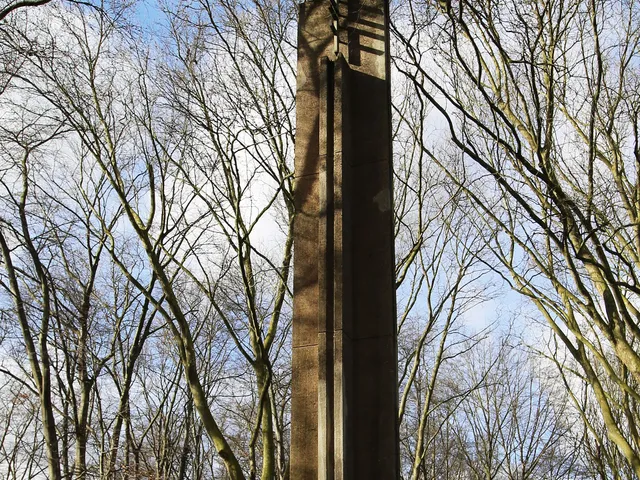
since 2020A freely accessible memorial in Cologne's outer green belt that has commemorated the former Nazi assembly camp since 2020. Around 3,500 Jewish people were deported from here. At its heart is a walkable path and the sculpture "Wall" by Simon Ungers.
Comments
- Loading comments…
Sources & links
Auto-generated, last verified: 2026-10-21
How this page is made
This page draws on open sources — Wikipedia, Wikidata, official websites and the city’s open data. Every statement is checked against the sources linked here, and pages are refreshed regularly.
Spotted a mistake anyway? Tell us below — we read every submission.