Urania Theater
Cologne's first neighborhood theater in Ehrenfeld, now reborn as Theater&Ehrenfeld after decades of shifting names and uses.
Long before it became a stage, this building lived several other lives — as a cinema, a supermarket, and even a daycare center — a small mirror of Ehrenfeld's cultural history.
Source: Wikipedia
At a Glance
- Type
- Theater
- Location
- Cologne-Ehrenfeld, Ehrenfeld district
- Origin
- Opened in 1930 as the "Die Lichtburg" cinema
- First neighborhood theater
- Founded 1985 as Urania Theater
- Current name
- Theater&Ehrenfeld since August 2026
- Operator
- Cologne venue of the kleines theater Bad Godesberg
- Name detail
- The "&" sits between function and place
Founded in 1985, the Urania Theater was Cologne's very first neighborhood theater and served as an early career launchpad for actors like Katy Karrenbauer and Mariele Millowitsch.
From Cinema to Theater
On the site of the former Rhenania-Saal, a cinema opened in 1930 under a name that changed several times over the years. Rebuilt after World War II, it reopened in 1953 as the Rio-Theater with around 600 seats, running until 1968. From 1967 onward, the front of the building housed a supermarket while a daycare center occupied the back — its name still echoing the 1950s cinema today.
The Urania Theater
In autumn 1985, Claudia Howard and Kurt Lambrigger founded Cologne's first neighborhood theater here under the name Urania Theater, in the former Rio cinema in an old working-class quarter of Ehrenfeld. The 1990 production of "Sindbadland" earned the house Cologne's first Theater Prize. Martin Armknecht and Katy Karrenbauer launched their careers on this stage, and Mariele Millowitsch performed here too. After Claudia Howard, her sister Katarina Eisenlohr-Millowitsch briefly ran the theater before it closed in 1993.
Later Operators
Necati Sahin's Arkadaş-Theater moved into the building on Platenstraße in 1997 and won the Cologne Children's and Youth Theater Prize in 2003. From the 2006/2007 season, the Bühne der Kulturen association continued operations as a touring venue with an intercultural focus. In June 2017, the German Cultural Council placed the theater on its Red List of Culture, rating it Category 1 (at risk of closure); performances ended on 31 July 2017.
Return and Relaunch
In October 2017, the Ensemble Phoenix Bühnenspielgemeinschaft, led by Bettina Montazem, Richard Bargel, and Frank Oppermann, took over the space and revived the Urania-Theater name, reopening on 7 November 2017 with "Mother Courage." In 2025 the Urania-Theater relocated to a mirror tent in Cologne-Mülheim. On 14 August 2026, under Frank Oppermann's direction, the original building reopened as the Cologne venue of the kleines theater Bad Godesberg, now called Theater&Ehrenfeld, with an opening premiere on 15 August 2026 of a stage adaptation of Irmgard Keun's "The Artificial Silk Girl."
Program and Mission
Alongside productions from the kleines theater Bad Godesberg, the house is once again open to independent theater ensembles. The aim is to bring different theatrical forms together and break down boundaries between them — securing the venue's long-term future as a theater house for Cologne, and for Ehrenfeld in particular.
Timeline
- 1930Opening of the cinema Die Lichtburg
- 1935Renamed to Ehrenfelder Volkskino
- 1939Renamed to Volks-Lichtspiele
- 1953Reopened after reconstruction as Rio-Theater on 15 September
- 1985Urania Theater opened by Claudia Howard and Kurt Lambrigger in autumn
- 1990Urania Theater receives the 1st Cologne Theatre Prize
- 1993Closure of the Urania Theater
- 2026Reopening as Theater&Ehrenfeld on 14 August under Frank Oppermann
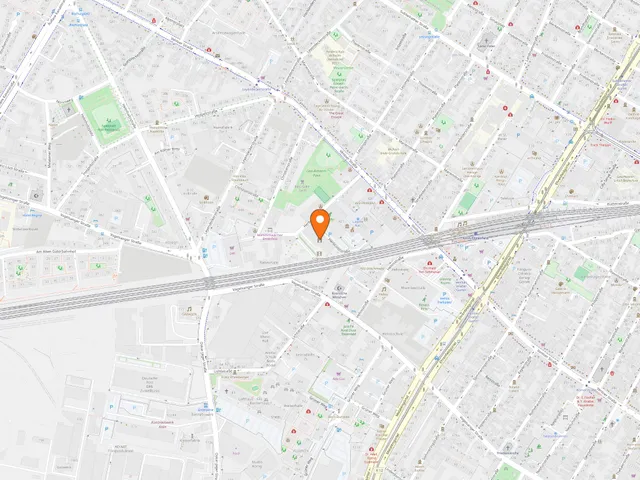
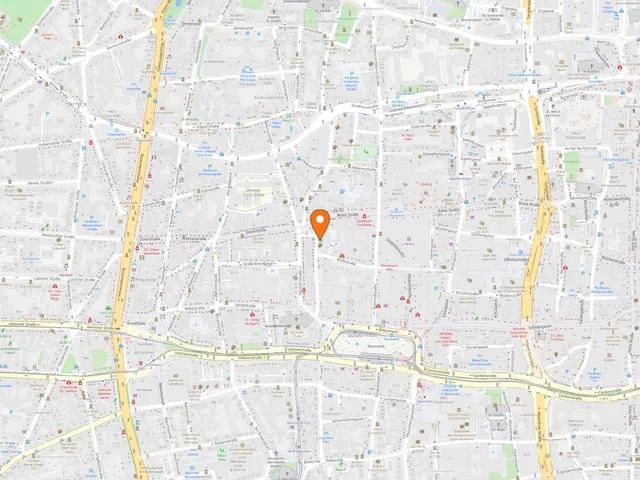
Map
Blue dots: other places nearby — tap to explore.
You might also like — related or nearby
Comments
- Loading comments…
Sources & links
Auto-generated, last verified: 2026-09-12
How this page is made
This page draws on open sources — Wikipedia, Wikidata, official websites and the city’s open data. Every statement is checked against the sources linked here, and pages are refreshed regularly.
Spotted a mistake anyway? Tell us below — we read every submission.