Funkhaus Wallrafplatz
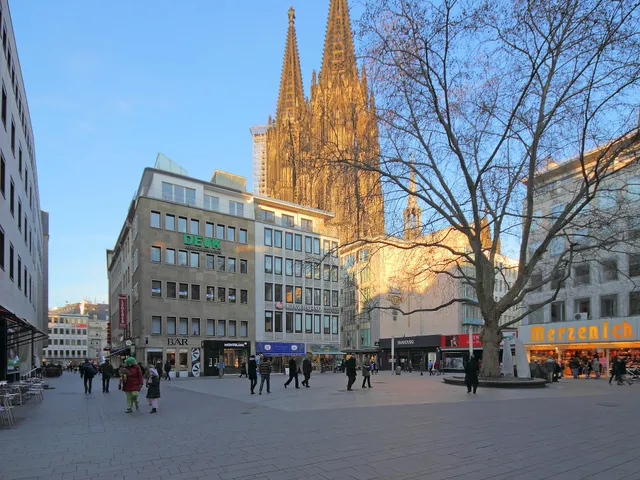
The oldest WDR building in Cologne, housing two public concert halls right beside the cathedral with more than 200 concerts a year.
Funkhaus Wallrafplatz is the oldest building of West German Broadcasting (WDR) in Cologne. Alongside numerous radio studios, it holds two public concert halls just steps from the cathedral.
At a Glance
- Location
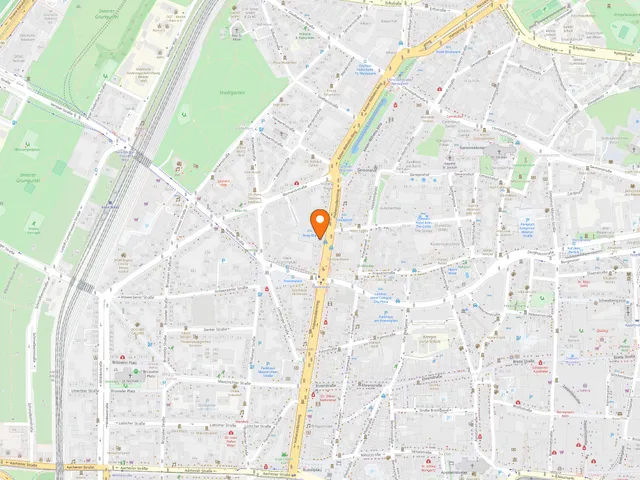
- Wallrafplatz 5, northern Old Town of Cologne, near the cathedral
- Opening
- ceremonially on 21 June 1952 (topping-out already in February 1949)
- Architect
- Peter Friedrich Schneider
- Operator
- West German Broadcasting (WDR)
- Broadcast halls
- Large Broadcasting Hall (650 seats) and Small Broadcasting Hall (160 seats)
- Use
- radio production plus more than 200 concerts and events per year
- Heritage status
- listed since 28 October 1994
- Visitors
- around 70,000 per year
History
The building was among the first major projects in war-ravaged Cologne, launched on the initiative of NWDR director Hanns Hartmann. From 1948 the studios rose on the site of the gutted Hotel Monopol (built 1899/1900 to designs by Ludwig Paffendorf); to save costs and materials, roughly 25 percent of the old structure was folded into the new one. Federal President Theodor Heuss and 700 guests attended the opening on 21 June 1952. With seven storeys and 16,000 square metres, it was then considered one of the most modern in Europe. On the evening of 25 December 1952 the first Cologne television broadcast went out from here, and in 1953 the German Bundestag held one session in the Large Broadcasting Hall while the Bonn plenary chamber was being rebuilt.
Architecture
A structured travertine façade and glazed arcades on the ground floor define the exterior. The curved interior deliberately breaks with the architecture of the Nazi era and displays many 1950s details, including the stairwell glazing by Ludwig Gies and Georg Meistermann and murals by Anton Wolff. To keep the tolling of the cathedral's Petersglocke out, the eight broadcast halls were clad in sound-scattering Swiss pear wood and built soundproof with walls 50 centimetres thick.
The Broadcasting Halls
The Large Broadcasting Hall entered service on 19 October 1951, was designed by sculptor Ludwig Gies and seats 650 visitors and 150 musicians. Fitted with a large Klais concert organ, it now bears the name of former director Klaus von Bismarck. As the first major concert hall in post-war Cologne, it still hosts more than 200 concerts and events each year. The Small Broadcasting Hall holds 160 spectators and is booked with concerts year-round.
Musical History
At the opening concert on 8 October 1951, Igor Stravinsky conducted the German premiere of his Symphonies d'instruments à vent — also the launch of the Musik der Zeit series. The Large Broadcasting Hall went on to see landmark premieres, among them Karlheinz Stockhausen's Gesang der Jünglinge (1956) and works by Hans Werner Henze and Bernd Alois Zimmermann (1958).
Good to Know
The paternoster lift is famous thanks to Heinrich Böll's story Doktor Murkes gesammeltes Schweigen; today only staff may ride it. From 1997 to 2012 the ground floor housed Café Campi, run by Cologne restaurateur Gigi Campi; since then the venue has traded as Funkhaus. The site gained nationwide fame through the children's TV series Der Spatz vom Wallrafplatz, broadcast in 36 episodes from 1969 to 1976.
Gallery
Map
Blue dots: other places nearby — tap to explore.
Address
Wallrafplatz 5
50667 Köln
Hours
Mo: 07:30–20:00
Di: 07:30–20:00
Mi: 07:30–20:00
Do: 07:30–20:00
Fr: 07:30–20:00
Contact
You might also like — related or nearby
Comments
- Loading comments…
Sources & links
- Official website
- Official website (retrieved 2026-08-11)
- Wikidata (retrieved 2026-08-11)
- Wikipedia (retrieved 2026-08-11)
Auto-generated, last verified: 2026-08-11
How this page is made
This page draws on open sources — Wikipedia, Wikidata, official websites and the city’s open data. Every statement is checked against the sources linked here, and pages are refreshed regularly.
Spotted a mistake anyway? Tell us below — we read every submission.