Envihab
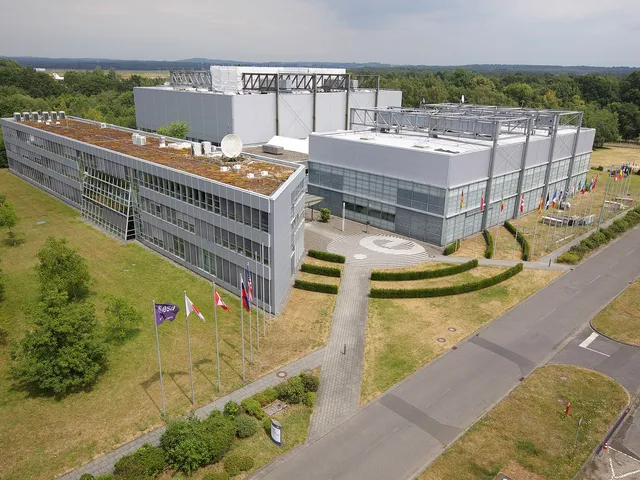
Human centrifuge, simulated altitudes up to 5,500 m and bed rest studies: the DLR facility in Cologne investigates how environmental conditions affect the human body.
The name combines the English "environment" with the Latin "habitat" (dwelling, living space). It is officially spelled ":envihab".
At a Glance
- Type
- Medical research facility of the DLR Institute of Aerospace Medicine
- Location
- Cologne, Porz district, Spich neighborhood
- Opened
- 2012
- Architecture
- Glass Kramer Löbbert Architekten, Johan Kramer
- Usable area
- around 3,500 m²
- Test subjects
- up to twelve, in single rooms
- Modules
- six units (M1 to M6)
At Envihab, weightlessness is partly simulated with "dry water immersion": test subjects lie on a pool of water but are separated from it by a waterproof sheet, for days or even weeks.
Gravity and Altitude
At the heart of the facility is a human centrifuge. Module 1 houses the DLR short-arm centrifuge, a custom-built system for experiments with increased gravity. It serves primarily as a countermeasure to the health risks of weightlessness. Oxygen reduction areas and a pressure area can simulate altitudes of up to 5,500 m. In the physiology lab/barometric complex (M2), experiments run under changing atmospheric conditions, such as scenarios from aviation, spaceflight and mountaineering.
Weightlessness on Earth
In space, the cardiovascular system weakens while muscles and bones deteriorate. The same affects older people, especially those confined to bed, as well as young people who move very little. EnviFit recreates these changes through bed rest with a 6-degree head-down tilt or through dry water immersion. In the latter, test subjects lie on the water but are separated from it by a waterproof sheet. The goal is preventive measures that reduce or entirely avoid illnesses caused by immobility.
Recreating Environments
Individual modules can be sealed off from the outside environment, alone or in combination. This applies to acoustics, temperature, humidity and light including daily cycles, and in part also oxygen content and pressure. The EnviSim test facility realistically reproduces typical conditions of environments such as an aircraft cabin, a space station or a field hospital. For this purpose, test subjects are isolated, immobilized and deliberately exposed to stressful situations. They live in the residential and simulation facility (M3).
Laboratories
The PET-MRI (M4) is used to study physical changes that can occur during long-duration space flights. The findings also apply to strain under unfavorable conditions on Earth. The psychology lab (M5) researches how isolation and stress affect the psyche and performance, and develops methods for prevention. The biology lab (M6) examines microbial diversity in the inhabited, enclosed areas. In the EnviBio laboratory area, microbiological research is possible up to biosafety level S2 under the German GenTSV regulation and in class 8 cleanroom conditions. Components of bioregenerative life support systems are also tested there, and biological space experiments are prepared.
Layout and Visiting
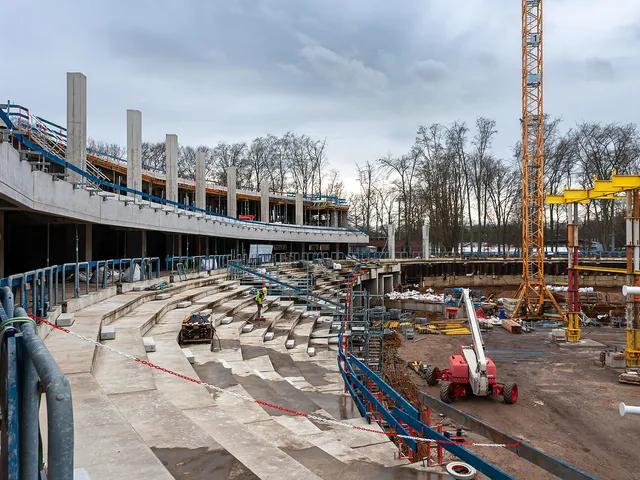
The building follows a modular house-in-house principle. A medical core area connects the modules, so everything can be used without leaving the building. Large training or simulation equipment can be installed. The publicly accessible EnviMeet area provides information about the goals and structure of the facility. It also gives visitors an impression of how science is practiced here.
Timeline
- 2012Construction/opening of the Envihab research facility in Cologne
Gallery
Map
Blue dots: other places nearby — tap to explore.
You might also like — related or nearby

Comments
- Loading comments…
Sources & links
- Official website
- Official website (retrieved 2026-11-06)
- Wikidata (retrieved 2026-11-06)
- Wikipedia (retrieved 2026-11-06, rev 270359317)
Auto-generated, last verified: 2026-11-06
How this page is made
This page draws on open sources — Wikipedia, Wikidata, official websites and the city’s open data. Every statement is checked against the sources linked here, and pages are refreshed regularly.
Spotted a mistake anyway? Tell us below — we read every submission.