Jewish Cemetery Köln-Mülheim
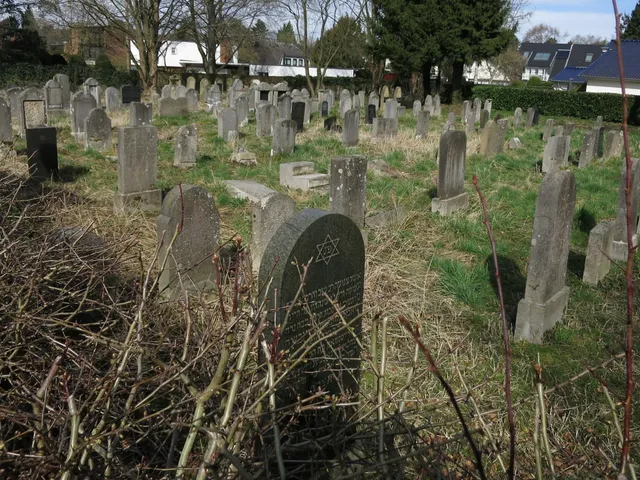
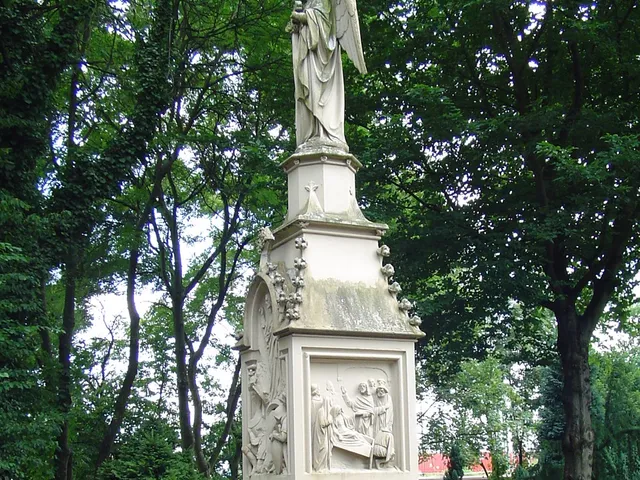
Jewish cemetery in Köln-Mülheim, in use since 1774, where the last burial took place in April 1942.
Mülheim am Rhein was once a town in its own right and has been a district of Cologne since 1914. The cemetery commemorates the Jewish community that existed here.
Source: Wikipedia
Auf einen Blick
- Type
- Jewish cemetery
- Location
- West of the Neurather Ring, alongside the tracks of the line from Köln-Mülheim to Leverkusen-Opladen
- District
- Mülheim
- Area
- 1,741 m²
- Surviving gravestones
- approx. 160
When the old Mülheim synagogue was destroyed by ice floes on the Rhine in 1784, a new building could only be consecrated in 1788. The cemetery, laid out in 1774, still exists today, with its last burial taking place in April 1942.
The Last Burial
The last burial at the cemetery took place in April 1942. It was that of Helene Speier-Holstein.
The Jewish Community in Mülheim
The Jewish community in Mülheim was small. From 1864, it also included the mayoralties of Merheim, Bergisch Gladbach, Bensberg, Odenthal and Overath. In 1885 it had 174 members. In 1929 it was incorporated into the Cologne Synagogue Community. For the Mülheim area, a figure of around 200 members is given for 1930.
The Mülheim Synagogue
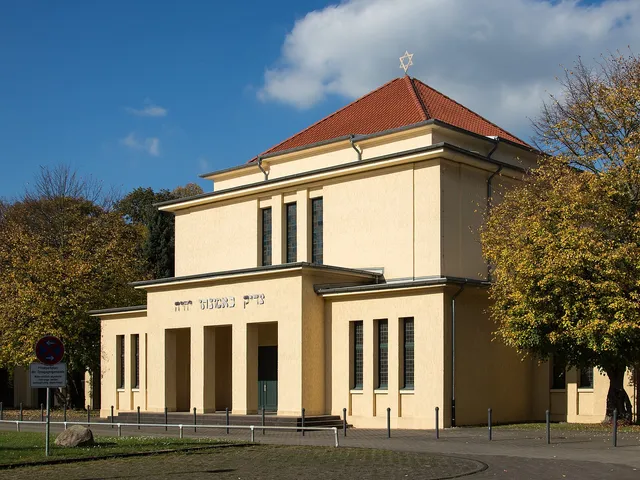
The old synagogue in Mülheim was destroyed in 1784 by ice floes on the Rhine. A new building was consecrated in 1788. That building was destroyed during the Reichspogromnacht (Night of Broken Glass) in 1938, and its ruins were cleared away in 1956.
Timeline
- 1774Jewish cemetery in Köln-Mülheim established
- 1784Old Mülheim synagogue destroyed by ice floes on the Rhine
- 1788New synagogue building consecrated
- 1864Mülheim Jewish community expanded to include surrounding districts
- 1929Community incorporated into the Cologne synagogue community
- 1938Synagogue destroyed during the November pogrom
- 1942Last burial at the cemetery (Helene Speier-Holstein)
- 1956Synagogue ruins removed
Gallery
Map
Blue dots: other places nearby — tap to explore.
You might also like — related or nearby
Comments
- Loading comments…
Sources & links
Auto-generated, last verified: 2026-10-21
How this page is made
This page draws on open sources — Wikipedia, Wikidata, official websites and the city’s open data. Every statement is checked against the sources linked here, and pages are refreshed regularly.
Spotted a mistake anyway? Tell us below — we read every submission.