Opera House on Habsburgerring
One of the largest municipal theaters in the German Empire – opened in Cologne's Neustadt in 1902, demolished in 1958 after wartime destruction.
For architect Carl Moritz, this building launched a sought-after career as a theater specialist; his later plans shaped the theaters in Barmen, Düren, and Stralsund.
Source: Wikipedia
At a Glance
- Type
- Opera house, originally called the "New Municipal Theater"
- Location
- Neustadt/Süd district, facade facing Habsburgerring
- Opened
- September 7, 1902
- Architect
- Carl Moritz
- Size
- Nearly 6,000 square meters footprint, 1,800 seats
- Construction cost
- 3.9 million marks
- Status
- Largely destroyed in 1944, demolished in 1958
To achieve the desired size, a street had to be routed through a tunnel underneath the opera house's stage.
A Building of Superlatives
Sources describe the building inconsistently: the introduction calls it one of the largest municipal theaters in the German Empire, while elsewhere it is even named the largest theater building in the Empire. The project arose because the older municipal theater on Glockengasse had become too cramped.
History
In 1896 the city council resolved to build a second, larger house. From a competition with 41 entries, Cologne building officer Carl Moritz prevailed, though his initial design was rejected and then heavily revised. Construction began in 1899. From 1906 onward, the new building was called the "Opera House," while spoken drama remained at the older "Schauspielhaus."
Architecture
Moritz clad the building in light sandstone and chose a neo-Baroque style inspired by the opera houses of Georg Moller in Mainz and Gottfried Semper in Dresden. Figures from theatrical literature, including Medea and King Lear, adorned the facades. In 1938 the ornate forms of the foyer and auditorium were simplified.
Site and Surroundings
The site lay near Rudolfplatz and the Hahnentor, framed by Habsburgerring and Aachener, Engelbert, and Richard-Wagner streets; a triangular plot had to be added to reach the required size. To achieve the desired footprint, a street was routed through a tunnel beneath the stage. In 1934 a restaurant building was added beside the theater at the Konzertgarten.
Destruction and Demolition
The bombing of Cologne in early 1944 left the building largely destroyed. Reconstruction would have been possible, but the structure was demolished in 1958.
Timeline
- 1896City council decides to build a second, larger theatre
- 1899Construction begins
- 1902Opening as 'New City Theatre' on 7 September
- 1906Building renamed 'Opera House'
- 1934Restaurant building added at the concert garden
- 1938Foyer and auditorium redesigned in a more sober style
- 1944Largely destroyed by the bombing of Cologne
- 1958Building demolished
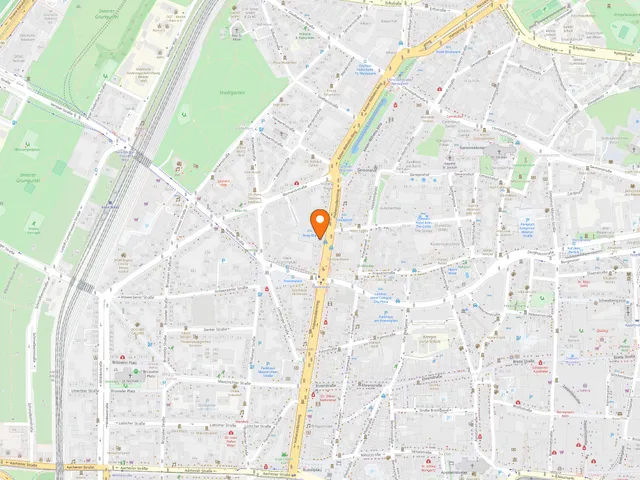
Map
Blue dots: other places nearby — tap to explore.
You might also like — related or nearby
Comments
- Loading comments…
Sources & links
Auto-generated, last verified: 2026-09-09
How this page is made
This page draws on open sources — Wikipedia, Wikidata, official websites and the city’s open data. Every statement is checked against the sources linked here, and pages are refreshed regularly.
Spotted a mistake anyway? Tell us below — we read every submission.