Konrad Adenauer
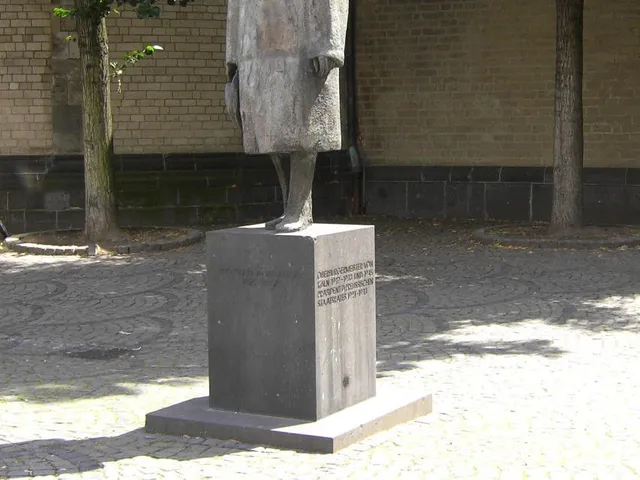
First chancellor of West Germany and a founding figure of the EU — born in Cologne, where he served as mayor from 1917 to 1933.
Konrad Adenauer served as mayor of Cologne for sixteen years and shaped much of the city's early-20th-century development before his later national career. His Cologne years were also marked by far-reaching and contested plans for the future of the Rhineland.
Source: Wikipedia
At a Glance
- Role
- Politician and statesman; first chancellor of West Germany (1949–1963)
- Born
- 5 January 1876 in Cologne, Rhenish Prussia
- Died
- 19 April 1967
- Cologne office
- Mayor of Cologne, 1917–1933
- Party
- Centre Party (from 1906), later founding chairman of the CDU (1946–1966)
- Other offices
- President of the Prussian State Council (1921–1933)
- Denomination
- Roman Catholic
Things to do here
Origins and Education
Adenauer was the third of five children of Johann Konrad and Helene Adenauer. The Kulturkampf, the conflict between the Prussian state and the Catholic Church, shaped his youth and left him with a lasting aversion to “Prussianism”. After his Abitur in 1894 he studied law and politics in Freiburg, Munich and Bonn, graduated in 1900, and then worked as a lawyer at the Cologne court for four years.
Rise in Cologne
Adenauer joined the Centre Party in 1906 and was elected to Cologne's city government the same year. In 1909 he became vice-mayor when his wife's cousin became mayor. Poor health kept him out of the First World War, and in the summer of 1917 he was seriously injured in a car crash. Later that year the council unanimously elected him mayor for a twelve-year term, and re-elected him in 1929. From 1931 to 1933 he was also acting vice president of the German Colonial Society and publicly called for Germany to acquire colonies, arguing that the country had too little room for its population.
Work for the City
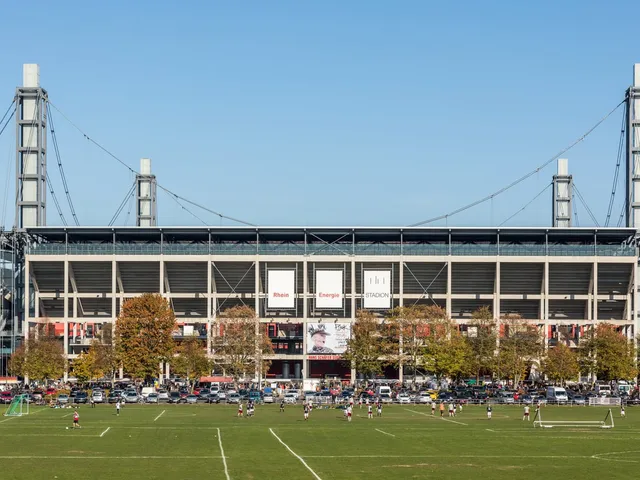
As mayor, Adenauer was among Germany's influential municipal politicians. He rebuilt the University of Cologne, drove the construction of a bridge across the Rhine and an electrical plant, and helped plan a stadium and a city park. During the war he paid particular attention to the civilian food supply, and in 1918 he developed a soy-based “Cologne sausage” to help feed the city. Amid the collapse of the old regime and the threat of revolution in late 1918, he kept order in Cologne through his working relationship with the Social Democrats.
Rhineland Plans
In a speech on 1 February 1919, Adenauer called for the dissolution of Prussia and for an autonomous Rhineland as a new state within the Reich, which he saw as the only way to keep France from annexing the region. Both the Reich and Prussian governments rejected the idea. In late 1923, after Berlin cut financial support to the Rhineland, he opened talks with the French high commissioner Paul Tirard about a Rhenish republic in an economic union with France — a plan he called his “grand design” for Franco-German reconciliation.
Gallery
You might also like — related or nearby
Comments
- Loading comments…
Sources & links
Auto-generated, last verified: 2026-07-02
How this page is made
This page draws on open sources — Wikipedia, Wikidata, official websites and the city’s open data. Every statement is checked against the sources linked here, and pages are refreshed regularly.
Spotted a mistake anyway? Tell us below — we read every submission.