St. Gregorius im Elend
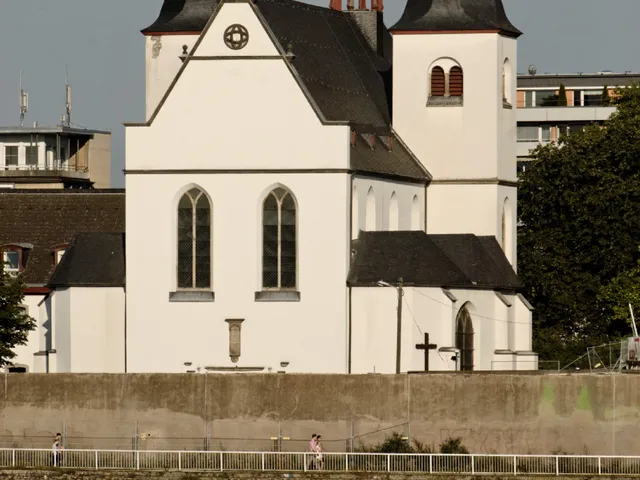
Baroque church rebuilt after WWII destruction, born from the 'Elendskirchhof' — Cologne's historic burial ground for strangers, outcasts, and the dishonoured.
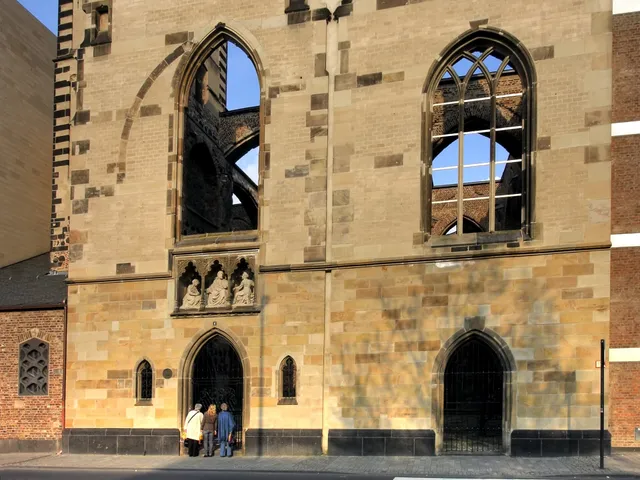
St. Gregorius im Elend — colloquially known as the "Elendskirche" (Church of Misery) — stands in Cologne's Altstadt-Süd district on the street An St. Katharinen. The current building is a post-war reconstruction of the church destroyed in the Second World War, itself descended from an 18th-century predecessor.
Source: Wikipedia
At a Glance
- Type
- Church; reconstruction of a war-destroyed building
- District
- Altstadt-Süd, city centre borough
- Location
- An St. Katharinen, between Sionstal, Arnold-von-Siegen-Straße and Severinstraße
- Patron saint
- Gregory the Great
- Architectural style
- Late Baroque
- Architect
- Karl Band
- Listed status
- Protected monument in North Rhine-Westphalia
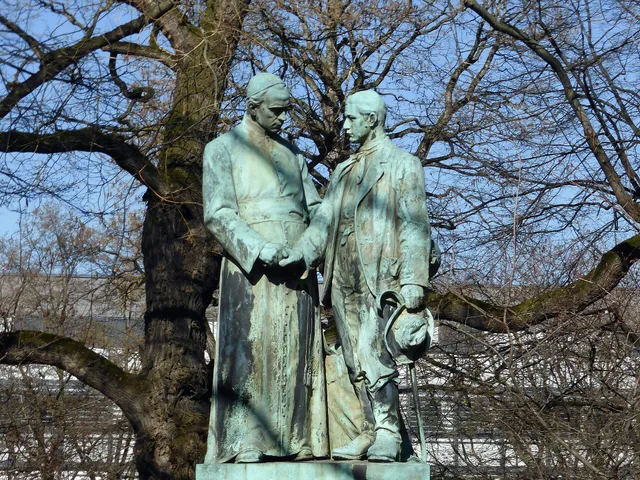
The churchyard served as a burial site for the homeless, the dishonored, suicides, and executed criminals — all those barred from burial in a regular parish cemetery. Even more curious: on the same grounds stands a memorial stone commemorating the family of the Dutch poet Joost van den Vondel, who fled Antwerp as Mennonites escaping the Counter-Reformation and sought refuge in Cologne.
Name and Origins
The name derives from its location in the Katharinengässchen, historically known as "im Elend" — meaning "in misery" or "in a foreign land." During the French period (1812/13) the site was called "Cul de sac Ste. Cathérine" (St. Catherine's Dead End). Well into the 19th century, Cologne residents still used the names "Am Elend" and "Elendskirchhof."
The Elendskirchhof
The churchyard behind the former Katharinen Hospital was first recorded in 1335 as an "ellendiger kirchooyv" — a burial ground for homeless foreigners who died in Cologne and were barred from interment in parish churchyards. It also served as the resting place for the dishonoured: suicides, executed criminals, and — from the 16th century onwards — "non-Catholic dead." Until the Geusenfriedhof was established in 1574, Protestants too were buried here.
Memorial Stones
Several grave markers in the small churchyard recall this history. The historian Paul Clemen noted the gravestone of Kaspar von Kleingedank, nicknamed "Mommersloch," who died in 1590. One memorial commemorates the Mennonite family of Joost van den Vondel, who fled from Antwerp to Cologne during the Counter-Reformation; another marks the nun Cornelia von Kaas (1762–1837).
From Chapel to Church
An altar is recorded as early as 1473, suggesting a small oratory existed by then; a chapel is documented by 1528. Between 1675 and 1678, Jakob de Groote established a family endowment whose funds were used to enlarge the chapel and enclose the churchyard with a surrounding wall. The chapel — previously dedicated to St. Michael — received Gregory the Great as its principal patron and became known as "Sankt Gregorius im Elend."
Timeline
- 1335Cemetery first documented as "ellendiger kirchooyv"
- 1473Altar erected on the grounds; first oratory assumed
- 1528Chapel first documented in records
- 1574Huguenot cemetery established; churchyard ceases Protestant burials
- 1675–1678De Groote foundation; chapel expanded into church, named St. Gregorius im Elend
- 18. Jh.Late-Baroque church building constructed (no longer extant)
- 2. WeltkriegChurch destroyed; current building is a reconstruction
Map
Blue dots: other places nearby — tap to explore.
You might also like
Comments
- Loading comments…
Sources & links
Auto-generated, last verified: 2026-06-27