St. Severin (Lövenich)
Romanesque pillar basilica in Cologne's Lövenich district, named after Severin of Cologne and rooted in the 12th century — though heavily remodelled in the 1800s.
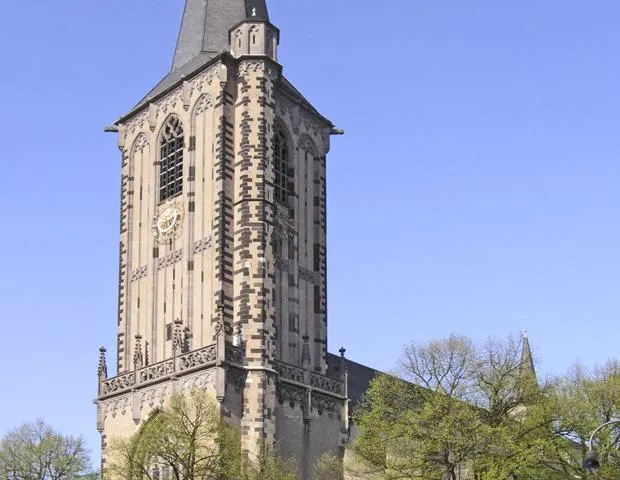
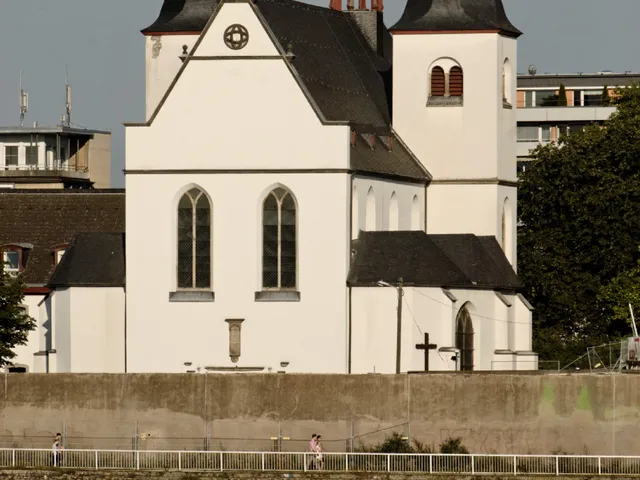
St. Severin is a Roman Catholic church in the Cologne district of Lövenich, named after Severin of Cologne. Its Romanesque core is now barely recognisable, having been substantially altered during the 19th century.
Source: Wikipedia
At a Glance
- Type
- Roman Catholic pillar basilica
- Location
- Cologne-Lövenich, Lindenthal borough
- Architectural style
- Romanesque
- Origin
- Core dates to the 12th century
- Named after
- Severin of Cologne
- Heritage status
- Listed monument in North Rhine-Westphalia
From 1361, the patronage of the church was held by the Knights Hospitaller – a medieval crusading order originally founded to care for pilgrims in Jerusalem – and remained in their possession for over 450 years until secularisation.
History
A document dated 1028 from Count Palatine Ezzo already mentions a church in Lövenich, though this record may be a forgery produced by the Brauweiler monastery in the 12th century. Art-historical analysis places St. Severin firmly in the 12th century. Around 1300 it appears in the Liber Valoris, and in 1361 Archbishop Wilhelm von Gennep transferred its patronage to the Commandery of the Order of St John in Cologne, where it remained until secularisation.
Architecture and Remodelling
Originally St. Severin was a flat-ceilinged, three-aisled Romanesque pillar basilica. A fire in 1765 caused severe damage. During restoration and expansion in 1858, the side aisles were extended eastward and the apses were demolished. The former vaulted choir bay was converted into an additional nave bay with an open roof truss, to which a new Romanesque Revival choir was added. At the same time, much of the original tufa stonework was replaced externally by brick, which is why so little of the original fabric is visible in what is today a plastered building.
Interior
In 1996 the Bonn organ builder Klais installed an organ with 16 stops and mechanical action. The five-bell peal was cast in 1959 at the Mabilon bell foundry in Saarburg.
Timeline
- 1028Church in Lövenich first mentioned in a document (possibly forged)
- 12. Jh.Construction of the Romanesque pillar basilica St. Severin
- um 1300Mentioned in the Liber valoris
- 1361Archbishop Wilhelm von Gennep transfers patronage to the Knights of St. John
- 1765Church severely damaged by fire
- 1858Restoration and extension; conversion to neo-Romanesque style
- 1959Five-bell carillon cast at the Mabilon bell foundry in Saarburg
- 1996Installation of a new organ by Klais (Bonn) with 16 stops
Map
Blue dots: other places nearby — tap to explore.
You might also like
Comments
- Loading comments…
Sources & links
Auto-generated, last verified: 2026-06-27