Gremberger Wäldchen
Urban woodland in Cologne-Humboldt, home to what is believed to be the city's oldest tree — a copper beech dating back to the early 18th century.
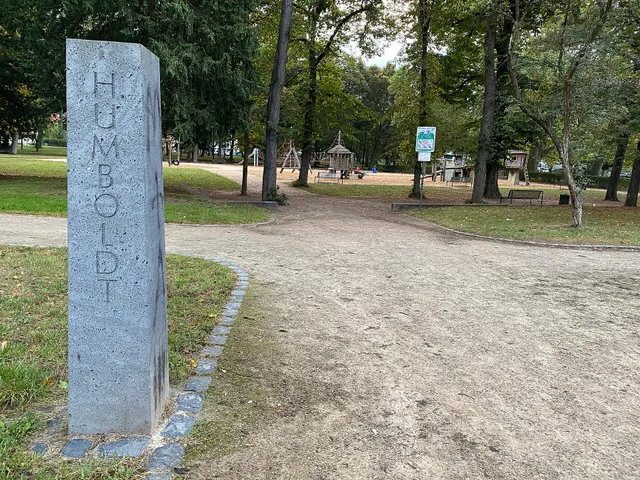
The Gremberger Wäldchen is a municipal recreational woodland on the edge of Gremberg, a district on the right bank of the Rhine. Within its deciduous forest stands what is likely the oldest tree in Cologne.
Source: Wikipedia
At a Glance
- Type
- Municipal recreational area with deciduous woodland
- Location
- Humboldt district, Kalk borough (right bank of the Rhine)
- Size
- approximately 72 hectares (acquired 1899)
- Highlight
- Copper beech from the early 18th century, probably the oldest tree in Cologne
- Listed status
- Monument under North Rhine-Westphalian heritage law
- Nickname
- affectionately known as "Grembi"
During World War II, the Gremberger Wäldchen housed a Nazi collection camp for sick forced laborers deemed unfit to work; when it was cleared in April 1945, barracks were set on fire and approximately 30 people lost their lives.
Forest and Ancient Trees
The woodland is a remnant of the original forest cover that once spread across the lower terrace of the Cologne Bight. Its standout feature is a copper beech dating to the early 1700s, widely regarded as the oldest surviving tree in Cologne.
From Monastery Grounds to City Forest
The Gremberger Hof farmstead and its surrounding woodland once belonged to Deutz Abbey, with the earliest written record dating to 1003. Its secluded location kept the land largely undisturbed for centuries. During the French occupation, the church's assets passed to the state. In 1899, the City of Cologne purchased the overgrown woodland for 400,000 marks, including a forester's lodge and the Gremberger Hof's outbuildings.
Opening Up Around 1900
At the turn of the century the forest was in an unkempt state — dense undergrowth of lime, hornbeam and oak beneath a canopy of old oaks and beeches. From autumn 1901 the city's head gardener, Hermann Robert Jung, cleared the site, thinned the woodland and laid out a network of paths. A forester was appointed in 1912 and the lodge rebuilt; with a tavern inside, the woodland became a popular day-trip destination. The building survives in its original form and is now used as private housing.
Forced Labour Camp, 1940–1945
From the early 1940s until 1945, the Nazi organisation Deutsche Arbeitsfront operated a collection camp here for sick forced labourers — many from Eastern Europe — who were no longer fit for work and were being registered for deportation. Eyewitness accounts describe dire conditions. During the evacuation in April 1945 numerous shots were fired, barracks were set alight, and reports speak of several injured and around 30 dead. On 11 July 2024 the site was entered into Cologne's register of archaeological monuments under number 506.
Today
In the early 1970s the construction of an eastern motorway spur cut the woodland in two. As partial compensation, a stretch of forest further east around Zwischenwerk IX near the Gremberg motorway interchange was added to the site. Hemmed in by motorways, a suburban rail line and busy roads, the Wäldchen is now exposed to constant traffic noise and has largely lost its role as a place of recreation — the former garden café closed many years ago.
Timeline
- 1003Gremberg estate of Deutz Abbey first documented
- 1899City of Cologne purchases 72-hectare forest plot for 400,000 marks
- 1901Head gardener Hermann Robert Jung begins developing the forest
- 1912Forester hired, forester's house rebuilt, restaurant established
- 1916Photo documents forester's house as garden restaurant with outdoor seating
- 1940Sick collection camp of the German Labour Front established
- 1945Camp evacuated amid gunfire and arson, approximately 30 deaths
- 1970Eastern motorway feeder road cuts the forest in two
- 11.07.2024Camp site listed as archaeological monument no. 506
Map
Blue dots: other places nearby — tap to explore.
Comments
- Loading comments…
Sources & links
Auto-generated, last verified: 2026-06-26